
The best things to do in Hoi An, Vietnam - travel guide
Hoi An, Vietnam captivated and enchanted me from the moment I arrived. From lanterns adorning the streets to floating candles on the river, a vibrant food market, wonderful food and beautiful beaches, read on for the best things to do in Hoi An.

After spending two nights in Hanoi, and another in Ha Long Bay, our Vietnam itinerary took us southwards down the central Vietnam coast to Hue and then on to Hoi An. After our time in Hoi An we travelled south to spend a few days in Ho Chi Minh City.
This ancient town is a UNESCO World Heritage site and a highlight of any visit to Vietnam, Southeast Asia.
The best things to do in Hoi An
There's a lot to keep you busy in Hoi An for 2-3 days or more. From temple hopping, historic buildings, cooking classes, the central market, food market and food tours to bike excursions, museums and time on the beach. The night life is pretty good too. Ready to discover the best things to do in Hoi An?
About Hoi An, Vietnam

The old town of Hoi An started life as a trading port in the 15th century. It was granted UNESCO World Heritage Site status in 1999 due to it being so beautifully preserved.
Many of the riverside historical buildings of the old town, pagodas, temples and traditional dwellings, remain much as when they were originally built. Hoi An old town does not allow motorised vehicles or motorcycles after 10:00 hours, which also adds to the charm.
Discover Hoi An old town
Hoi An old town, or Hoi An ancient town as it is also known, is home to many of the area's most popular tourist attractions.
The labyrinth of streets and alleyways in the old town is crammed with tiny shops selling lacquer-work, local crafts and silk by the metre, while lush plants trail down ochre, moss-covered walls. Souvenir sellers wearing Vietnamese coolie hats mingle with tourists, offering to take photos for a small charge.
Many of the yellow painted buildings and colonial French architecture that once traded in silks and spices now house shops, bars and restaurants and the town is lit by gently glowing lanterns criss-crossing the streets from above.

Hoi An old town entry ticket
An old town ticket is required to enter ancient Hoi An although it's not always enforced or checked. The ticket is good value at 120,000 VND (5 USD) per person so it won't break the bank and helps to maintain the attractions.
You will definitely need the ticket to enter some of the main heritage sights and it will allow five visits. If you wish to visit more than five Hoi An attractions you'll need to buy another ticket.
Tickets will need to be bought at the 11 ticket stalls around town and not at the tourist attractions themselves. The ticket offices are yellow painted wooden huts.


Enjoy Hoi An Full Moon Lantern Festival
My first evening in Hoi An we spent strolling along the city’s Thu Bon River, the dusk illuminated by flickering candles floating on the water and hundreds of colourful lanterns strung from moss-covered rooftops.
We'd arrived on the night of Hoi An's full moon festival and the moon’s silver light flooded the sky, making the town look even more magical. The Hoi An Full Moon Festival is still one of my favorite things to do in Hoi An.
If you plan to visit Hoi An, it’s worth shuffling your schedule to ensure you’re there for the full moon lantern festival, which falls on the 14th day of each lunar month. This is no raucous Full Moon party; it’s a night for local residents to honour their ancestors.
The adults wear traditional dress and play beautiful, lilting music aboard floating junks. Nearby, groups of children show off their martial arts skills and perform short plays.
Hoi An’s old town is restricted to pedestrians only until 9.30pm, and without the bustling traffic, the peace and tranquillity are remarkable. We wandered spellbound through the streets, fascinated by this unique and ancient city.
Cross the Japanese Covered Bridge

There’s plenty of culture to discover in Hoi An. Walk along the main street, one up from the river, and you can’t fail to miss the Japanese Covered Bridge, a well-known symbol of the city.
Hoi An’s Japanese community built this wooden bridge in the 1590s to connect them to the old Chinese quarter. Weather-worn statues of a monkey and a dog guard the Japanese bridge, which houses a shrine to the Tao god, Trấn Vũ.
Crossing the bridge is free of charge, but you will have to pay an admission fee to visit the temple alongside it.
Light an incense cone at Phuc Kien Assembly Hall


An ornate gateway on Tran Phu Street will guide you into Phuc Kien (Fujian) Assembly Hall, the grandest of the city’s four assembly halls.
Inside, you’ll find elaborate carvings, shrines, and Chinese dragons, while the conical incense burners hanging from the ceiling create a fragrant atmosphere.
Each burner has a dangling yellow tag inscribed with prayers and wishes that will last as long as the cone smoulders.
Visit the House of Tan Ky
House of Tan Ky is a traditional ancient Hoi An merchant home built around a small courtyard. It was one of the first national heritage buildings in the town. The ceilings inside are embellished with delicate crab shell designs, and the pillars are decorated with mother-of-pearl inlay.
Antique furniture decorates the rooms and on the walls, you’ll see markers showing the height of past flood waters.
Does Hoi An flood?
How bad are the floods in Hoi An? Let’s just say the electrical sockets are all fitted at over six-foot, and the furniture is designed to be easily moved up to the second floor.
The river flooded frequently on our first visit to Hoi An. One day, we could be sitting outside a bar watching the world go by, and by the next day, it was accessible only by sampan and we'd be on the upstairs terrace!
You’ll find many shrines around the city where the Vietnamese make offerings to their ancestors. You’ll find them in shops, on pavements, and I even spotted the one below in a gnarly old tree.


Get bespoke clothing made in a tailor shop
Hoi An is bursting at the seams with tailor shops. Be warned, you get what you pay for, so it’s worth buying the best fabric you can afford. However, it’s also very easy to pay over the odds, so shop around and be prepared to haggle.
This doesn’t disrespect the shopkeeper; haggling is expected and gives you a good chance of getting your custom-made suit or dress at a lower price.
At some of the smaller shops, it’s worth having something made just for the banter. We had lots of giggles with a very cheeky seamstress, and I came away with some linen trousers that fitted perfectly.
It's wise to have a design in mind or you'll be overwhelmed by the countless number of pattern books to browse through. I took in a favourite dress and had a duplicate made in a completely different fabric so now I have two dresses I love.
Visit a Lantern Shop

You’ll see lanterns everywhere when you visit Hoi An, and the sight of a street lit at night by these beautiful colourful lanterns is one of the most memorable images of ancient Hoi An.
Vietnamese lanterns are based on a similar design to Japanese lanterns but with a few tweaks. Their collapsible spiral structure makes them easy to transport and store, and the frame is covered in beautiful Vietnamese silk.
Each colour has its own traditional meaning in Vietnamese culture; for example, red stands for luck and celebration, while yellow indicates happiness and prosperity.
The lanterns collapse easily to fit in your suitcase and we brought a few home in checked luggage with no breakages. The only problem with lantern shopping in Hoi An is that you’ll struggle to choose just one!
If you want to take home a unique souvenir then you might want to take a lantern making class and construct your own lantern. Check rates and availability for lantern making classes.
Hoi An Night Market
The Hoi An Night Market is a good place to buy silk lanterns. It's located on the other side of the river starting near Cau An Hoi bridge and is a short walk continuing along Nguyen Hoang street. There are several lantern shops with prices ranging from 100,000 to 500,000 VND.
The night market is different from the daytime market in that it sells clothing, souvenirs, leather goods and other touristy bits and bobs.
Street food stalls offering some tasty snacks can be found at the night market too. Hoi An night market is open from 17:00 - 22:00 hrs. Tip: Visit the market after 20:00 hrs when it's quieter.
Take a guided bike tour

If you’re a confident cyclist, hiring a bicycle is one of the top things to do in Hoi An. But if you’re a little rusty or unsure about negotiating your way through the traffic, a guided bike tour of Hoi An is one of the best ways to explore the city and surrounding countryside.
Of course, you need to be comfortable riding a bike and have a reasonable fitness level. But following an experienced tour guide will make exploring Hoi An by bike less stressful, and a guided tour will give you insider knowledge on the best places to visit.
After you’ve been fitted for your helmet and cycle, you’ll set off on your bike ride with an experienced local guide. Together you’ll explore Hoi An’s alleyways and see the villages, rice paddies, water buffalo and family farms in the local countryside. You’ll learn more about local traditions and local life in Hoi An and taste delicious local foods.
Many hotels have bikes to hire if you'd prefer to explore independently but you'll learn so much more about the culture on a guided tour.
Hit the beach in Hoi An
An Bang Beach
If you’re ready for a change of pace after all your sightseeing, An Bang Beach is the perfect location. Just 3km away from Hoi An city centre, the white sands and chilled-out vibe of this peaceful, tree-framed beach make it a great place for rest and relaxation.
Once a sleepy coastal village, An Bang has grown in both size and popularity. You’ll find many sea-front bars, restaurants serving local cuisine, ATMs, convenience stores and other shops.
Early morning is the perfect time of day for a yoga class on the sands. You could take a Vietnamese cooking class by the beach and if you’re feeling energetic, there are plenty of water sports on offer.
In the late afternoon, people head to the beach after school or work, so it’s the perfect place to lay back in a hammock with a cold drink, go for a swim or do a spot of people-watching.
In the evenings, An Bang comes alive with people listening to live music, drinking cocktails or singing karaoke. It's the liveliest of the city's beach resorts and Soul Kitchen is definitely a place to spend time on An Bang.


Cua Dai Beach
Rent a bike or hire a pillion ride on a scooter to travel the 2-3km to Cua Dai Beach. Here you can kick back and relax on the pristine sands of one of the best beaches in Vietnam. Be warned, though - you may have to share your space with the occasional herd of cows.
We stayed at Palm Garden Beach Resort and Spa 5***** in a beachside bungalow. There was a hotel minibus into town and back during the day and evening so we got the best of the town when we wanted it and time to relax on the beach too.
Take a food tour and cooking class


A cooking class is a fun way to discover some Vietnamese traditional dishes and is one of the best things to do in Hoi An. I've taken a few cooking classes in Hoi An and they all follow a similar format.
You'll meet at a cafe or restaurant and head to the local market for a food tour and introduction to the fresh vegetables, herbs, fresh fruit and food stalls in this lively, colourful market. The market, especially the night market, was my favorite place to go to get a taste of local life.
After buying some produce you'll take a short boat ride down the river, passing rice fields and farms to the cooking school where you'll take a fun cooking class. The chefs are hilarious with a dry sense of humour and you'll laugh a lot as well as learning about Vietnamese food and how to cook it.
Some classes take place in the town without the river boat ride so you'll want to check if you particularly want the boat ride.
You'll eat the food that you've cooked for lunch or dinner depending which time you book. You can read more about food in Hoi An and the cooking class we took in my post Hoi An - a culinary quest. A food tour and cooking class is one of the most popular things to do in Hoi An.
>>> Check rates and availability for cooking classes in Hoi An
Take a river boat ride
You'll be offered a river boat trips whenever you pass one of the boats moored up along the Thu Bon river. Be prepared to haggle (the prices are inflated to counter this) and spend a pleasant time floating along and watching the sun set on the town.
If you want to try something a little different then opt for a basket boat ride. The 'thung chai', or basket boats made from bamboo were created during the French colonial time. Fishing boats were taxed and to avoid the tax the Vietnamese fishermen came up with the thung chai countering that it was a basket rather than a boat thus making it exempt from the tax.
>>> Check rates and availability for basket boat rides
A kayak tour might be more your thing and Hoi An Kayak will take you out on a sunrise tour where you'll see the fishermen out with their nets. Their unique way of fishing is quite a thing to see. If you'd prefer a sunset kayak then that's available too.
Some of the cooking classes will transport you by basket boat which makes a fun transfer from the city center to the cooking school.

Day trips from Hoi An
If you have more time in Hoi An there are some great day trips which you can take:
Go Snorkelling in the Cham Islands
Take a speedboat for a Cham Island highlights tour with snorkelling and lunch. You'll explore the local market, snorkel in the sea, and enjoy lunch in a local restaurant. This group of eight small islands is part of a Unesco Biosphere reserve and one of the best diving and snorkeling areas in Vietnam.
Visit the Marble Mounts
Visit the Marble Mountains and Monkey Mountain on a private tour from Hoi An. The Marble Mountains are 20-mins south of Da Nang. Take a tour and explore the pagodas, grottos, tunnels and natural caves of the Marble Mountains and Monkey Mountain. Take in the amazing views of the coastline from the Linh Ung Pagoda. Book an early tour to beat the crowds.
Explore the ruins of My Son Sanctuary
See My Son Sanctuary
My Son Sanctuary is an archaeological site about an hour's drive west of Hoi An. The ruins were the political and imperial city from the Champa dynasty from the 4th to 13th centuries. My Son is one of the most popular day trips from Hoi An.
Although not nearly as vast as other SE Asia runis like Angkor Wat or Bagan the ruins are worth a visit because many of the temples were built for Hindu Krishna, Vishnu and Shiva as opposed to Buddhist temple whose origin which is more usual in the region.
There's a trail which you can walk to see the main highlights but book to go early in the day to avoid the heat and the crowds. It's a beautiful spot to watch the sunrise and you'll pass rice fields and small villages on the drive there.
A guided half-day tour of My Son Sanctuary from Hoi An with hotel transfers, breakfast, and coffee is one of the best ways to visit.
Food in Hoi An and where to eat

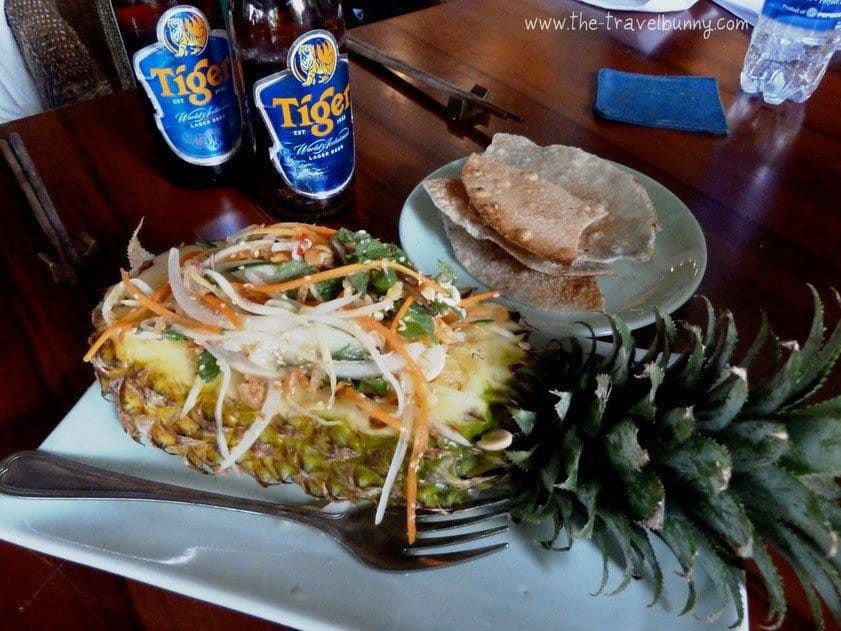
Vietnamese food is delectable with zingy, tantalising flavours drawn from fresh, locally grown herbs; lemon grass, Vietnamese mint, coriander and Thai basil. You'll find some really good food served up in Hoi An.
Choose from subtly spiced stir-fries with rice or noodles, fresh fish, delicate soups and steamed vegetable rolls - all delicious. Don’t worry that your tailor-made clothes won’t fit you when you get home because Vietnamese cuisine is incredibly light and healthy.
Hoi An is especially known for two traditional dishes; white rose dumplings and Cao Lau noodles so be sure to try this local food during your visit to the town. A banh mi makes for a tasty lunch on the go.
The unique taste and texture of Cao Lau noodles is because the water used to make them comes from the ancient Ba Le well. The unusally thick noodles are served with pork and a special mix of herbs.
You'll find these Hoi An dishes at most restaurants and at many of the street food stalls in the city and central market.
The Cargo Club
One of the best eateries we found was the Cargo Club serving traditional Hoi An specialities and other Vietnamese favourites in a beautiful old shop-house. The best tables are on the balcony overlooking the river.
Before and Now
Before and Now on Le Loi Street is one of the more popular bars in Hoi An with pool table, video screens and good music. You’ll hear it before you see it. The upstairs restaurant serves excellent local cuisine or pizza and pasta if you don't fancy Vietnamese, although why anyone wouldn't beats me.
Lantern Town
The best place we ate at was Lantern Town where the food and service were excellent. The Miss Hoi An cocktails were pretty good too.
Tam Tams
There are great bars all over town, we liked Tam Tams. The cheapest beers were in the bars overlooking the river next to the market and worked out at around 38,000 VND or USD $1.60 a bottle.
White Rose Restaurant
This restaurant serves just two dishes. This is where white rose dumplings originated so it's probably the best place to try them. If that's not your bag then they also serve pizza.
Be sure to make time to explore the coffee shops and try a Vietnamese coffee. They really are delicious.
Where to stay in Hoi An
- Luxury: Palm Garden Beach Resort and Spa 5***** (located on Cua Dai beach. We stayed in a beach bungalow here and loved it)
- Mid range: Ann Retreat and Spa
- Boutique: Anio Boutique Hotel
- Or find your own perfect Hoi An accommodation
Our Hoi An hotel was The Palm Garden Resort in a gorgeous beach bungalow overlooking the sea. We love this hotel and have stayed there three times now and can highly recommend it.
When is the best time to visit Hoi An?
Like much of Vietnam, Hoi An has a tropical climate. The temperatures are generally warm all year round, reaching an average high of 35°C in July and rarely falling below 23°C. If you visit between June and August, the soaring temperatures will soon make you realise why locals do their work in the early morning and take a siesta in the afternoon!
So generally, the best time to visit Hoi An is between February and May. The weather will be warm and dry at this time of year, without the high temperature and humidity of the summer months.
Depending on the lunar calendar, visiting Hoi An in February means your holiday might coincide with the Tet holiday or Vietnamese Lunar New Year. This is the most important annual festival in Vietnam and is a great way to experience local culture and traditions. However, many businesses close for the holiday, and prices can also be higher than usual.
Weather in Hoi An

Hoi An has two seasons: dry and rainy. And when it rains it rains long and hard.
The rainy season in Hoi An runs between September and January, and the area experiences monsoon rains throughout the season. There are occasional typhoons and flooding in Hoi An, but this doesn’t happen every year.
December and January are the coolest months of the year, with temperatures often around 22°C. Although the weather is still rainy and humid at this time of year, there are still some sunny days.
The dry season in Hoi An starts in February and lasts until the end of August. Temperatures are moderate between February and April, reaching an average high of around 30°C, and humidity levels are relatively low. This is a very popular time of year for tourists visiting Hoi An and I've been myself in February and experienced good weather.
Between May and August, the weather starts to get seriously hot. Daytime temperatures between June and August can reach a high of 38°C; at night, the temperature rarely drops below 21°C. This makes it the perfect time of year for a beach holiday, and because it’s less popular with overseas visitors, you can find great bargains on hotels, flights and other services.

Getting to Hoi An
There isn’t a Hoi An airport, so you will need to arrange a transfer to Hoi An from one of the country’s other airports.
The nearest airport to Hoi An is Da Nang International Airport (DAD), around 30km away. You'll probably fly into Hanoi or Ho Chi Minh City and fly into Da Nang after exploring those cities. From Da Nang, travelling to Hoi An by taxi or bus takes around 45-60 minutes.
There are frequent private and public bus services travelling to Hoi An from Da Nang and many Hoi An hotels can arrange transfers for you.
Another option is to get the train to Da Nang Railway Station, which is the closest train station to Hoi An. Trains run frequently from other cities in Vietnam, and then you can simply get a bus or taxi from the train station to Hoi An.
Hoi An is fairly close to Hue, the ancient imperial capital of Vietnam. We booked a van transfer from Hue to Hoi An which is incredibly scenic with a stop at the Marble Mountains en route.
I've returned to Hoi An a few times over the years to find that little has changed. The lantern shops are over on the other side of the river, and there are more tourists now, but Hoi An remains as enchanting and photogenic as ever.
I hope you enjoyed my travel guide of things to do in Hoi An and it helps you have a magical time there too.
Ready to plan your visit to Hoi An?
- For deals on flights, compare prices with Skyscanner flight comparison site
- Book your airport transfers with Welcome Pickups
- Find the perfect place to stay on Booking.com
- Compare prices for your car hire
- Book your ferry crossing with Ferryhopper
- For data and roaming I use Orbit Mobile Get 20% off with code TB20 (up to $10)
- Explore your destination through local experiences
- If you think you need a visa check with iVisa
- Plan your trip with maps and guide books
- I use a Wise account multi-currency debit card. Easy to top up, low fees and better exchange rates.
- For long-haul travel the Trtl travel pillow will help you get some decent in-flight sleep.
- For travel gear check out my Amazon Storefront
- For travel insurance. I use Heymondo. Travelbunny readers get a 5% discount with Heymondo.

Hoi An was probably my favorite place in Vietnam- your beautiful photos took me right back there! The old lady by the postcards is an incredible photo. Well done for capturing her. 🙂
Thanks Katie - my favourite place in Vietnam too 🙂
what is the best hostel to stay at in Hoi An? I am looking to move there for 6 months or so and would like to start off in a hostel while I get used to the city. Can anybody recommend a good hostel that you could bear to live in for a month or two?
Hi Maxwell - thanks for dropping by. I haven't had any experience of hostels in Hoi An - the smaller hotels are excellent value so it might
be worth spending a couple of nights in one of them while you search for something long-term. A shout out on Twitter might get some
results too. Good luck and have a fantastic time in Vietnam.
i hope to enjoy Hoi An as much as you did as im going there next month.
nice read =)
Congratulations! I have just given you the Versatile Blogger Award and The ABC Award – you can find out more about this here on my blog http://thethoughtpalette.co.uk/2012/05/07/awards-in-march-and-april/ I do hope that you will accept these awards in the spirit in which they are sent to you. With best wishes – and thank you for your blog. Alyson
Wow thank you! - I'm thrilled that you've nominated my blog. I'm not sure that I can accept the ABC award as I've already been nominated by Restless Jo - just
haven't got around to writing it up yet. Now with two awards I really should do something about that.
of course you can accept twice! just mention me and Jo as both awarding it to you! and congrats twice!
Excellent review and great pics. I will be arriving in Da Nang on Monday and I plan to take a day trip to Hoi An. Did you visit the Cham Islands off the coast?
Hello - so glad you like the post 🙂 I didn't get to the Cham Islands - are you planning to visit them?
Don't the lanterns in Hoi An create a magical scene? I have a series I'm hoping to do very soon devoted just to them.
Thanks for your well-done series here! Makes me long to stroll on Hoi An's quiet lanes...
Thank you for your lovely comment Tricia. I still have Halong Bay and Hanoi to write up. Keep me posted on your Lantern post, I'd love to see that...
Will do! Happy blogging... 🙂
Lovely post and beautiful images!
Thank you - it's a magical little town
All these posts of places I need to go. What a beautiful place...It is definitely very photogenic like you say. I had to share a beach in Malaysia with some cows though too so it's not too bad 😉
They were nice cows hope yours were too!! Hope you get to visit Vietnam - it's a wonderful place
Definitely makes me rethink my plans of hiking Vietnam, Laos and Cambodia =) ... lovin the spirit of the pics, thumbs up! ^^ What's your next destination?
Thanks for your comments 🙂 Hoi An's a fab little town and Hue, the old imperial capital, is about 130k north so two places worth visiting that are fairly close to each other.
Next destination is a week in Tenerife next month so a little different - I'd like to spend some time in the National Park around Mount Teide. I look forward to hearing about your
SE Asia trip.
Tenerife is beautiful, my dad shot an amazing picture of the night sky on the mountain... you should definitely plan some hiking, although the beach is tempting =)
I absolutely LOVE the picture of the lanterns! And then I got hungry reading about the food available. We're down in Chile and the food options aren't as diverse and tasty as in other countries 🙂
I don't think I could ever tire of Vietnamese food - and so healthy too!
An excellent post Suzanne. This makes my efforts look very amateur but is great to read. Maybe I can learn a little from you. We really enjoyed the whole trip. It was very educational but quite hectic. Thanks for visiting my blog and your kind comment.
I think I can learn from your photography David - you have some excellent shots. I'm so glad you enjoyed reading the post it makes all the effort worthwhile. We enjoyed our trip too and like yours was quite hectic, we were ready for a rest when we got home. I shall definitely be heading back to your blog on a regular basis.
I so loved Hoi An when I was there and its great to see that it doesn't seem to have changed too much in the last 8 years!
I do too - it's so different from anywhere else I've ever been
Nice pictures and thanks for the post. Will like to visit one day ..... 🙂
Thank you!
Randomly came across your blog and thought it was great. Im traveling to Hoi An in March and was wondering where you stayed or what area is best to stay?
Hi and thank you for the comment! Accommodation depends on what you're looking for from your stay.
E-mail me at travelbunny@live.co.uk and I'll let you have more info.
Sounds and looks wonderful. Great photos and great post (Hope I get to see it for myself one day).
Hope you do too Kat - you wouldn't be disappointed, thank you.
Oh Suzanne, what a lovely piece! I SO want to go there and see those bobbing candles and lanterns. Love that little childs lit up face.
Thank you Jo 🙂 It really is a dreamy little place - I love it there and the people are lovely too.
I love Hoi An......x
It's brilliant! The road from Danang is filling up fast with hotel chains - hope it doesn't spoil it. x