


If you’re planning a trip to China, you’re in for something truly unforgettable. It’s a destination that surprises at every turn, vast, complex and packed with incredible experiences. But for first-time visitors (myself included), it can also feel a little daunting. Which is why I’ve put together these essential China travel tips to help you prepare and travel with confidence.
China is unlike anywhere else I’ve visited. From language barriers and cashless payments to cultural nuances and sheer scale, it requires a bit more planning than your average trip, but that’s all part of the adventure. During my road trip through Sichuan and Qinghai in September 2025, I kept notes of the things that genuinely made a difference on the journey.


This post may contain affiliate links, which means that we may earn a small commission for qualifying purchases. As an Amazon Associate I earn from qualifying purchases. More info: disclosure.
In this guide, I’m sharing my tried-and-tested China tips for first timers, from essential paperwork and must-have apps to download to getting around and avoiding common pitfalls. Think of it as your shortcut to travelling smarter in China and making the most of every moment in this extraordinary country.
China Travel Tips: Quick Summary
- Best time to visit: Spring (April–May) and Autumn (September–October) for mild weather
- Visa: Currently visa-free for UK travellers (up to 30 days) — always check latest updates
- Payments: China is largely cashless — set up Alipay before you travel
- Internet: Use an eSIM for access; a VPN is needed for sites like Google and Instagram
- Language: English is limited outside major cities — a translation app is essential
- Transport: High-speed trains are fast, affordable and easy for getting between cities
- Planning tip: Consider a tour company for your first trip, especially in remote regions
Use a professional tour company

English isn’t widely spoken in China, which can make travelling independently more challenging, especially in the remote regions of Sichuan and Qinghai that we visited.
I’d recommend travelling to China with a professional tour company, especially if you’re visiting China for the first time or exploring off the beaten track. Joining an organised group tour will make planning your travel easier and allow you to explore the country with an expert English speaking guide.
I travelled to China with Eastogo Travel in September 2025, and highly recommend their small group tours. They sent over a list of China tips and handled all of the reservations and travel within China, so I could enjoy a smooth and hassle-free experience. After my experience I wouldn’t hesitate to travel with them again.
The best time to visit China

China is a vast country covering five international time zones. It spans thousands of miles, so the weather varies greatly depending on which part of the country you’re visiting.
The best time of year for visiting China is generally in Spring or Autumn. We visited in the second half of September and had many kinds of weather from rain and hail to sunshine. On the high Tibetan Plateau the temperature was much cooler.
The summer months can get very hot, often reaching the high 30˚Cs, and the winter temperatures often sink to -8 ˚C or even colder at night.
However, bear in mind that the typhoon season in southern and eastern coastal regions stretches between May and November.
It’s also best to avoid public holidays, as many businesses will be closed and the cities and attractions will be even more crowded than usual. The main national holidays are Chinese New Year (late January to early February), Labour Day (1st-5th May) and National Day (1st October).
Whenever you visit, it’s best to book flights and accommodation at least 2-3 months in advance.
Visit the UK Government Advice website
It’s advisable to check the official UK Government travel advice website before you travel to China. This will give you the latest safety updates and changes to any regulations.
Do you need a visa for China?
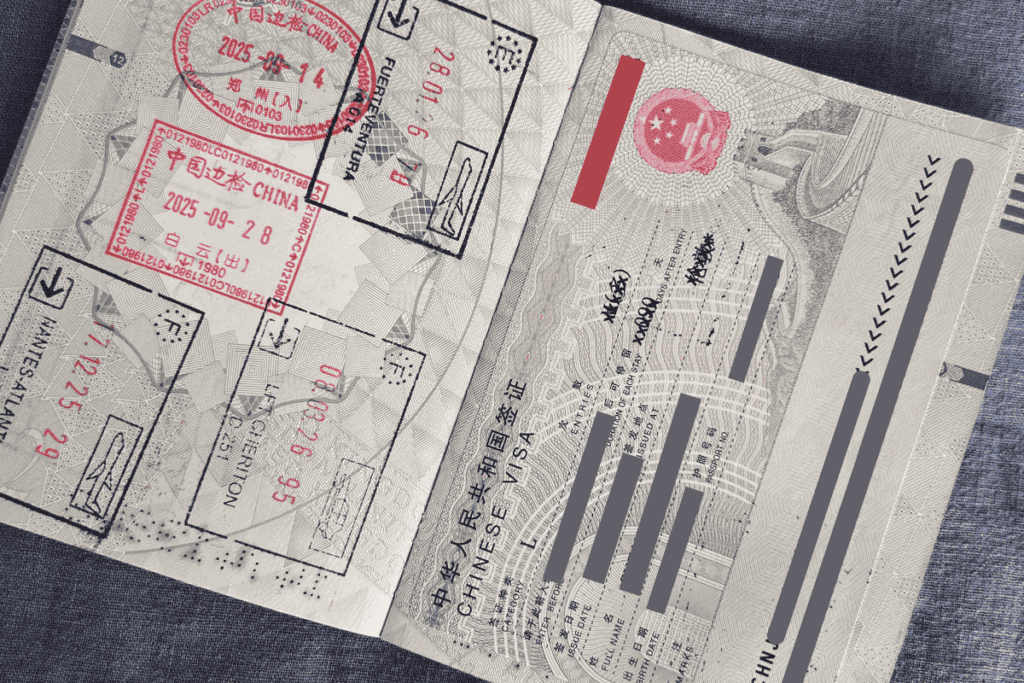
From 17th February 2026 to 31st December 2026, UK citizens don’t need a visa to visit mainland China for up to 30 days for tourism, business, family visits or transit.
If you are visiting for work, study or journalism or staying for more than 30 days, you will still need a visa. You can make your visa application online, but you will also need to submit documents at one of the Chinese Visa Application Service Centre (CVASC) offices in London, Manchester, Edinburgh and Belfast.
The 30-day visa-free stay also applies to citizens of over 50 countries, including Australia, New Zealand, Japan and most other European countries. Visas are still required for citizens of other countries, including the United States, India, and many African and Latin American nations.
These regulations could change at any time, so be sure to check the current situation before booking your trip to China.
Passport validity for China
Your passport must be valid for at least six months beyond the date you enter China. You’re also strongly advised to ensure that it has at least two blank visa pages.
Always carry your passport with you while you’re in China, as you’ll need it to enter attractions and ride the high speed trains.
Travel insurance
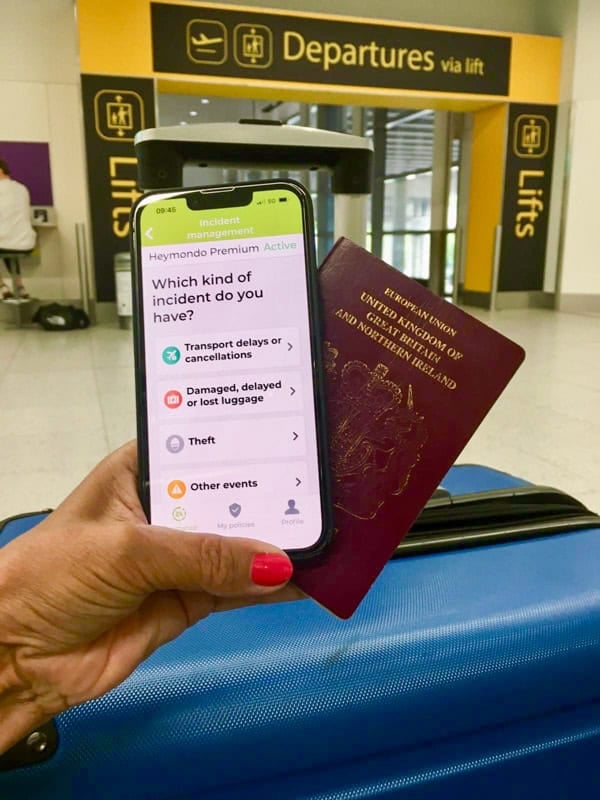
I would never travel anywhere without travel insurance, and China is no exception.
Travel insurance will shield you from the high cost of medical care or emergency transport back home if you fall ill or have an accident during your trip. It will also cover your costs if you have to cancel your trip before you travel due to illness or other reasons. Get your travel insurance as soon as you’ve booked your flights.
I use Heymondo for my travel insurance and they were able to insure me up to an altitude of 5000 metres and include activities like horseriding. A 5% discount is included with this Heymondo link.
Medicines
If you need to bring your own medicines into China, the quantity must be reasonable, and in the original packaging. You should also bring a copy of your prescription or a letter from your GP with details of the dosage and diagnosis. It would be useful to get this translated into Chinese.
You might also want to bring some general medicines such as paracetamol, Immodium, travel sickness tablets and so on. This is easier than trying to find the right medication in a Chinese pharmacy if you feel unwell.
Again, make sure you only bring enough for your personal use and keep them in the original packaging. All medications should be packed in your carry-on luggage.
What to expect when you arrive in China
When you arrive in China, you should expect to see strict security and mandatory health checks, including temperature checks, at the airport.
Be sure to complete an arrival card, and have your passport and all travel documents ready for inspection. Immigration may also want to see proof of your hotel bookings and exit flight details. I was asked to fill in hotel names and addresses on my arrival card.
Getting from the airport to the city
It’s helpful to plan ahead for your transfer to your hotel when you arrive in China. You can book your airport transfer through Trip before you arrive which I did. You’ll find more details on Trip in the app section below. The Trip app kept me updated on where my driver was and where to meet them. Mine was waiting for me in arrivals. Clearly you’ll need your e-sim data roaming enabled to receive notifications.
Make sure you have a note of your hotel address in both English and Chinese. Both should be listed on your hotel’s website.
The best way to travel around China
Public transportation, taxis and rideshares in China are all very cheap, and ride-hailing apps like WeChat and DiDi are easy to use.
If you’re travelling between cities, you’ll find that China’s high-speed train network is very fast, clean and modern. It’s worth paying a little extra for business class, which is less crowded and offers comfortable reclining seats.
Of course, China is such a huge country that a domestic flight is the best way to travel between major cities like Beijing, Shanghai, Chengdu and Shenzhen. I flew from London Gatwick into Zhengzhou Xinzheng International Airport and took a domestic flight to Chengdu Tianfu International Airport where I joined our tour group.
China Travel Tips: Credit Cards, Payments and Cash
Cash
The local currency in China is usually known as the yuan (CNY), however its official name is the renminbi (RMB). One yuan is divided into 10 jiao.
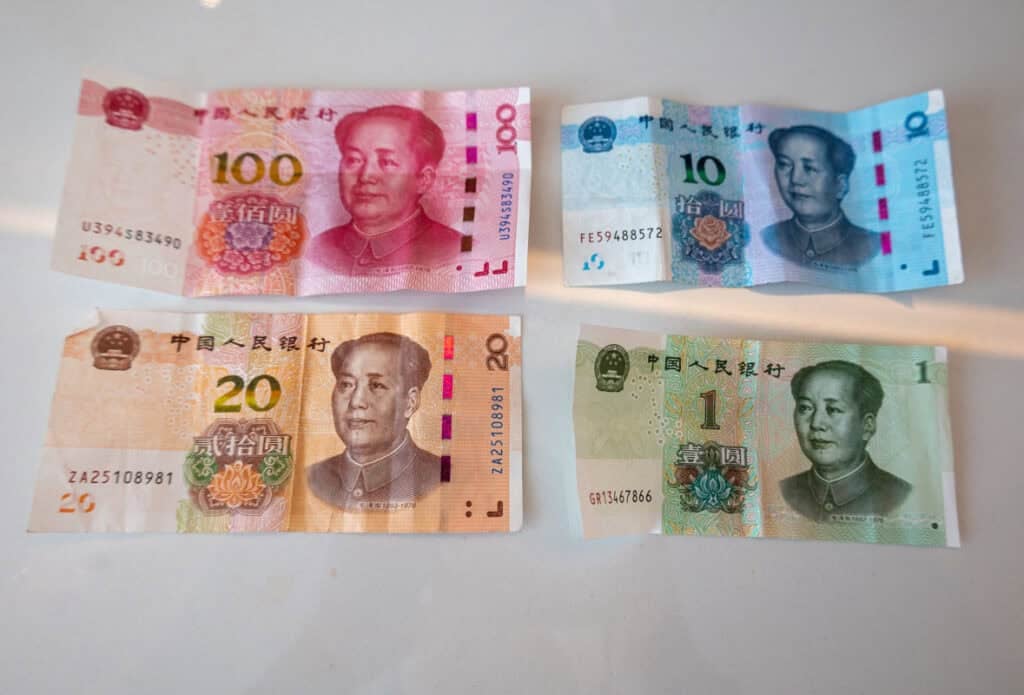
Although China is a near-cashless society, cash is still sometimes used outside the big cities. Most retailers accept mobile phone payment apps like Alipay and WeChat, but it’s still a good idea to carry some cash.
It’s best to exchange cash before you travel or use the ATM at the airport. Not all ATMs in China have an English language option, but ATMs at the main banks like Bank of China or ICBC often do. These should accept foreign credit or debit cards without any problem.
I took a small amount of cash with me and only used a little of it in a local market and in a small shop in Litang. My travel companion borrowed cash from me when her Alipay and WeChat didn’t work.
At one point in a rural market some young children (under 5s) started pulling on our clothes and gesturing for money. But they didn’t want cash – they each had QR codes, fully laminated on lanyards around their necks!
Payment by App
Payment by app is the most accepted form. Download the Alipay or Wechat apps to your phone and then scan a QR code to pay. There’s more information about Alipay and WeChat below.
Credit Cards
Apart from hotels and major department stores in bigger cities like Beijing and Shanghai, very few places accept international credit cards. You will probably want to take one with you as a backup for emergency use, if nothing else.


eSim in China
Although WiFi is widely available in China, many public WiFi hotspots will require a local phone number for activation. An eSIM is an easy way to access the internet while you’re in China, but you’ll need to set it up before you travel.
An eSIM is basically a digital SIM card that’s built into your mobile phone. You purchase an eSIM profile and install it on your phone, and then you can activate a plan with one of the local carriers at your destination.
It’s important to get the right eSIM for China. I used an Airalo eSIM, and in some remote places I had no signal for days. My travel companion used this eSIM from Trip.com, which was cheaper than mine and had excellent coverage.
Another alternative is to buy a local SIM card from a China Mobile or China Unicom shop when you arrive in China. You’ll need your passport for registration, and your phone must be unlocked and able to accommodate a new SIM.
VPNs in China
Many popular Internet sites are blocked by China’s massive censorship system, known as the ‘Great Firewall’. Some of the sites that are blocked include Facebook, Instagram, WhatsApp and Google.
If you just want to access the internet on your phone, installing an eSIM will allow you to get around the firewall. However, if you want to use your laptop to access the internet, you’ll need to use a VPN (Virtual Private Network). This will also protect your personal data if you use public WiFi networks.
Many VPNs are blocked and only a few work reliably, including AstrillVPN, ExpressVPN and Surfshark. You’ll need to purchase and install your VPN before you arrive in China.
Can you use Google in China?
Google services like search, Gmail, maps, Drive and YouTube are blocked by the ‘Great Firewall’ in mainland China and will not work on local networks.
To access Google services on your phone you must use a VPN, which comes with an an international roaming SIM card, or an eSIM like this one to bypass restrictions. This allows you to connect to servers outside China.
Check China tour availability with Eastogo Travel here
China Travel Tips: Apps You Need Before You Go
One of the most important things to know before travelling to China is what apps to use. I literally wouldn’t have been able to function in China without some of these apps. Namely Alipay and WeChat. These are all the apps I found useful in China, along with a couple of extras that you might find handy.
Tip: It’s important to download apps to your mobile before you travel to China, as you may not be able to add them after you arrive.
Alipay
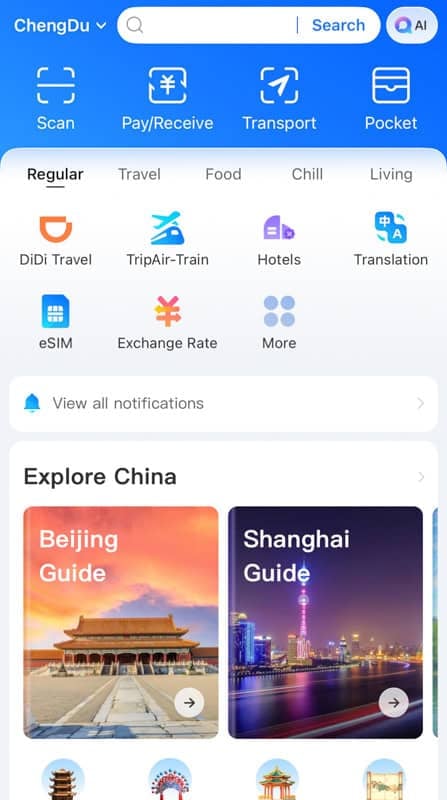
Alipay is a popular digital wallet and payment app. It offers QR code payments and money transfers along with services like ride-hailing.
You can register on the Alipay app with an international phone number and the app will work with an international credit card.
I’d recommend linking your Wise currency card after opening a yuan account (CNY) and transferring funds to it.
A Wise account is a multi-currency debit card. It’s easy to top up, has low fees and competitive exchange rates. You can also use it to withdraw cash from ATMs. I’ve been using mine for years and wouldn’t be without it now.
WeChat is a bit like WhatsApp, we used it for our group chat in China, but it offers much more than messaging.
You can make reservations, order taxis, make payments and read QR codes in restaurants. It even works as a search engine – remember, there’s no Googling in China!
You’ll need an existing user to validate your account and our contact at Eastogo Travel happily provided the QR code for me.
I found Alipay was so easy to use that I didn’t bother using WeChat Pay for mobile payments, but it was good to have as a backup.
Google Translate
If you have a VPN on your phone, installing the Google Translate app is a good way to bridge the language barrier. Unlike many other translation apps, Translate allows you to enter full sentences.
It’s also really handy when you’re shopping in China. You can speak English into your phone and show the written Chinese translation to the seller. They can then use the app the same way to translate from Chinese back into English.
However, the Google Translate app needs to run on mobile data or a VPN. The service can also be unstable as Google officially wound down parts of the Translate service in China in 2022.
Another good option is the Pleco translation app, which works offline and allows you to search in both English and Pinyin (the official romanisation of Chinese characters).
Trip
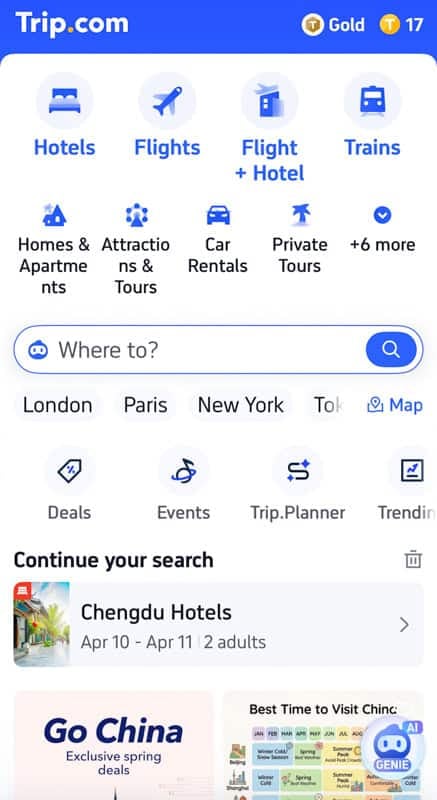
Trip is an all-in-one travel app that is excellent for booking transfers, hotels, trains and attractions. It’s also useful for buying services like eSIMs and VPNs.
I used the Trip app to book my hotel/airport transfers in China, it’s easy to use. Since I got home have used it to book a flight so it’s useful for more than just your China trip.
DiDi
In 2016, Uber sold their Chinese business to a Chinese company called DiDi that offers ridesharing, taxi hailing and food delivery services.
The DiDi app works in a similar way to Uber. It has an English interface and accepts foreign bank cards, but you’ll need a Chinese phone number.


Gaode Map
Also known as Amap, Gaode Map is like Google Maps for China. It’s all in Chinese, but you can search for addresses in English, and it also marks your real-time location accurately. This will be useful for exploring your destination independently if you’re booked on a tour.
I was able to use Google Maps via the VPN on my eSIM, which was useful for finding my way around the cities of Yushu and Xining which I explored alone.
MetroMan China
If you’re planning to travel by subway, this app can be very useful. It contains details of every subway station in China, making planning routes and calculating fares easier.
Microsoft Bing
You might not use Bing at home, but it’s currently the only major foreign search engine that isn’t blocked in China. It also complies with the local censorship rules on sensitive topics.
If you’re not planning to use a VPN in China, the Bing app can be a handy way to access the internet.
Local Culture
Local customs and traditions are different all around the world, and you might experience a little culture shock when you visit China.
It’s essential to follow local etiquette, which includes avoiding discussions about sensitive topics like political issues and human rights. Public displays of affection are traditionally discouraged, although you might see some younger Chinese people holding hands.
Chopstick Etiquette

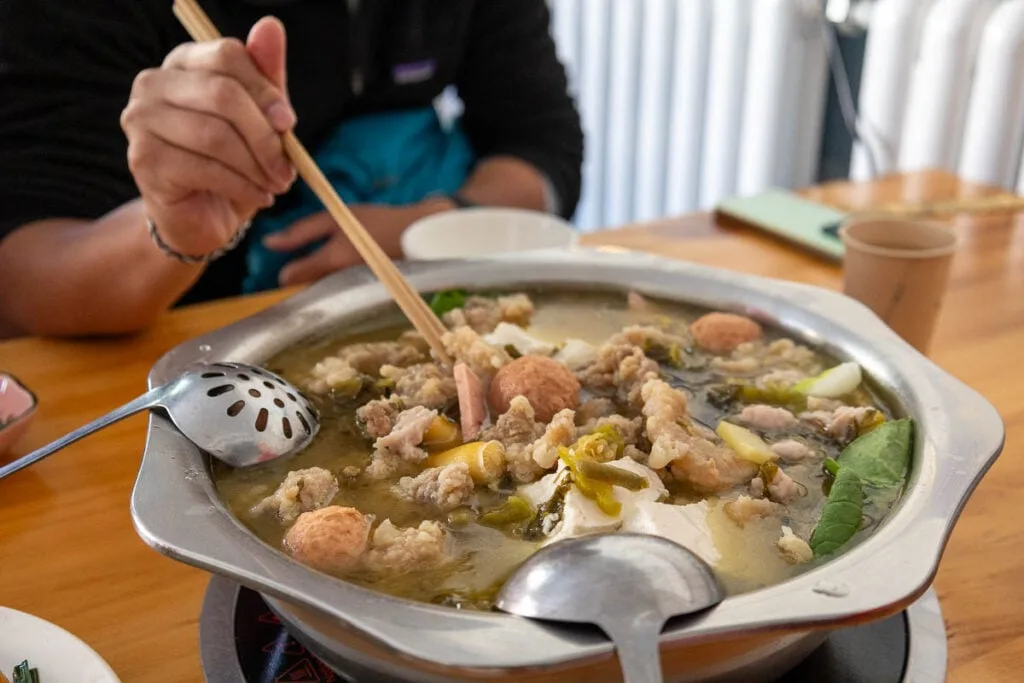
You’re sure to want to explore the local cuisine, so be aware of basic chopstick etiquette.
You should never stick chopsticks upright in a dish of rice, as this resembles funeral incense. Never transfer food directly from your chopsticks to someone else’s, as this also resembles a funeral ritual.
Don’t point with your chopsticks or use them to stir or spear food. You should always use serving utensils to serve yourself from shared dishes, and don’t dig through to find the best bits, that’s just rude!
Westerners in China
If you visit areas of China away from the big cities, you’ll find that the locals are probably not used to seeing foreigners. They may stare, point or try to take your photo. They’re not being rude, they’re just genuinely surprised and curious.
One thing that surprised me about China was just how friendly people are. We had quite a few people asking us to have photos taken with them and we were happy to oblige and reciprocate. I also had a few people taking sneaky photos of me which I found highly amusing.

A man dressed as a pig on a mountain pass in Sichuan wanted a photo with me. I wasn’t expecting that!
Check tour availability with Eastogo Travel
Queuing in China
Finally, Western-style queuing doesn’t really happen in China, so expect some pushing if you’re waiting for the train or subway. Don’t be afraid to use your elbows and push back a bit!
Learn some common words and phrases
Unlike many destinations, English isn’t widely spoken in China. You probably won’t hear it spoken except at major tourist attractions in cities like Beijing and Shanghai.
Standard Mandarin is the official language of China, and it’s based on the Beijing dialect of Mandarin. Other areas speak their own regional languages such as Yue (Cantonese), Wu and Min.
It’s always helpful to have a few basic words of the local language. Useful words for your China tour include:
- Ni hao – hello
- Zai jian – goodbye
- Xie xie (she she) – thank you
- Dui – yes
- Bu – no
- Duoshao – how much
This travel tip really applies for any country you visit if you want to get more out of your visit.
Dress Code in China

When you visit cities in China, you’ll notice that most of the fashion is modern and Westernised.
However, the country is still pretty conservative, so it’s best to dress modestly, especially if you’re travelling outside the major cities. Avoid wearing anything too revealing, such as short shorts or low-cut tops.
China’s vast size means that the climate will vary depending on your location. It’s crucial to research the weather for the destinations you’ll be visiting, and I’d recommend checking the weather forecast just before you leave for your trip.
Even then, you should pack for diverse weather. Layers are essential, along with comfortable walking shoes, a raincoat and sunglasses. If you forget anything, you can probably pick it up when you arrive in China.
Haggling
When you’re shopping in markets, the sellers will expect you to haggle for a good price. A general rule of thumb is to start by offering no more than half the stated price.
However, everything is so affordable in China that the item you’re buying will already seem like a great bargain. Paying a few yuan over the odds probably won’t leave you out of pocket, but the extra money will be welcomed by the seller.
Tipping
Tipping is not generally expected in China. Some people may even be offended if you leave money on the table at the end of your meal.
If you’re staying in a high-end hotel or using the services of a tour guide, a small tip might be appropriate for exceptional service. Tips are not expected for taxis, but you could ask the driver to round up the fare.
Electrical plugs and sockets
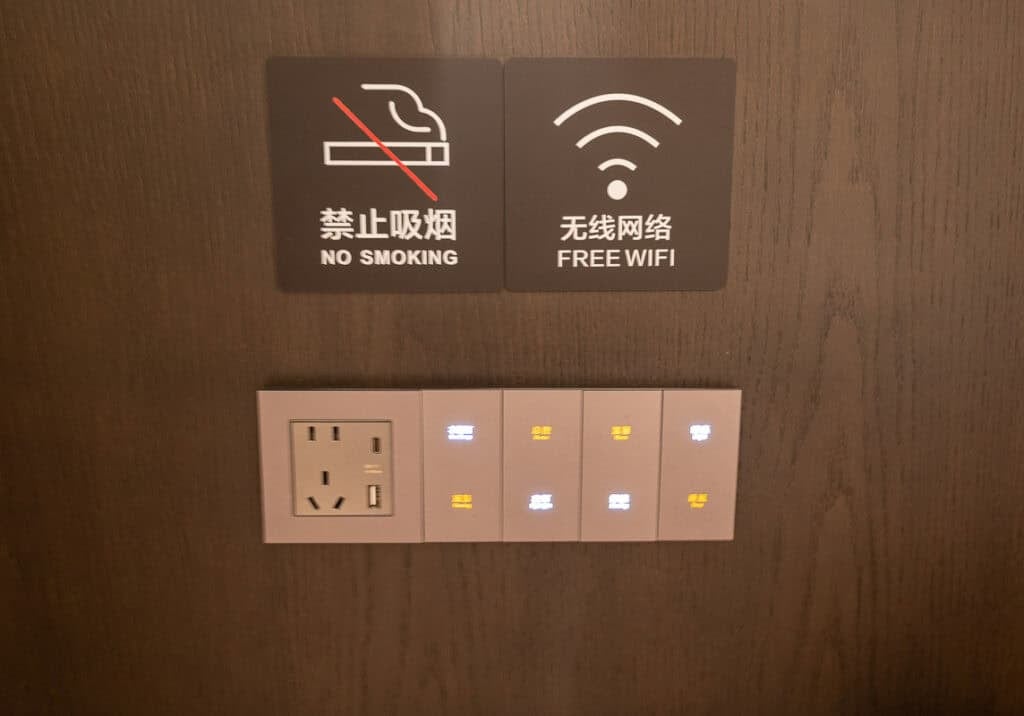
China uses power plugs and sockets (outlets) of type A, type C and type I with a 220V voltage and 50Hz frequency. The most common socket is the Type I (three flat, angled pins), especially in modern buildings.
You’ll need to pack a travel adapter for electrical devices with UK Type G plugs, but voltage converters aren’t usually needed.
Get your UK travel adaptor plug here or your universal adaptor here.
Power Banks *Important*
Since 2025, any power bank you take to China must have a China Compulsory Certificate (CCC or 3C) logo. This is a Chinese safety mark, like the CE mark in Europe, and it looks like three interlocking Cs.
If your power bank doesn’t have a visible CCC logo, it will be confiscated by airport security – I was asked twice if I had one on me. Your power bank must be under 100Wh (20,000mAh is roughly 74Wh) and must be packed in your carry-on luggage.
There was a new regulation which came out on 1st March 2026. New Power Banks should have a QR code label next to the CCC, which contains all information about the battery, including where it was made, batch number, production date.
For travellers, they will still allow batteries which comply with current rules (with CCC printed on it) on domestic flights. It’s rumoured that the new rules will only apply to manufacture and should not affect traveling until 2027, but if you are going to get a new power bank in China ensure you get a power bank which complies with the new rule with the QR code next to the CCC label.
Don’t drink the tap water
Tap water in China is not safe to drink. You should only drink bottled water and also use bottled water for cleaning your teeth.
Most hotels will provide free bottled water in your room, but it’s available at reasonable prices in convenience stores.
Ice in drinks is generally safe in big cities and international restaurant chains. If you’re visiting smaller towns and rural areas, or eating at street food vendors, it’s safer to avoid ice as it may be made with tap water.
If you have any dietary requirements it’s worth getting some translation cards for to show in restaurants or street food vendors.
Toilets in China
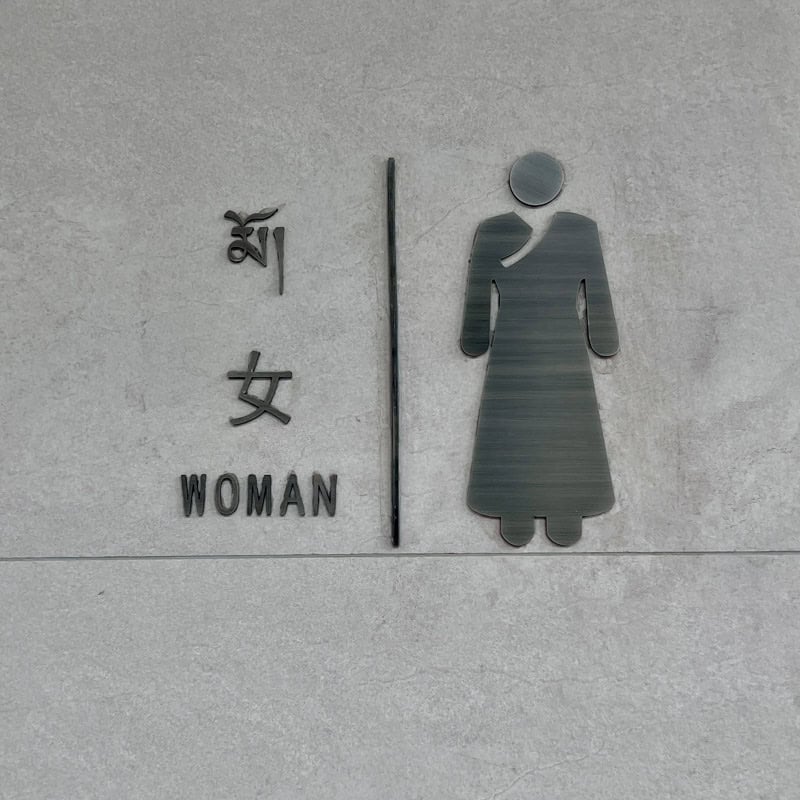
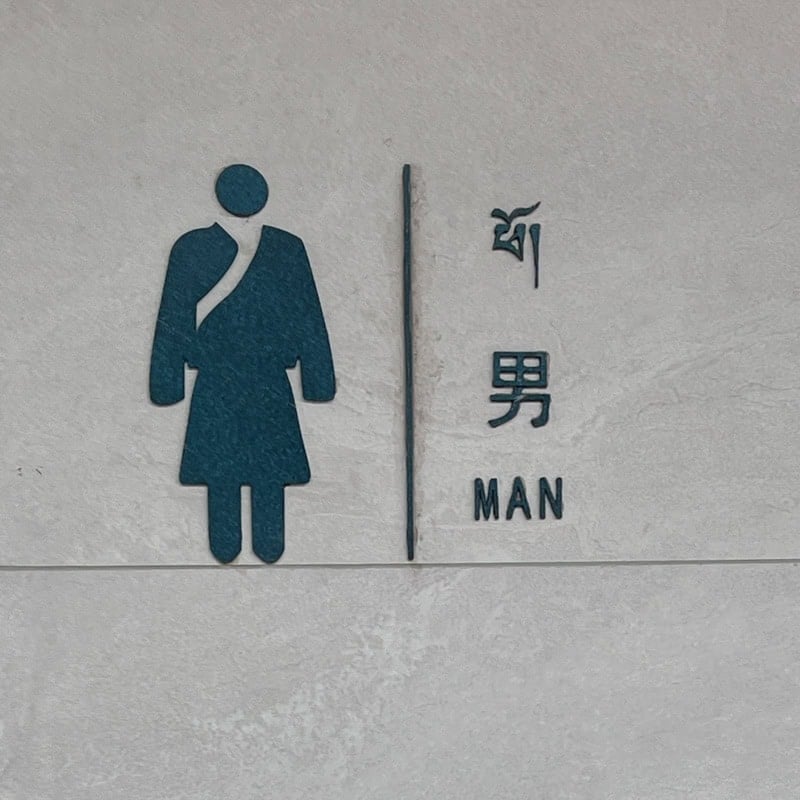
I’m going to be honest with you. The toilet situation in China can be a bit of an eye-opener, especially if you haven’t travelled much in Asia. We experienced a lot of them on our Tibetan Plateau roadtrip.
Most Chinese loos will be squat toilets, although some western-style loos are available in hotels, big shopping malls and top tourist attractions. If both types are available, there will be a sign on the cubical door showing which type it is.
Some loos will supply toilet paper, but most don’t. It’s safer to assume they won’t, and carry your own toilet paper or tissues and hand sanitiser or wipes. Remember that you can’t put toilet paper down the loo – it has to go in the bin next to the loo instead.
Finally, public toilets in China are not generally very clean, and the rural toilets are particularly bad. We found the ones in fuel stations to be the least bad option when you’re on the road.


Is China safe for tourists?
China is generally very safe for tourists with very little crime except for some petty crime in cities.
That’s probably because there are cameras running facial recognition everywhere, which acts as a very effective crime deterrent. However, as always, stay aware and take care of your belongings at tourist sites and in other busy places.
Don’t leave drinks unattended or accept drinks from strangers. Personal attacks and sexual assaults are rare, including spiking of drinks and women, travelling alone or with female friends, could be at higher risk.
I felt very safe during my time in China, even when out exploring on my own.
That completes my China travel guide for first timers. I hope you’ve found it useful and are feeling excited about planning your own adventure.
Now you know how to prepare for a trip to China, what you need to do before you travel and what to expect when you’re out there. It’s a fascinating country, and although the culture is very different, I hope these simple China travel tips help your trip run smoothly.
Pin it for later…




Suzanne Jones is a full-time travel blogger and writer at The Travelbunny which she started in 2011 during her time as a professional travel planner. Suzanne enjoys exploring new destinations, adventure and the outdoors. When not travelling you’ll most likely find her, camera in hand, enjoying coastal walks in Sussex.
Suzanne also runs Hello Sussex a website which showcases the best of East & West Sussex. Read more about Suzanne.
Nidm
Wednesday 29th of July 2026
This is such a helpful guide! Knowing these tips in advance can make any trip to China much smoother. 🇨🇳
Suzanne Jones
Thursday 30th of July 2026
Thank you, I'm glad you found them helpful
Bud
Wednesday 15th of April 2026
Don't rely on a filtered water bottle. There is significant risk from industrial chemical pollution in groundwater. Stick with bottled water.
Suzanne Jones
Wednesday 15th of April 2026
Hey, thanks for letting me know.