
India is a different kind of holiday. It’s not somewhere you go to switch off and it doesn’t gently ease you out of everyday life onto a palm-fringed beach, cocktail in hand. It does the exact opposite and pulls you straight into the pulsing heart of life re-energising and reawakening the senses.
Disclaimer: My trip to Delhi, Varanasi and Agra was in partnership with Explore. This post may contain affiliate links, which means that we may earn a small commission for qualifying purchases. As an Amazon Associate I earn from qualifying purchases. More info: disclosure.
With retirement ages rising and burnout arriving earlier, more people are choosing to take meaningful time out mid-career. My journey through India proved exactly why a micro-retirement energises and resets.
The sounds, the smells, the colour, the chaos are immediate. India wasn’t a relaxing beach break and not entirely restful. But it made me feel incredibly alive, energised and present.
Why take a Micro-Retirement?
My recent trip with Explore, as part of their new micro-retirement campaign, was built around the idea that we shouldn’t wait until retirement to take meaningful time off. With retirement ages shifting out later and burnout arriving sooner, I couldn’t agree more. I think the idea feels less like a luxury and more like common sense.
And I’m not alone. More and more people are considering extended time away from work in the form of a micro-retirement: a short sabbatical to focus on wellbeing, reconnect with themselves, experience new cultures and create lasting memories. But what does that actually look like?
In India, it was dawn on the Ganges, night trains, tuk tuks, family recipes shared and eaten together. From street food tours to temple visits, India offers cultural experiences that immerse you fully in daily life. Let’s start in Delhi.
Delhi: Street Food and Cultural Experiences
Day one and we’re thrust into the heart of Old Delhi and Chandni Chowk on a street food tour that’s sensory overload in every conceivable way.
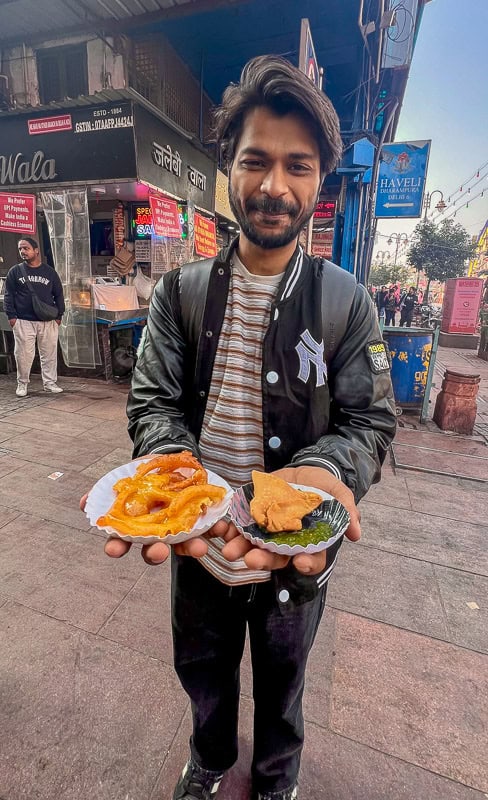
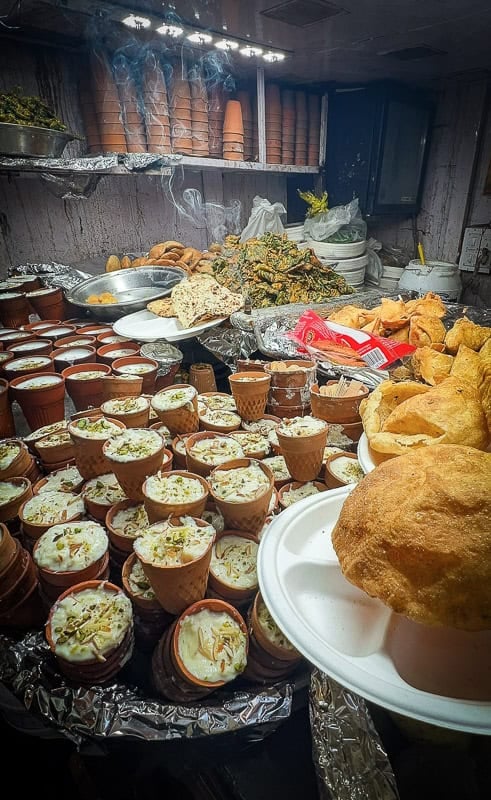
Chapatis flipped over open flames. Potato and cauliflower paratha with chutney. Sweet mango lassi. Syrupy jalebis still warm from the pan. A food tour through Old Delhi is pure, delicious chaos.
The narrow lanes buzz with life and the spice-laden air catches in your throat. Recipes passed down through generations are served on battered metal plates. There’s a constant backbeat of horns and voices. It’s loud, it’s messy and it’s completely energising.
Our Level of Spicy or Your Level of Spicy?
Every stop has a story. The food is authentic, local and deeply rooted in history. A question that lingers and still makes me smile is “Our level of spicy or your level of spicy?” Choose wisely.
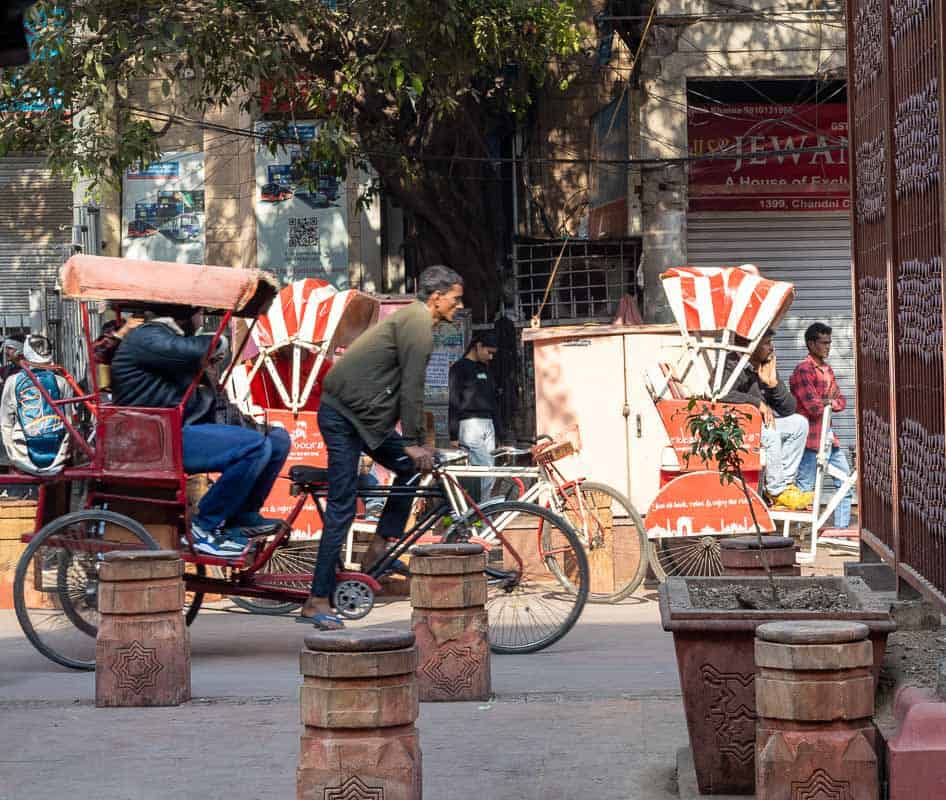
Between bites we visit Jain and Sikh temples, wander through Asia’s largest spice market, and slip down quiet alleyways where rickshaw drivers rest in the shade and hidden doorways open onto tranquil courtyards.
The Salaam Baalak Trust
Our guides, Nikki and Bobby, pepper the tour with fascinating snippets about Old Delhi’s food heritage. But it’s Bobby’s own story, of a childhood spent on Delhi’s streets, that adds a deeper layer to the day, and offers our first insight into the Explore Foundation.
The registered charity, run by Explore, supports initiatives in destinations their tours visit, focusing on education, healthcare, conservation and poverty alleviation. A small part of the cost of your booking with Explore automatically goes to the foundation which supports carefully chosen charities and organisations.
In Delhi, it supports The Salaam Baalak Trust, who provide care and opportunity to street children. The kind of support that helped Bobby rebuild his life.
It’s a powerful reminder that meaningful travel isn’t just about what you see, but about the people you meet and the positive impact your visit can have.
Delhi was intense, authentic and fully engaging. There was no space in my mind to think about work or anything else, I was totally immersed. And that is exactly what stepping away should feel like.
From Dawn to dusk on the Ganges
From Delhi we took the train to Varanasi, passing through towns and open countryside, witnessing life along the tracks as we went. The journey offered time to reflect on Delhi and the people we’d encountered. It also gave me time to ponder our visit to Varanasi the next day, one of Hinduism’s holiest cities, closely linked to Shiva, god of destruction and renewal.
Varanasi is intense and confronting, but also deeply human and spiritual. It has an energy unlike anywhere I’ve been before.
Sunrise on the Ganges
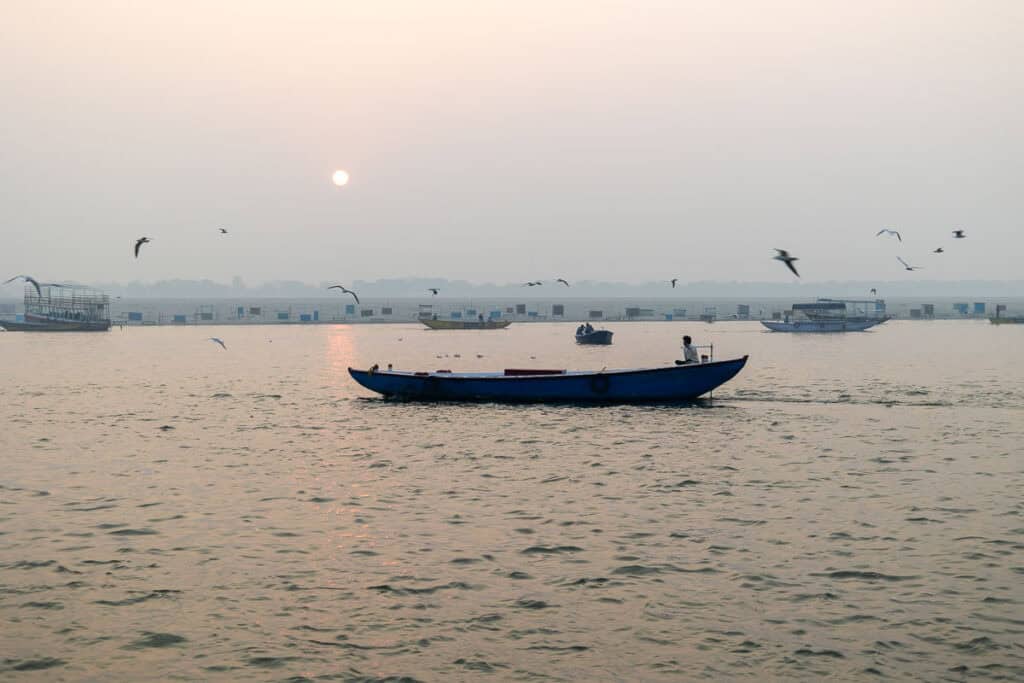
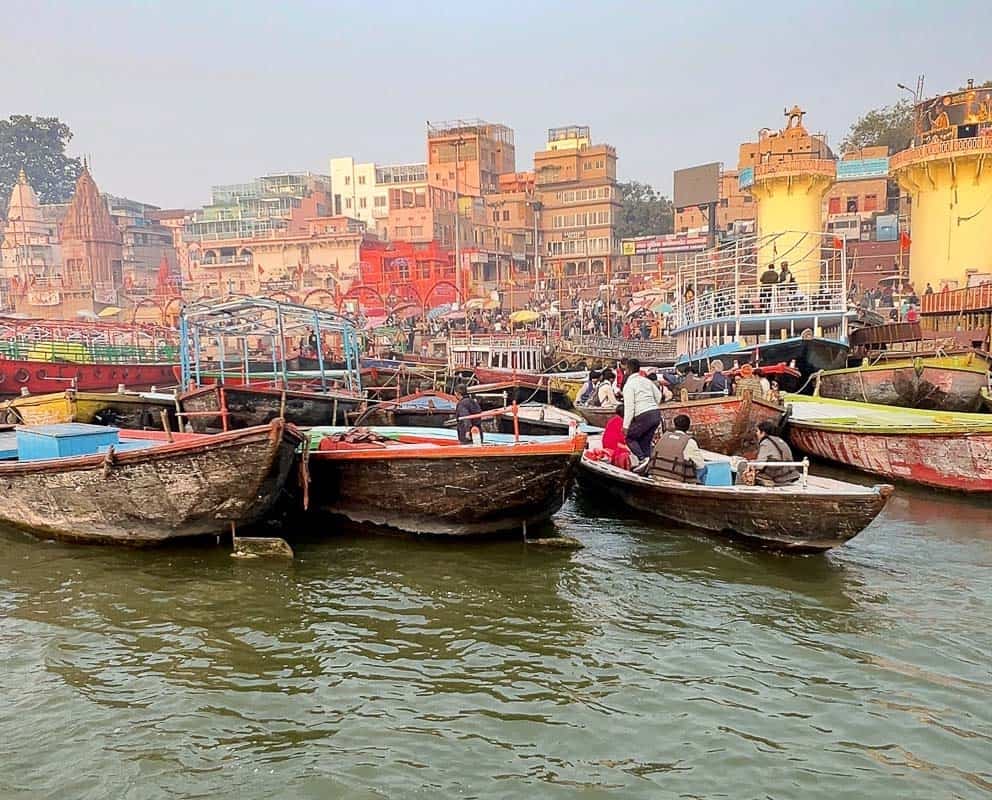
Gliding by boat along the ghats that line the Ganges, the city begins to stir. Gulls screech against the resonating sounds of sitar music floating on smoke-laden air. A sunrise boat trip on the Ganges in Varanasi offers us a glimpse into the spiritual heart of the city.
From the river we witness life in Varanasi much as it has been for centuries. Life and death, ritual and routine, devotion and daily duties unfolding side by side along the water’s edge. A moving, unforgettable experience.
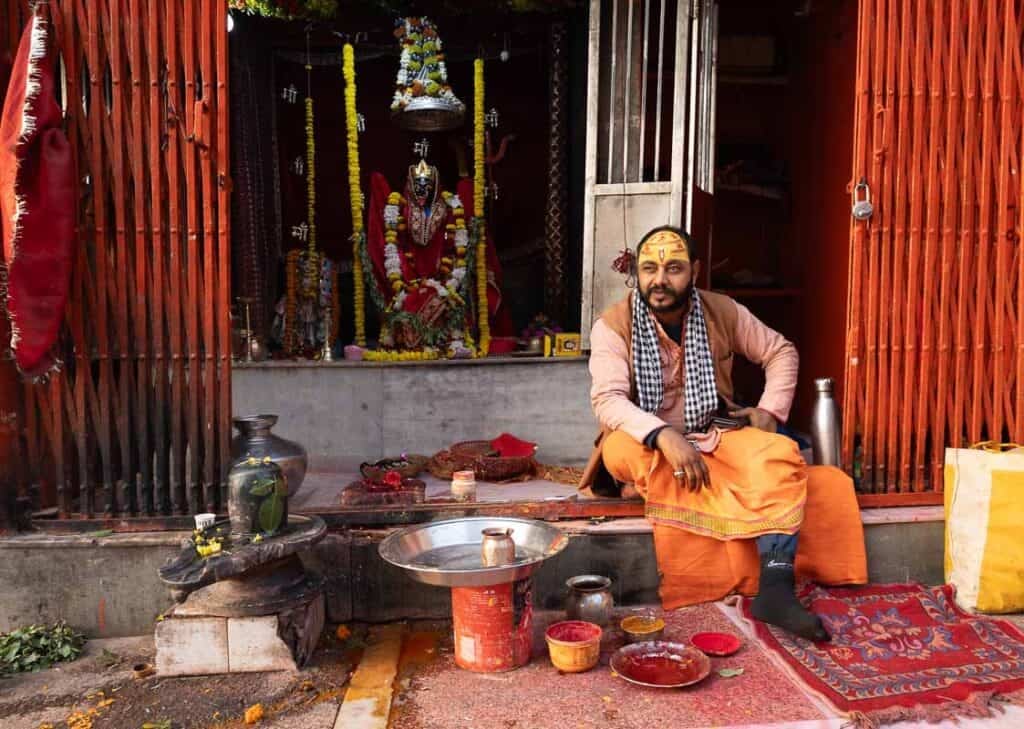
Pilgrims practising the puja ceremony step into the river to bathe, pray and make offerings as the first golden light touches the water. Bathing in Mother Ganges at sunrise is an act of devotion, a way to honour Shiva, cleanse the soul and begin the day blessed.
We make our own offerings too. As my small flickering tea light, encircled by flowers, drifts slowly away, I feel unexpectedly emotional.
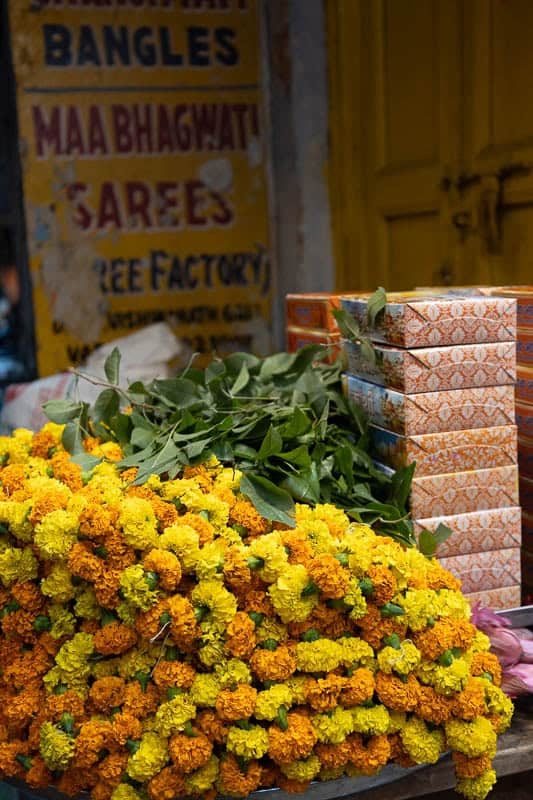
We walk back to town and wander through the narrow lanes and markets, lined with stalls selling orange and yellow mala (flower garlands), spices, street food, souvenirs and religious trinkets. Women in vibrant saris slip in and out of temples, stallholders call for attention and sleeping cows block alleyways.
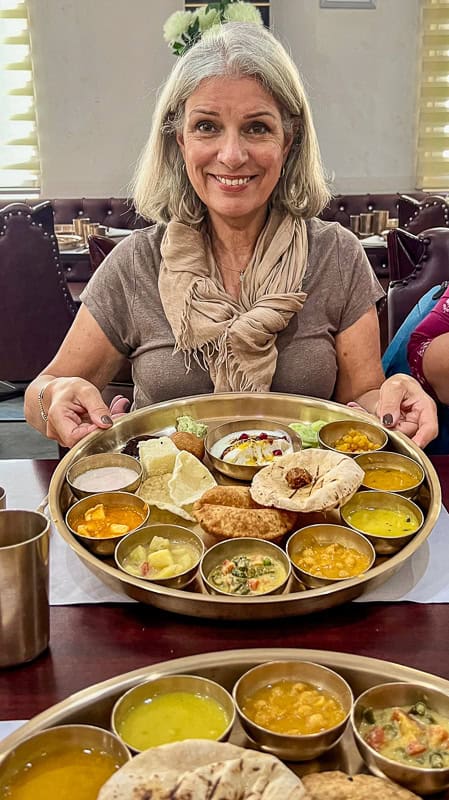
After a lunch of aromatic thali we visit the city’s ancient weaving colony, where artisans create some of India’s finest silk saris, their intricate designs telling stories in threads of silk.
Ganga Aarti
That evening we returned to the river for the Ganga Aarti, a nightly Hindu prayer ceremony honouring the sacred river.
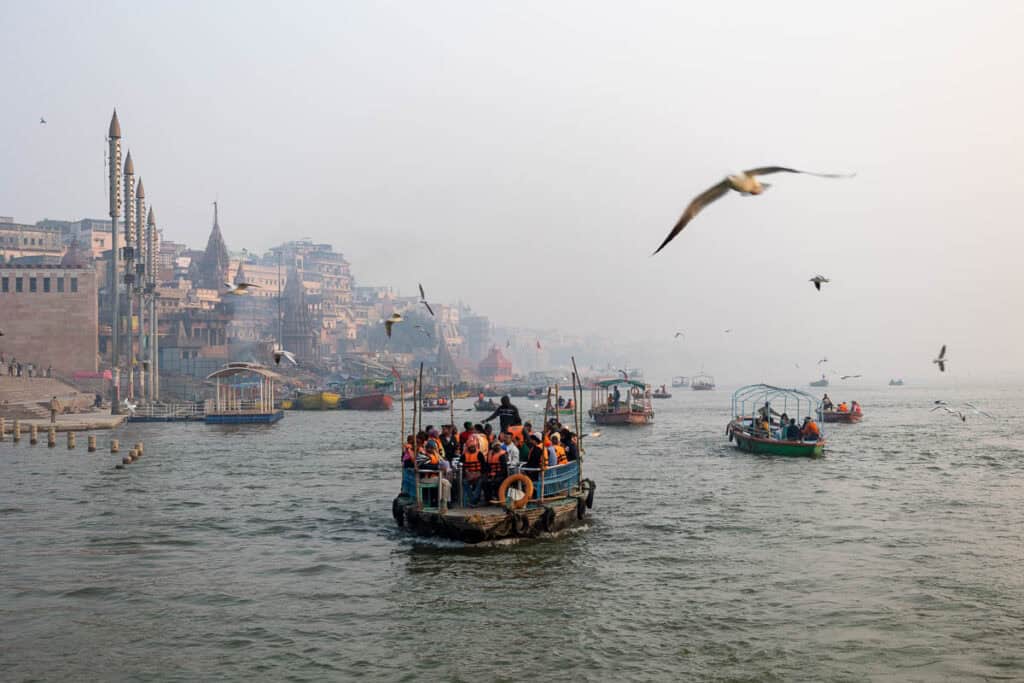
From our vantage point overlooking the ghats we sip aromatic chai and watch as thousands of pilgrims gather below us and boats packed with people assemble on the river beyond. The anticipation is palpable.
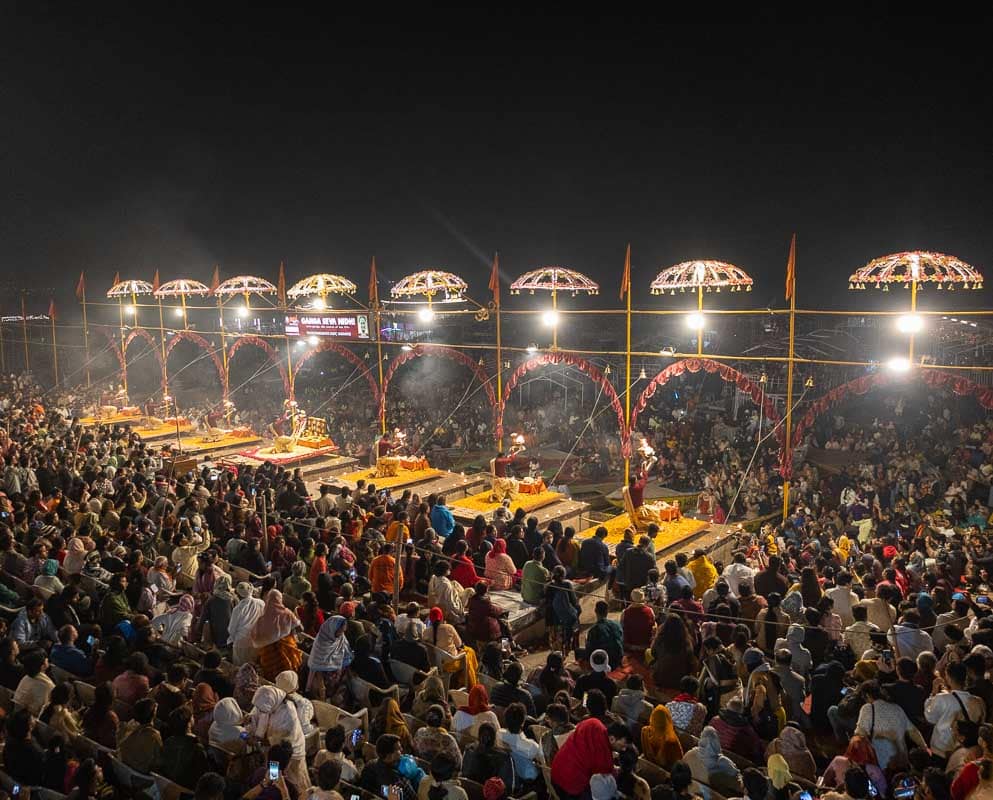
Incense drifts upwards from stalls below as aarti music and ghanta bells fill the air. The sound of conch shells spiralling through the night signals the beginning of the ceremony.
Priests dressed in maroon and saffron robes stand on flower-strewn platforms chanting rhythmic mantras. They lift large flaming lamps towards the night sky, sweeping them in slow arcs and patterns.
The crowd are entranced, some raising their hands to receive blessings. I’ve never experienced anything like it. The crowds. The devotion. The fire and the ritual. It’s life-affirming.
We leave before the ceremony ends in an attempt to beat the crowds, but the streets are already heaving. We climb into a cycle rickshaw and I perch sideways on the back seat, facing the traffic behind us.
Everyone seems to be looking back at me. A woman in an emerald green sari riding pillion on a moped catches my eye and smiles. A brief moment of connection in a sea of people.
Dinner and an Indian Sleeper Train
We returned to our hotel for dinner, everyone still buzzing after the intensity of the day. Over the meal we reflected on everything we had seen and experienced in a culture so different from our own.
Before long it was time to check out and head to the station, where we boarded a sleeper train bound for Agra. As the train pulled away from the platform, the ancient rituals and spirituality of Varanasi slowly faded behind us, the carriage rhythmically rocking me to sleep as we rattled into the darkness.
Not the best night’s sleep I’ve ever had but certainly not the worst either. And really, have you even been to India if you didn’t spend a night on a sleeper train?
Agra: Palaces, Forts and Sheroes Hangout
Agra is known for one of the most famous buildings in the world: The Taj Mahal.
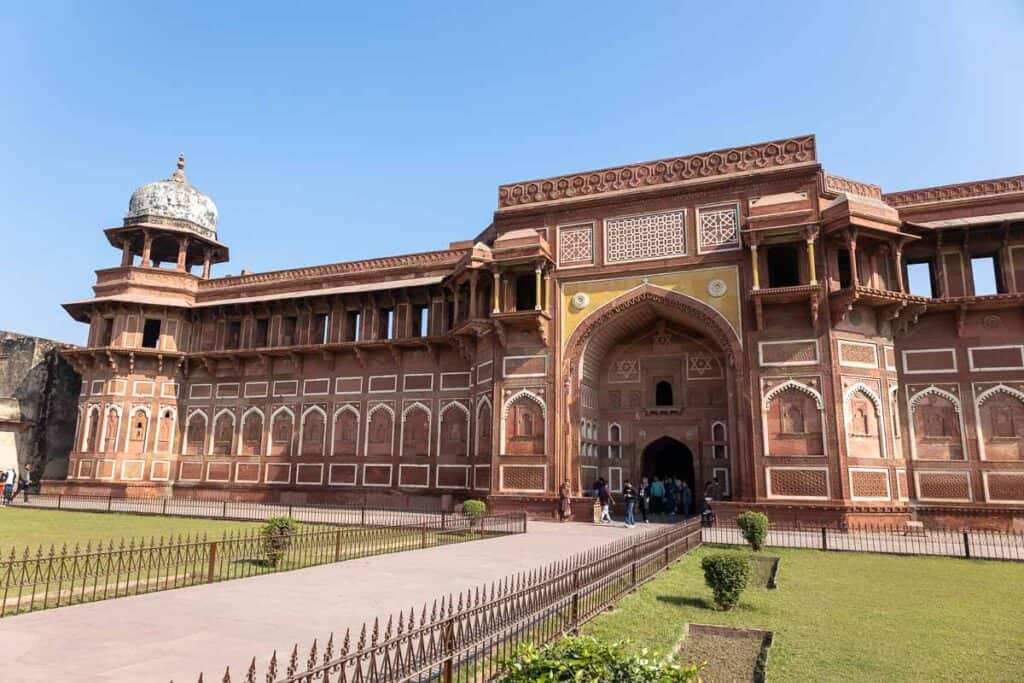
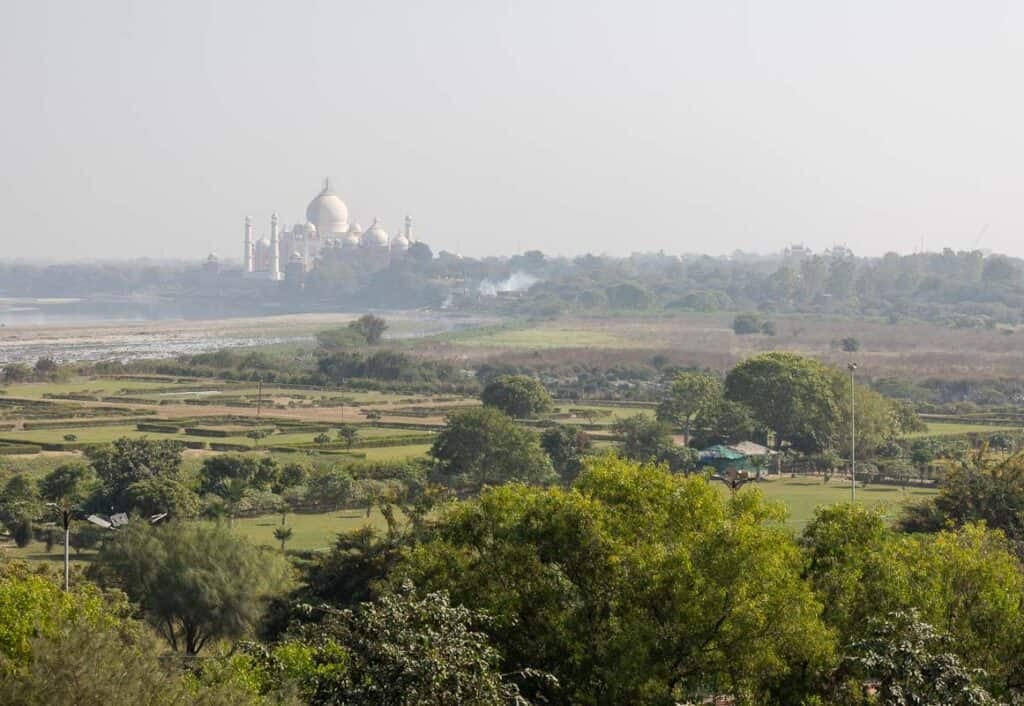
But our introduction to the city begins at Agra Fort, a vast sandstone complex that once served as the seat of Mughal power. From its red ramparts we catch our first distant glimpse of the Taj Mahal, shimmering pale in the morning light across the river.
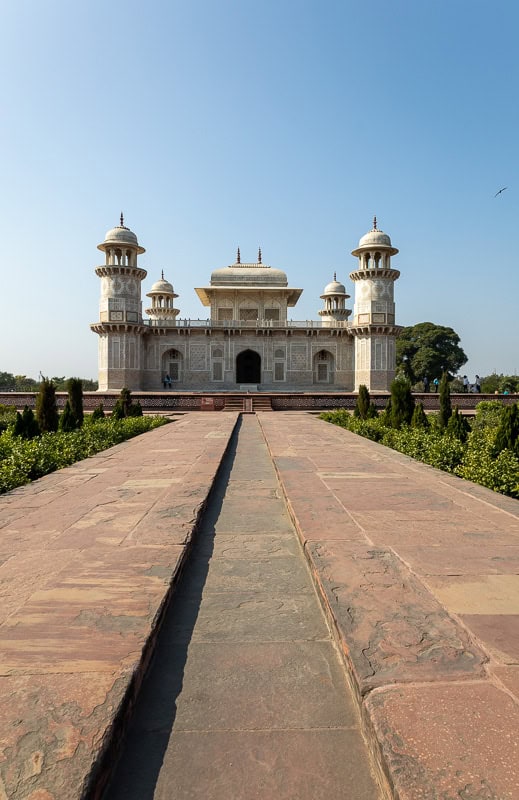
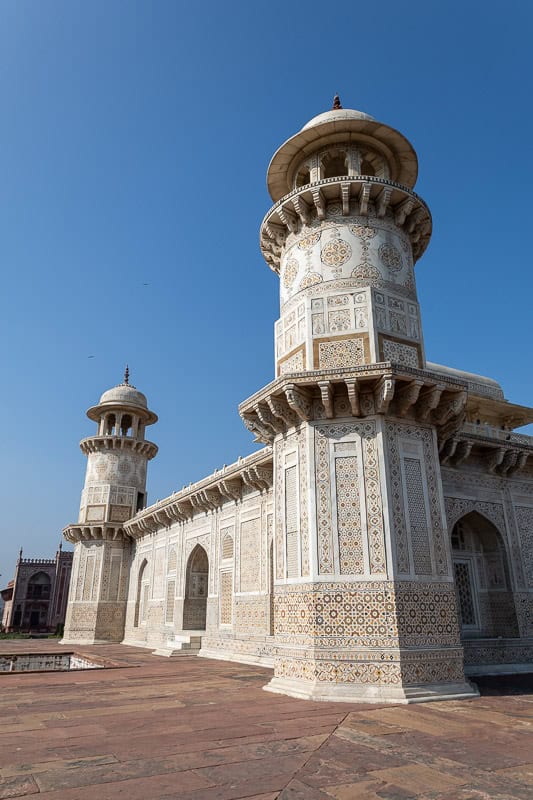
Our next stop is the Itimad-ud-Daulah tomb, often nicknamed the “Baby Taj”. Built in the 17th century and set within peaceful gardens beside the Yamuna River, its intricate marble inlay and delicate lattice work are actually more ornate than those of the Taj Mahal itself, just on a much smaller scale. And there’s barely anyone there.
The Taj Mahal
Then finally, after lunch, we see her properly. There are very few landmarks in the world that truly live up to their reputation. I think the Taj Mahal is one of them.
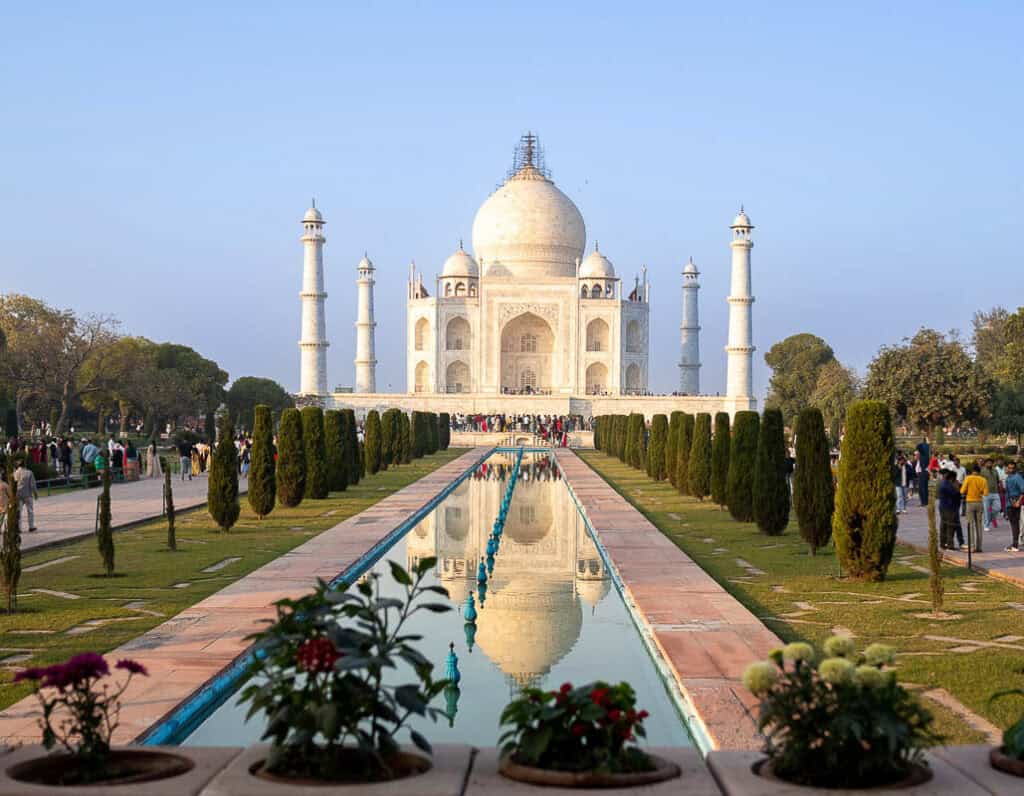
Standing before the white marble mausoleum at sunset, watching its colour shift from warm ivory to soft pink as the light fades, it’s easy to understand why this monument to love has captivated travellers for centuries. It’s breathtaking.
But Agra offered more than just one of the world’s New Seven Wonders.
Sheroes Hangout
One of the most memorable experiences of the day was lunch at Sheroes Hangout, one of four social enterprise cafés run by survivors of acid attacks. The café provides employment, independence, and a platform for women whose lives have been dramatically altered by violence.
The women are warm and welcoming, the vegetarian food is delicious, and their resilience is inspiring. After lunch they share some of their personal stories as they create intricate henna designs on our hands. We buy some of the handicrafts on sale and learn about the steps India is taking to combat these attacks.
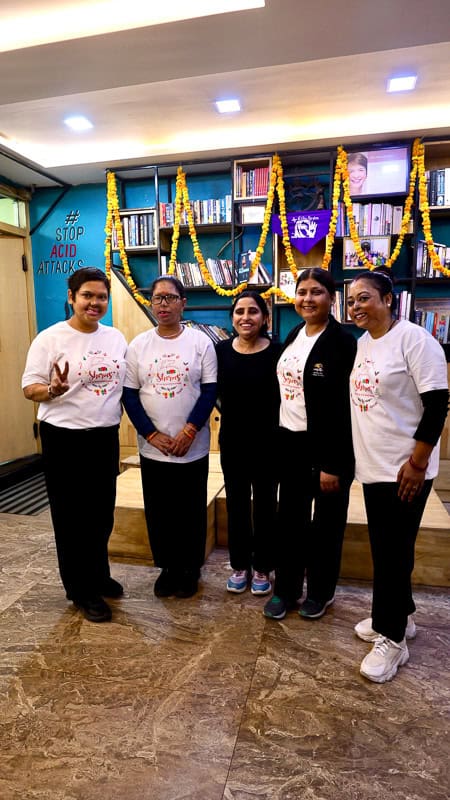
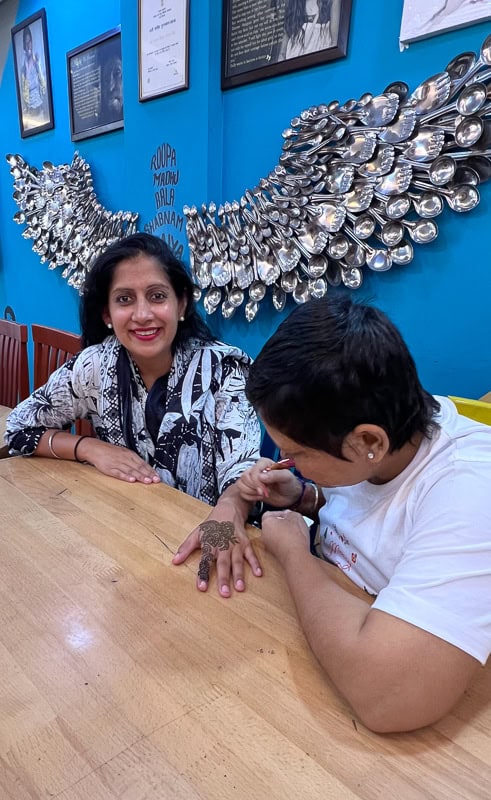
The café is another initiative supported by the Explore Foundation, reinforcing the idea that travel can contribute positively to the communities we visit. Responsible travel in India means supporting initiatives that benefit local communities.
That evening we headed to a local home for a cooking class where family recipes are shared. Under the watchful eye of the family matriarch, spices are toasted, chapatis rolled and stories exchanged as we help prepare a traditional meal and enjoy eating it around the kitchen table.
Meaningful Travel Experiences
These kinds of meaningful travel experiences transform a trip from sightseeing into something far deeper.
Today was a reminder that travel isn’t just about seeing beautiful places, it’s also about connecting with the people who live there. Experiences like this slow you down. They pull you out of the rhythm of work and routine and place you fully in the moment.
I’ve cooked the paneer curry twice since returning home, and each time it takes me straight back to that family kitchen in Agra.
An Elephant Encounter
It’s our final day and after breakfast, we travel back to Delhi by minibus. But we have an important stop enroute.
Just outside the city we visit the Wildlife SOS Elephant Conservation and Care Centre, a sanctuary, established in 1995, that rescues and rehabilitates elephants that have been exploited in tourism, manual labour or forced into street begging.
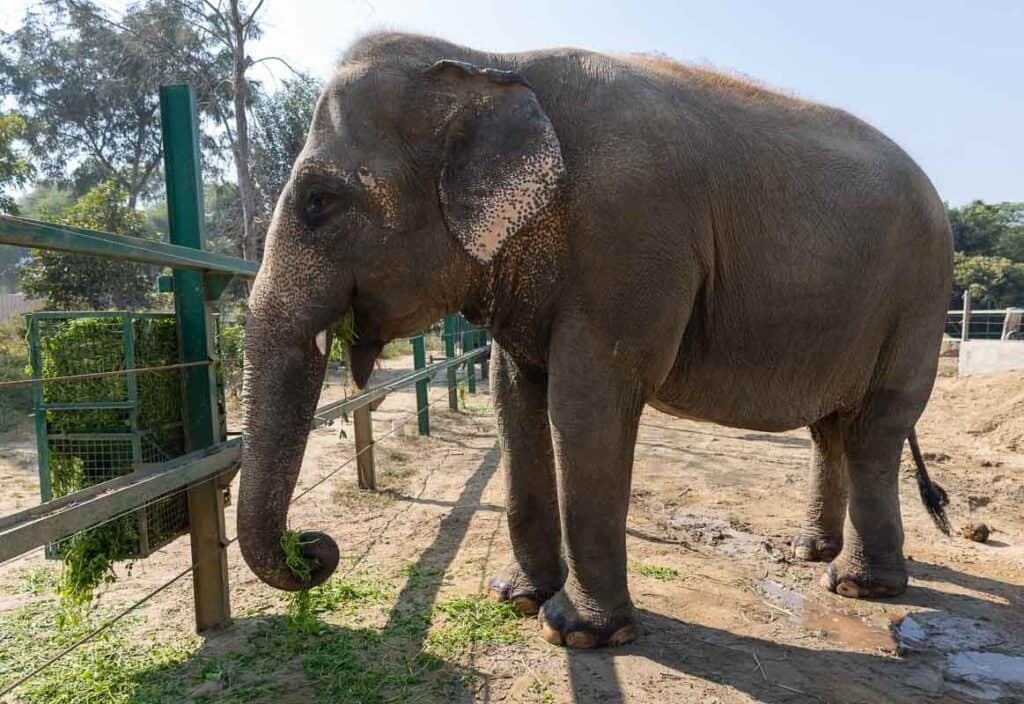
For many years, elephants in parts of India were used to entertain tourists or earn money on the streets. Sadly, many still do. Wildlife SOS works to rescue some of these animals and give them a safe environment where they can recover physically and psychologically. Wildlife SOS is another non-profit organisation supported by the Explore Foundation.
In keeping with Explore’s Animal Welfare Policy, we kept a respectful distance as we learned about some of the 20 elephants who now live there, Laxmi, Tara and Emma among them, each with their own story.
Many arrived underweight, injured or traumatised after years of mistreatment. It was incredibly sad to see the injuries they’re suffering from. Although some of the elephants will never fully recover, at least they can now roam in spacious enclosures, socialise with other elephants and receive the veterinary care they need.
It’s a moving experience, and another reminder that travel has the power to support positive change when done responsibly. There was a hush in the minibus on the way back to Delhi as we pondered all that we’d seen and heard at the sanctuary.
Delhi and a Farewell Dinner
We arrived back at our Delhi hotel with just enough time to change before our farewell dinner. When I stepped into my room, I discovered a neatly wrapped parcel waiting on the bed, inside a beautiful sari in shimmering gold fabric.

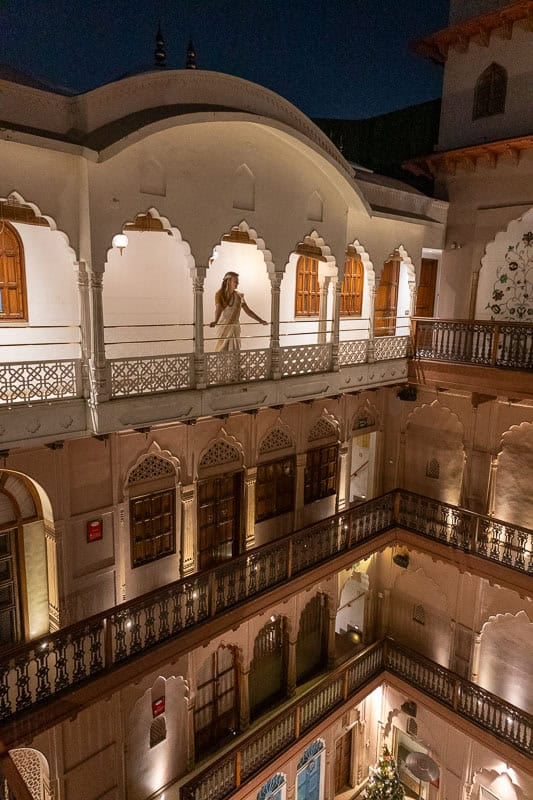
I’ve never worn a sari before, and neither had most of the group, so we gathered in one of the rooms for help with dressing. There’s far more fabric involved than you might expect, and there’s no way I would have managed to drape it properly on my own. With a little guidance, and a lot of laughter, we got there. The men in our group wore traditional kurta pyjama. Together we made quite a colourful sight.
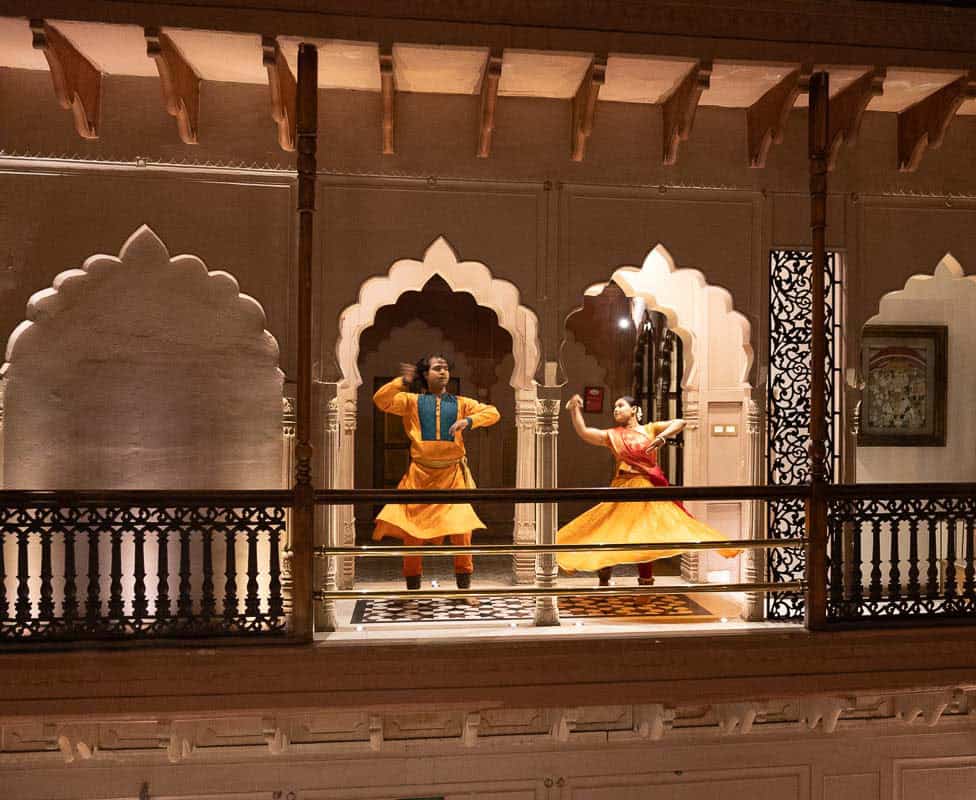
Our final evening was spent at the beautifully restored Haveli Dharampura, tucked away in the narrow lanes of Old Delhi. Dressed in our finery, we gathered for a farewell dinner, sharing stories from our journey and reflecting on a trip that had been intense, eye-opening and deeply memorable.
Why a Micro-Retirement Works
India didn’t offer rest in the traditional sense. There were early starts, night trains, crowds and sensory overload. A micro-retirement in India isn’t about escaping work, or flopping and dropping. It’s about stepping away long enough to return home with perspective.
Travel like this needs you to be present. It pulls you into the moment and reminds you how much there is to see, learn and experience beyond the familiarity of home. It’s not about escaping life for a while, but more about stepping outside of it long enough to return with a clearer view of it, especially for those who feel stuck between careers, commitments, and an ever-moving retirement goal.
And sometimes it’s the smallest moments that stay with us; sunrise on the Ganges, a kitchen in Agra, or a smile shared in the chaos of traffic.
About Explore
Launched in 1981, Explore, a B-Corp company, leads small group adventure holidays offering over 350 tours in around 100 countries. Their authentic travel experiences explore the sights and culture of a country, with hand-picked accommodation that balances comfort and location. The average group tour size is 11. Expert local guides take the hassle out of travel and bring unique richness and spontaneity to every tour.
Explore offers a sustainable approach and is committed to reducing impact on the planet and working towards a sustainable future. Each trip has a carbon label, and ensures a positive impact on the communities visited.
Have you considered a micro-retirement? Share your thoughts in the comments below, I’d love to hear your views.


Suzanne Jones is a full-time travel blogger and writer at The Travelbunny which she started in 2011 during her time as a professional travel planner. Suzanne enjoys exploring new destinations, adventure and the outdoors. When not travelling you’ll most likely find her, camera in hand, enjoying coastal walks in Sussex.
Suzanne also runs Hello Sussex a website which showcases the best of East & West Sussex. Read more about Suzanne.
sdivyashree
Monday 20th of July 2026
This was a truly thought-provoking read. I appreciate how you presented micro-retirement as a well-planned lifestyle choice rather than just an extended vacation. The emphasis on intentional planning, financial preparedness, and making time for meaningful experiences offers readers a fresh perspective on balancing work and personal aspirations. It's encouraging to see such a practical discussion on a topic that is becoming increasingly relevant. Thank you for sharing your insights and inspiring readers to think differently about work, travel, and life planning. Regards, Divya
Christina | Christina's Cucina
Thursday 30th of April 2026
What an experience! I'm all for a micro-retirement in India, having never hear this term before, I just love it! I've also never been to India and cannot wait until I can visit! You look wonderful in the sari, btw! Thanks for the in depth article about your incredible trip!
Suzanne Jones
Monday 4th of May 2026
With retirement pushing further out it makes sense to take a mini retirement and India was the perfect place to do it. This trip made me feel so alive!