
Fed up with the high costs of data roaming when you’re travelling overseas? Me too, especially as I used to have free roaming with my provider until they started charging for it. And they charge a lot. eSIM is the answer.
But what is an eSIM and how do they work. Read on for everything you need to know about choosing an eSIM for your travels.


This post may contain affiliate links, which means that we may earn a small commission for qualifying purchases. As an Amazon Associate I earn from qualifying purchases. More info: disclosure.
I remember flying into Dubai a few years back without turning off data roaming or logging into the airport’s free WIFI. Before I’d even left the airport I’d racked up £39 worth of roaming fees. In less than an hour. I wish I’d known about eSIMs back then. Now I use Orbit eSIM for travel and it’s so much cheaper.
What Is an eSIM and Why Should You Use It?
An eSIM is a digital, embedded SIM card that lets you connect to mobile networks without needing a physical SIM. It’s built directly into your device, so you can download data plans and switch networks with just a few taps. I’ve relied on eSIMs to avoid roaming fees and stay connected in places like India, China and Europe. If you travel internationally, want multiple numbers, or just want a faster, easier mobile setup, eSIMs are a total game-changer.
As wonderful as international travel is, one of the downsides is the high cost of keeping in touch. Whether you’re using messaging apps like WhatsApp to contact family at home or using navigation and translation apps to find your way around your destination, the roaming fees and high mobile data costs add up pretty quickly.
However, there is a quick and easy way to get around this problem. eSIMs are a digital alternative to the plastic SIM cards we’re all familiar with. They make it easy to switch between mobile phone carriers, so you can take advantage of lower-cost plans from local carriers.
I’ve used eSIMs for over a year now, including when travelling in India to avoid the roaming charges on my normal mobile phone plan. An eSIM was also essential for visiting China, where using WiFi is impossible without a local number. This guide will explain all you need to know about eSIM technology and help you choose the best eSIM for your needs.
I’ve been using the Orbit eSIM since November 2025. I’ve purchased and used packages for Morocco, India, Spain, Greece and Turkey. I’ll be using an Orbit eSIM again next week on my trip to France. Get your Orbit eSIM here and quote TB20 for a 20% discount.
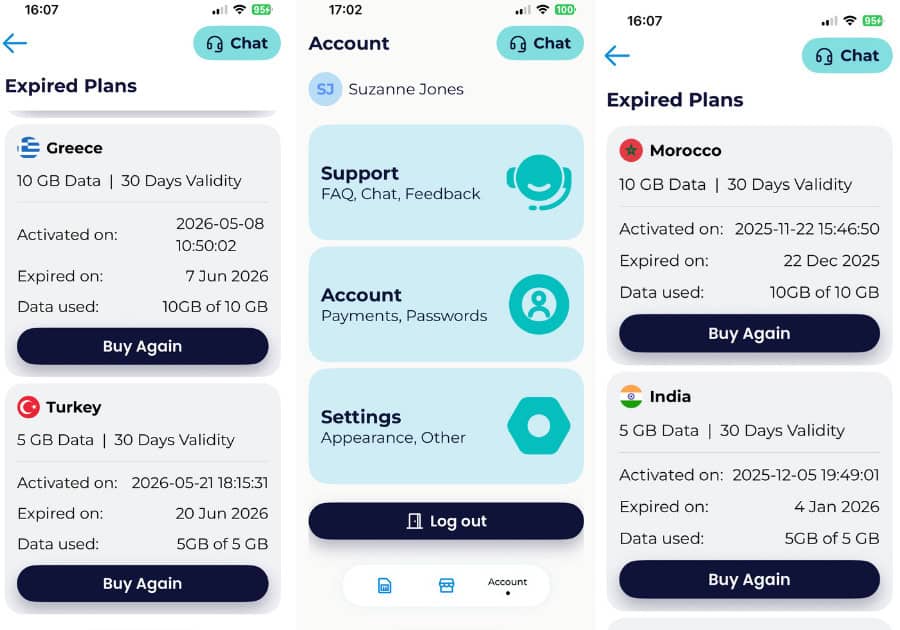
Some of the eSIM packages I’ve bought with Orbit. Just to show you I’m happy to repeat buy!
What is an eSIM?
eSIMs and physical SIM cards are two different ways to connect your device to a data network.
SIM stands for Subscriber Identity Module, and a physical SIM card is a plastic card that contains a tiny chip. Once inserted into your mobile phone or device, it lets you connect to a mobile phone network for calls, texts and internet services.
eSIM is short for Embedded SIM, and it’s a digital SIM card built into your phone’s hardware. The reprogrammable chip in your phone stores the information that allows you to access wireless data services, and most modern phones can store more than one eSIM.
eSIMs are also found in tablets, drones, smart watches and other smart devices.
Get your Orbit eSIM here and quote TB20 for a 20% discount.
How Do eSIMs Work?
You’re probably used to installing a standard SIM card when you get a new phone or switch to a new mobile carrier. These days, most newer phones have switched to eSIM, so now you can simply download the eSIM software to your phone and activate the service.
Once the virtual SIM card has been activated, you can call, text and use data on your phone as usual.
If you’ve already got a traditional SIM card in your phone, there’s no need to take it out when you want to switch to an eSIM. This makes things easier when you’re travelling overseas or switching between mobile network operators.
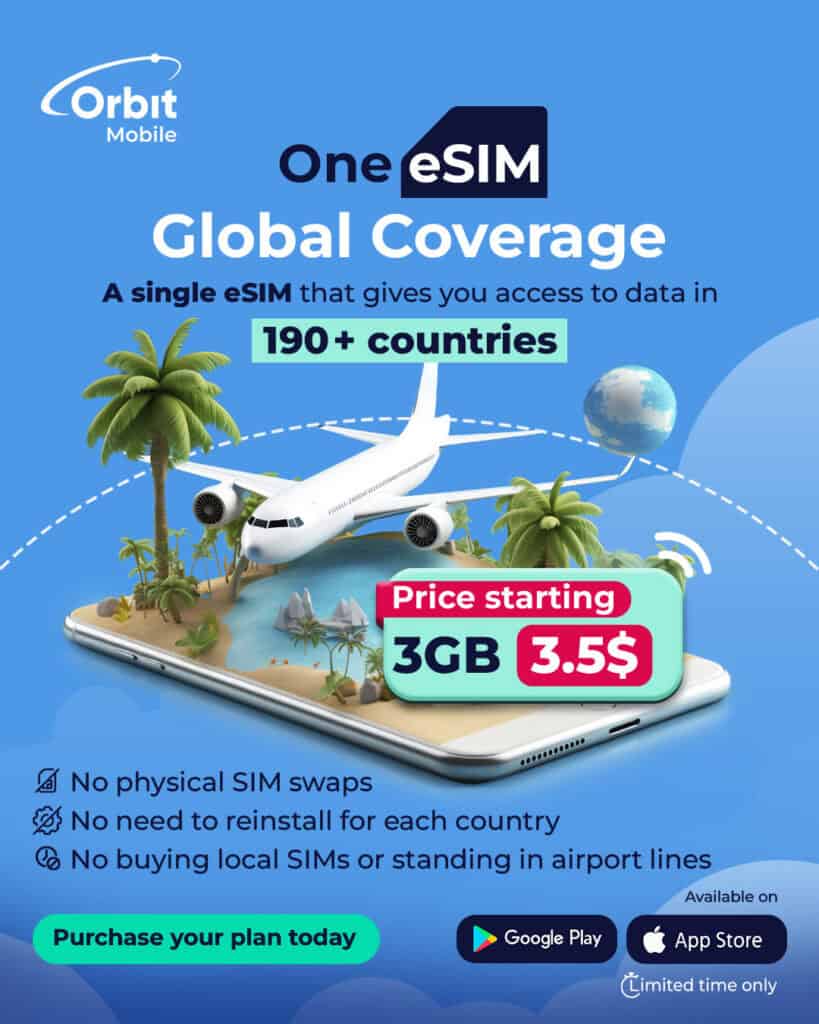
What is an eSIM and its benefits?
There are plenty of eSIM benefits, including easy setup and greater flexibility compared to physical SIM cards.
Easy Setup
There’s no need to travel to a mobile phone store to collect your new SIM card or wait for a physical card to arrive in the post. You simply download the eSIM and activate the plan over WiFi. This also makes switching between networks easier.
Setting up or switching to your eSIM takes moments, and you can manage your WiFi access easily online.
Multiple Phone Lines
eSIMs also make it easy to use multiple phone numbers without the cost of a separate handset. For instance, you might want to access both your work phone number and a personal number on a single device.
No Unexpected Roaming Fees
One of the biggest eSIM benefits is the reduced cost of getting online abroad. Roaming fees on your usual mobile plan can add up quickly when you’re travelling internationally. Remember Dubai?
By using data through your eSIM, you will get exactly the amount of data you have paid for, without any nasty surprises on your next bill. If you run out of data on an extended trip, you can simply top up again.
Travelling Soon? Stay connected with Orbit Mobile Travel eSIM quote TB20 for a 20% discount.
Improved Security
Physical SIMs can easily be removed from a stolen phone, but an eSIM can’t be disabled or removed by a thief. This means tracing a stolen phone is easier if it has an active eSIM profile.
Many eSIMs have SIM protection to stop the number from being swapped to another phone, so it can’t be used for fraud. Your eSIM service provider can also suspend your eSIM remotely if your phone gets lost or stolen.
What Are the Disadvantages of Using an eSIM?
An eSIM might not be the best choice for every situation. If you want to use the same mobile line over multiple phones or devices, swapping physical SIM cards can be quicker than deactivating and reactivating an eSIM each time.
If your phone gets damaged, it will also take longer to swap your eSIM to a new device than moving your physical SIM over.
But in most cases, an eSIM usually works out to be more convenient and practical than traditional physical SIM cards.
eSIM vs Physical SIM: Which Is Better?
eSIMs offer more flexibility and security, while physical SIMs can be easier for device-swapping and quick changes. For most travellers and users who need multiple plans, eSIMs are now the more convenient option.
Here’s a quick way to think about it:
Choose an eSIM if you travel internationally, want multiple numbers on one device, or want the convenience of switching plans without visiting a store.
Stick with a physical SIM if you regularly move your number between different devices, or if your phone doesn’t support eSIM.
For the vast majority of people, though, especially frequent travellers, eSIMs are the clear winner. The ability to download a new plan in minutes, without hunting for a SIM card vendor at the airport, is hard to beat.
Travelling Soon? Stay connected with Orbit Mobile Travel eSIM quote TB20 for a 20% discount.
How Much Do eSIMs Cost?
The cost of an eSIM depends on your provider, the amount of data and call time you need, and the region you’re buying it for. Travel eSIMs are often available for as little as a few dollars for short-term data packages, while long-term or global plans will naturally run higher.
It’s a good idea to shop around and compare before you buy, as prices can vary significantly by country and carrier. A regional eSIM for a week in Europe might cost around $5-$15, while a global eSIM covering dozens of countries could run $30 or more depending on your data needs.
If you’re on an extended trip, look out for providers that let you top up easily, that way you’re never paying for more data than you actually use.
I use my phone quite a lot when I travel to post to social media and check emails. I find that 10GB with my Orbit eSIM is enough for a week’s usage in Europe. If you’re not sure how much data you’ll need then buy 5GB and then top up if you need to, although you’ll save money by buying the right amount first go.
Does an eSIM Give You a Phone Number?
Yes, an eSIM gives you a phone number from the network you activate it with, exactly the same as a traditional SIM card. You can use one number per eSIM profile, and on most modern devices, you can run multiple eSIM profiles alongside your regular SIM.
This is particularly useful if you want a local number while travelling. It means apps, services and contacts in your destination country can reach you on a local number, while your home number stays active on the same device for family and friends back home.
Travelling Soon? Stay connected with Orbit Mobile Travel eSIM.
Who Are eSIMs For?
Most eSIMs are bought for travel by holidaymakers or digital nomads. Whether you’re hopping over to Europe for a city break or exploring far-off destinations like Egypt or Morocco, eSIMs are an affordable way to stay online.
If you’re travelling long-term, you might need to renew your eSIM plan. Travellers on a multi-country trip might find a global plan works out as better value, as it lets you connect to carriers in multiple destinations.
eSIMs are also useful for international students who want to stay in touch with family and friends back home. If your job involves frequent travel, such as flight attendants or cruise ship crew, an eSIM removes the need to use different local SIMs in each destination.
Some people even use eSIMs at home as a flexible data plan. It can be handy to have as a backup when your local network goes down or in areas of patchy coverage.
Travelling Soon? Stay connected with Orbit Mobile Travel eSIM quote TB20 for a 20% discount.
How to Install and Use an eSIM
Installing an eSIM on a compatible device only takes a few minutes. Before you start, make sure your phone’s software is up-to-date and that it’s connected to the internet via WiFi.
You’ll need to select the option in your device settings to add a new network, and then scan the QR code provided by your eSIM carrier. Follow the on-screen instructions, and you’ll soon have your new eSIM up and running.
You can install the eSIM at home, but check when the plan will activate before you start the process. Some eSIM data plans activate as soon as you install them, and this could mean your data period runs out before the end of your trip.
If you’re unsure, only install the eSIM just before you travel and ideally activate the plan once you arrive in your destination country. Once activated, you can switch carriers with just a few taps.
Is My Phone eSIM Compatible?
Most newer models of premium mobile phones support eSIM. If you’ve purchased your phone since 2018, there’s a good chance that it’s eSIM compatible.
You can easily check if your phone is eSIM compatible by dialling *#06# on your keypad. Several barcodes will appear on-screen, and if one of those is an EID number, your phone supports eSIMs. This works on both iPhone and Android devices.
What Is a Global eSIM?
A global eSIM uses the same technology as the eSIMs discussed above. However, normal eSIMs usually only cover one country, whereas a global eSIM offers coverage across multiple countries or even continents.
This means you can purchase one eSIM, install it on your phone or mobile device and connect to the local network whenever you enter a new country. If you’re a frequent traveller who often visits different countries, a global eSIM gives you the freedom to use multiple carriers without having to swap your SIM card or purchase a new plan at every border.

Do eSIMs Have a Better Signal?
eSIMs connect to the same mobile network as a traditional SIM card, so there’s no difference in signal strength or data speed. These will depend on your location and carrier, as well as the mobile phone you are using.
Can Travel eSIMs Offer High-Speed Data in Remote Areas?
eSIMs may offer high-speed 4G/5G data in rural and remote regions. However, the speed and coverage depend on the local carrier. In very remote areas, you may find that coverage is patchy and download speeds are low.
If you’re planning to travel to remote rural regions, it’s a good idea to check the coverage map from your eSIM provider before making a purchase.
When I was travelling in remote areas in China I used an Airalo eSIM, and in some remote places I had no signal for days. My travel companion used this eSIM from Trip.com, which was cheaper than mine and had excellent coverage.
Travelling Soon? Stay connected with Orbit Mobile Travel eSIM quote TB20 for a 20% discount.
Are eSIMs Better for the Environment?
Using an eSIM instead of physical SIMs is also better for the environment as it removes the need for plastic and metal SIM cards. It also helps stop millions of SIM cards ending up in landfill sites.
As well as reducing waste, this also means less energy spent on manufacturing the SIM and fewer carbon emissions caused by shipping. It’s a small change, but across billions of devices worldwide, it adds up to a meaningful difference.
Key Takeaways
- eSIMs are digital, embedded SIM cards built directly into your device hardware, no plastic card required.
- Install and activate directly by scanning a QR code or entering an activation code in your settings.
- Costs and plans vary by region and carrier, with travel eSIMs starting from just a few dollars for short-term packages.
- Many devices support both eSIM and a physical SIM at the same time, so you don’t have to choose one or the other.
- eSIMs make switching plans easier for travellers, letting you move between carriers and countries with just a few taps.
- Most phones purchased since 2018 are eSIM compatible, check by dialling *#06# and looking for an EID number.
- eSIMs are more secure than physical SIMs, they can’t be removed from a stolen device, and many support remote suspension.
Are you ready to try an eSIM?
Overall, eSIMs are a real game-changer for international travellers. This digital version of a SIM card offers a quick and convenient way to access web services overseas and helps you avoid costly roaming charges on your holiday or work trip.
Whether you’re travelling abroad, switching mobile phone providers, or want to run more than one phone number on your device, an eSIM is the easy way to stay online. I’ve found them indispensable, from navigating the streets of Delhi to staying connected in Morocco, and once you’ve made the switch, it’s hard to imagine going back to fumbling with tiny plastic cards.
Travelling Soon? Stay connected with Orbit Mobile Travel eSIM quote TB20 for a 20% discount.


Suzanne Jones is a full-time travel blogger and writer at The Travelbunny which she started in 2011 during her time as a professional travel planner. Suzanne enjoys exploring new destinations, adventure and the outdoors. When not travelling you’ll most likely find her, camera in hand, enjoying coastal walks in Sussex.
Suzanne also runs Hello Sussex a website which showcases the best of East & West Sussex. Read more about Suzanne.