
The second week of our China road trip with Eastogo Travel took us deeper into the high-altitude landscapes of the China Tibetan Plateau, where roads blur into infinity, the pace slows and Tibetan culture continues to intrigue.

Disclaimer: This post is in collaboration with Eastogo Travel. As always, the opinions, thoughts and experiences below are entirely my own. This post may contain affiliate links, which means that we may earn a small commission for qualifying purchases. More info: disclosure.
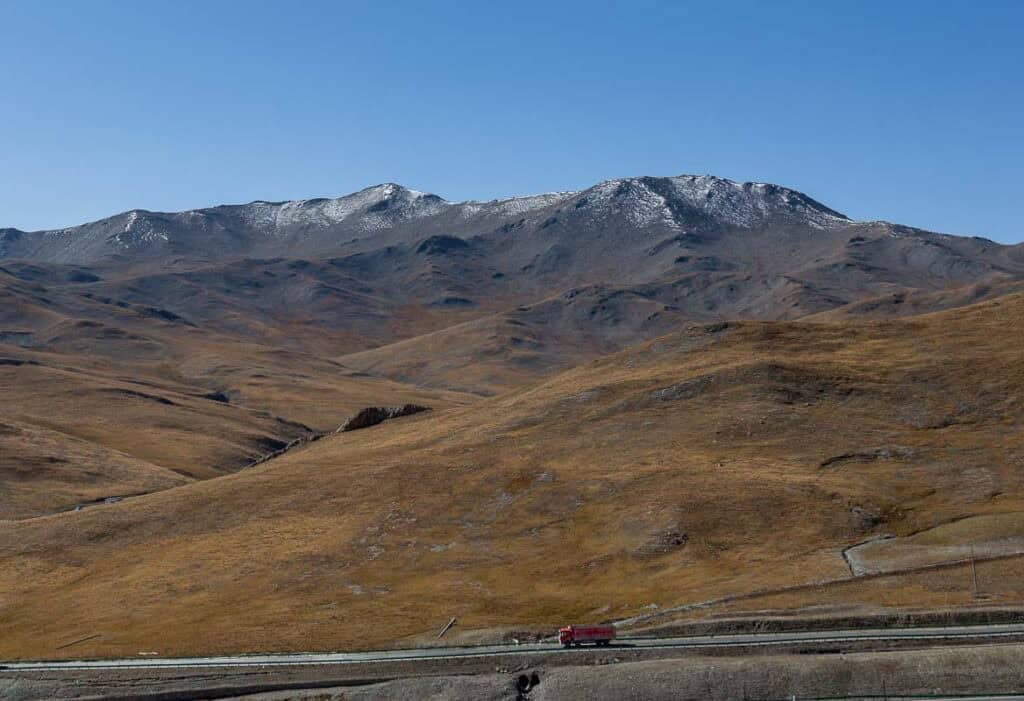
Ending our time in western Sichuan, we crossed into Qinghai Province, journeying across the spectacular Qinghai Tibetan Plateau. Virtually all of Qinghai Province lies within the Tibetan Plateau, one of the most remote and lesser known regions of China.
This part of our trip felt more expansive, with long days on the road framed by endless plains, mountain passes and remote monasteries perched in the hills.
Travel became slower, regulated by altitude, terrain and stops for wildlife spotting. We visited monasteries, temples, Dege Parkhang Sutri-Print House and Jiana mani stone city, learning more about Tibetan culture, customs and daily life. We travelled through areas that see very few international visitors.
Catch up on week one of our China road trip here where you’ll find some background info on the Tibetan Plateau in China and more about Eastogo Travel the company we travelled with.

Week two of our China road trip was about immersion, perspective and travelling slowly through one of the most off the beaten track regions in the China Tibetan Plateau.
Week two of our China Itinerary
Baiyu – Sichuan
Day 8 Baiyu → Zhuqing Monastery → Dege County
Qinghai – Yushu Prefecture
Day 9 Dege Sichuan → Yushu
Day 10 Yushu: Jiegu Monastery → Mani Stones → Jiana Mani Stone City
Day 11 Yushu → Maduo
Qinghai – Xining
Day 12 Maduo → Ta’er Monastery → Xining
Day 13 Departure from Xining
Day 8: Baiyu to Dege
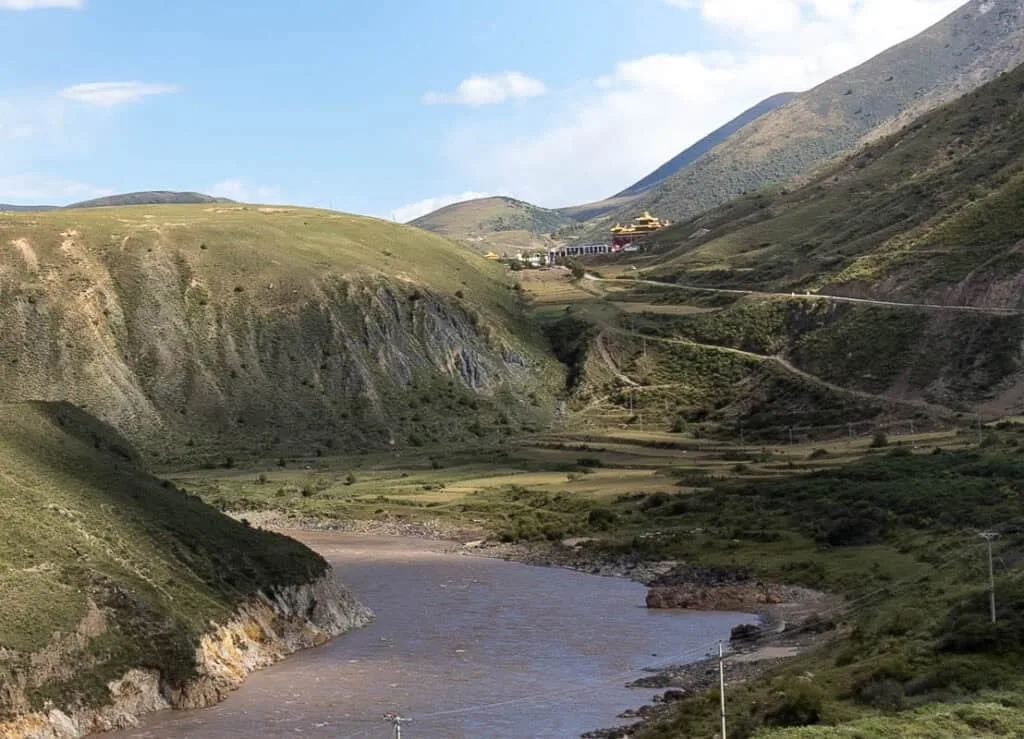
After an early start we hit the road and follow a meandering river along the valley floor. The rolling scenery is dotted with yaks grazing in the grassland and low clouds obscuring the hilltops giving it a mystical feel. It’s a peaceful start to the day’s 270 km drive.
Dege County in the western part of Sichuan, sits amid deep valleys and high peaks. This traditional trade route borders Tibet, connecting Sichuan and Qinghai and is the northern gateway to Kham and Tibet.
Zhuqing Monastery

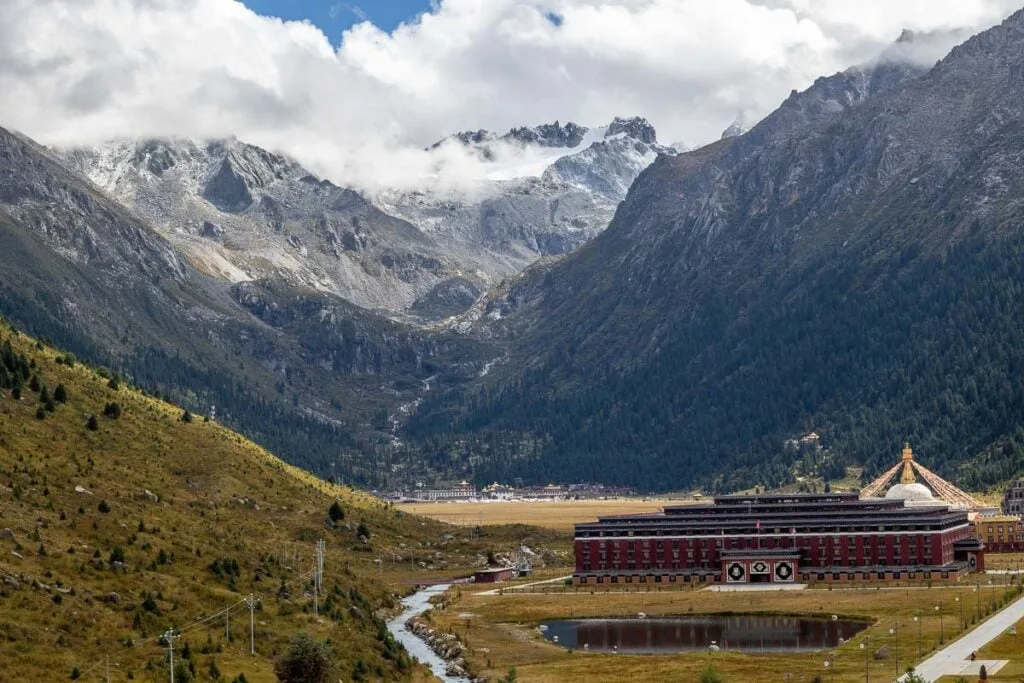
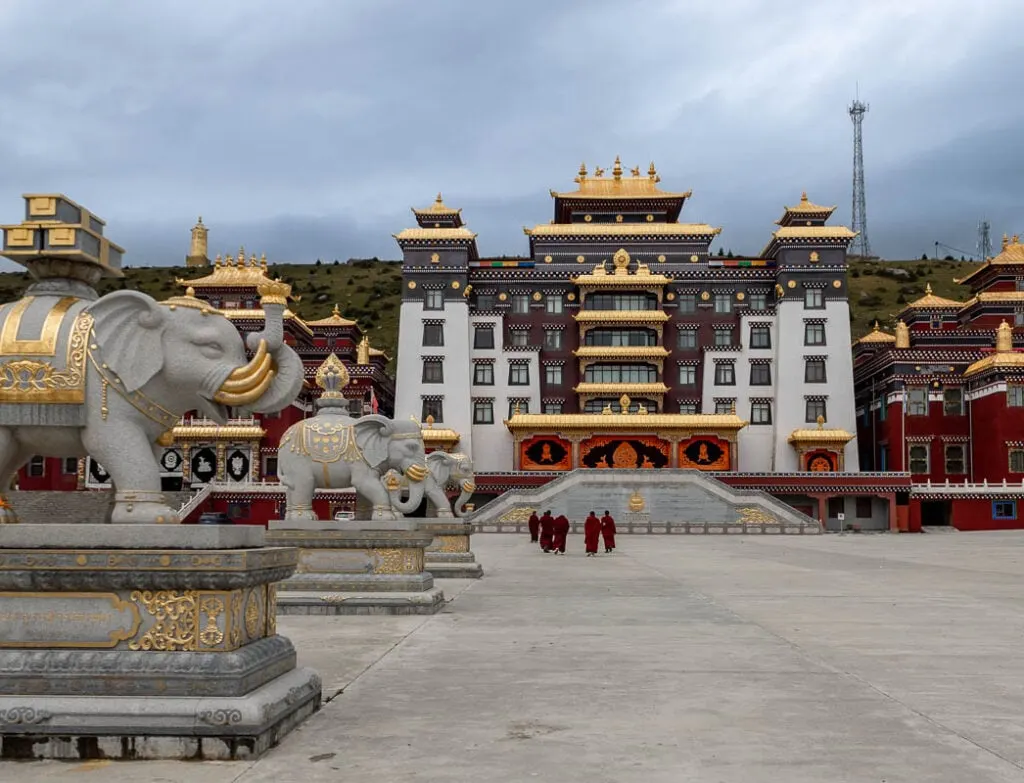
After one or two yak herd hold ups we arrive at Zhuqing Monastery, formally known as Dzogchen Monastery. It’s one of the most important monasteries of the Nyingma school of Tibetan Buddhism.
The vast monastery complex sits in Dege County at the foot of Mount Que’er Glacier at an elevation of almost 4,000 metres. The sacred site is surrounded on three sides by mountains and there’s a hint of snow left on the peaks, a taste of the winter to come.
We arrive at lunchtime and head to Baima Hall for a vegetarian lunch cooked by the monks. It’s a self-service buffet and we sit with monks and enjoy our food. If you fail to clear your plate and waste any food you’ll forfeit a small fine. But the food was good so it was never an issue. I think more places should do this, just so people are more mindful of waste.

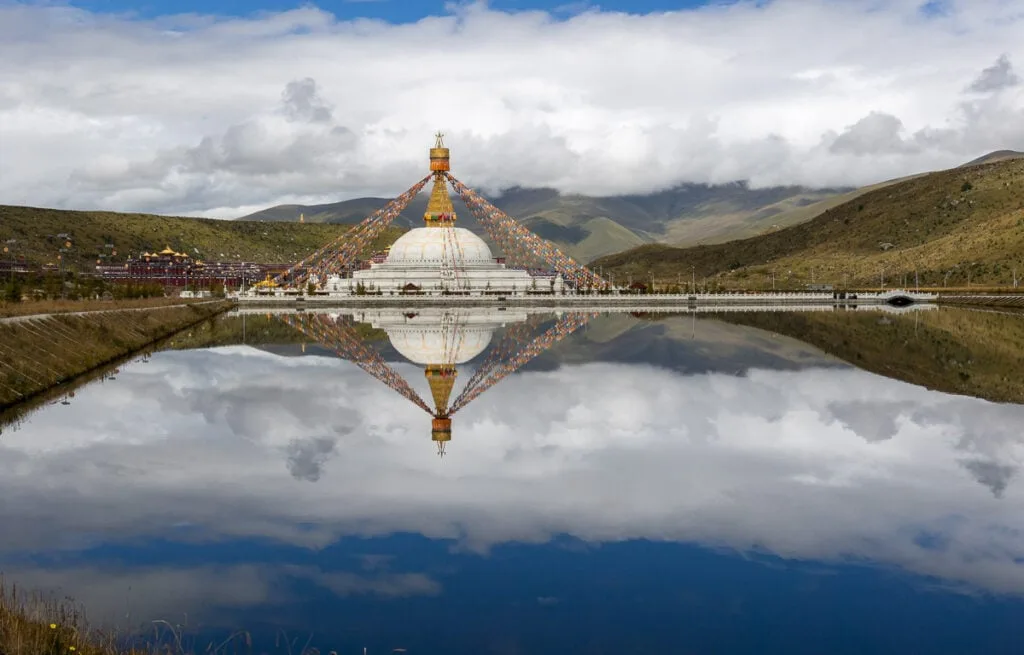
As we emerge we see deer grazing and monks going about monastic life shrouded in their maroon robes. We stop at a stupa for photos and as we approach we get some stunning reflection shots from a lake not visible from the road.
We explore the rest of the large complex including the teaching hall and main Buddha hall. The views looking back up the valley are incredible and display Zhuqing’s spectacular place amid the grandeur of nature.

Parading Monks and a Nepalese Meal
From Zhuqing we continue our journey to the city of Dege located on the border of the Tibetan Autonomous Region (TAR). It’s the heart of the Kham region and the closest we’ve been to Tibet so far. The city which is split in two by the Sèqū River sits in a narrow valley. We dump our bags at the hotel and head out for dinner but we’re soon stopped short.

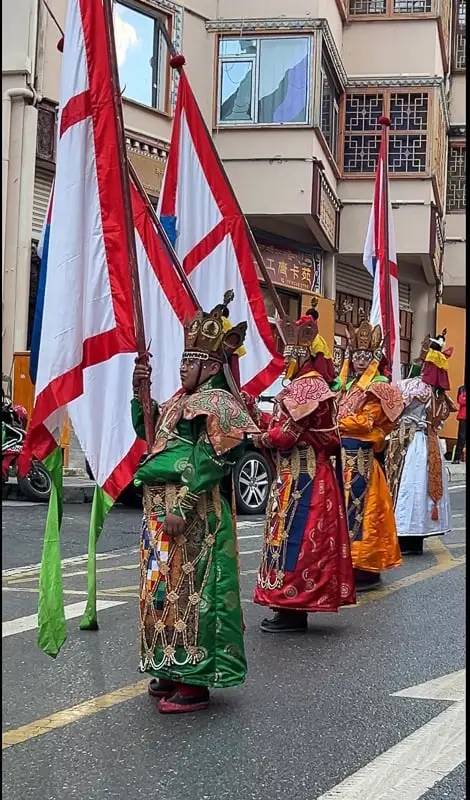

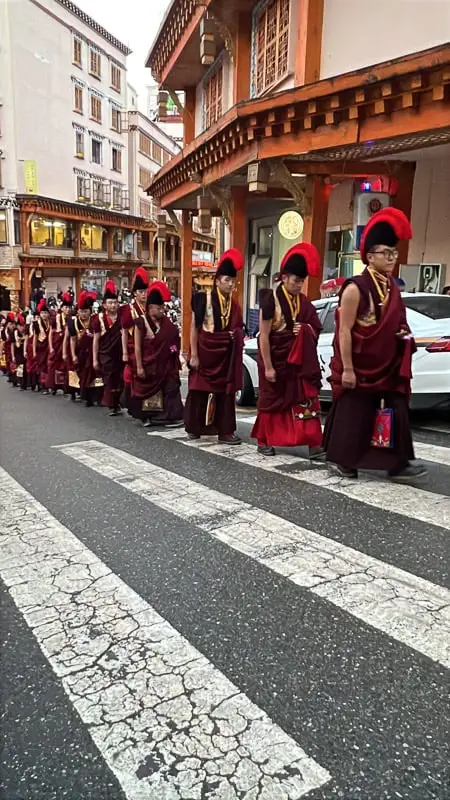
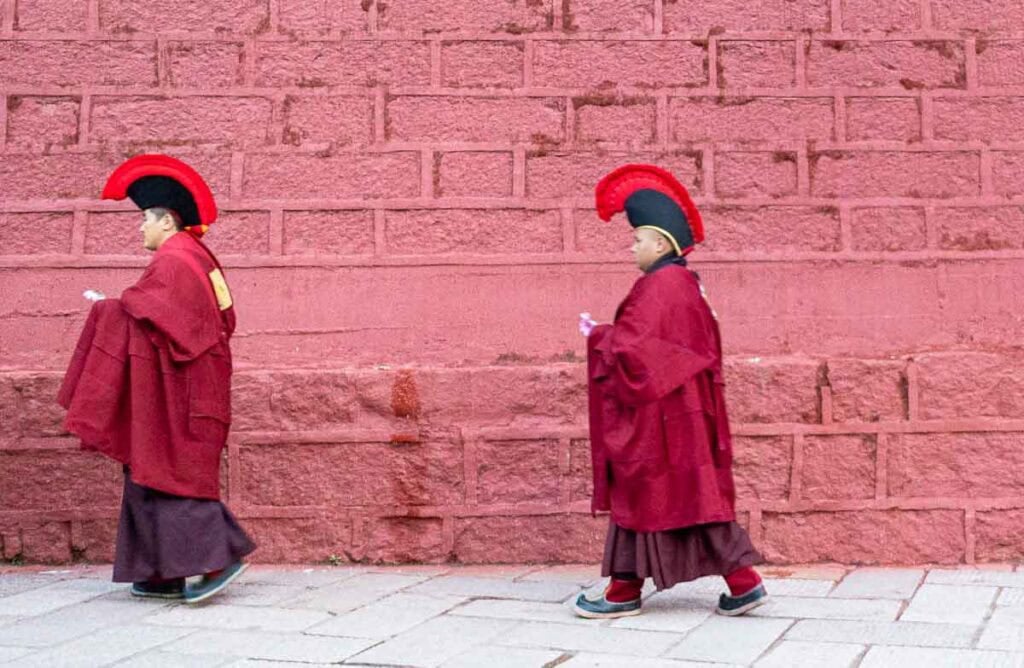
A parade of Tibetan monks file their way up the hill to the monastery. The sound of loud horns and tinkling bells accompany them and it’s a compelling sight for the crowds that line the road.
The monks wear colourful robes and ornate headdresses, some hold flags, others flowers. We’re told they’re being welcomed back to the monastery after a long stretch of prayers and meditation in the mountains.
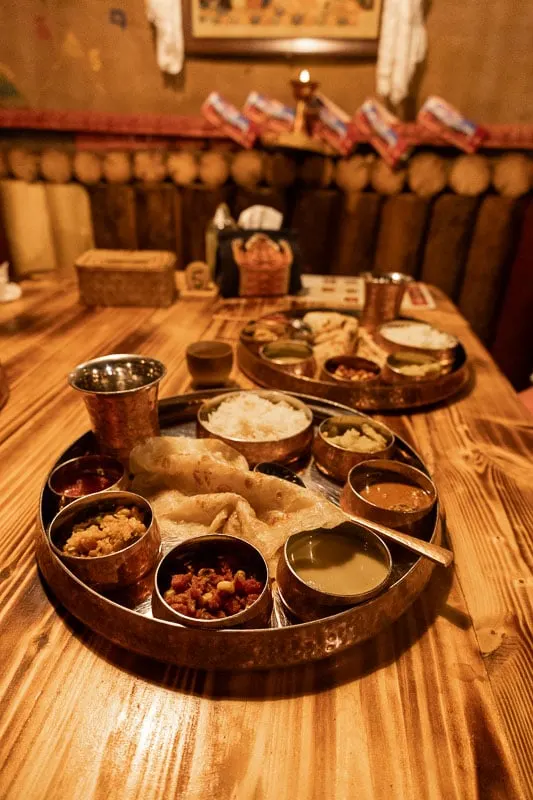
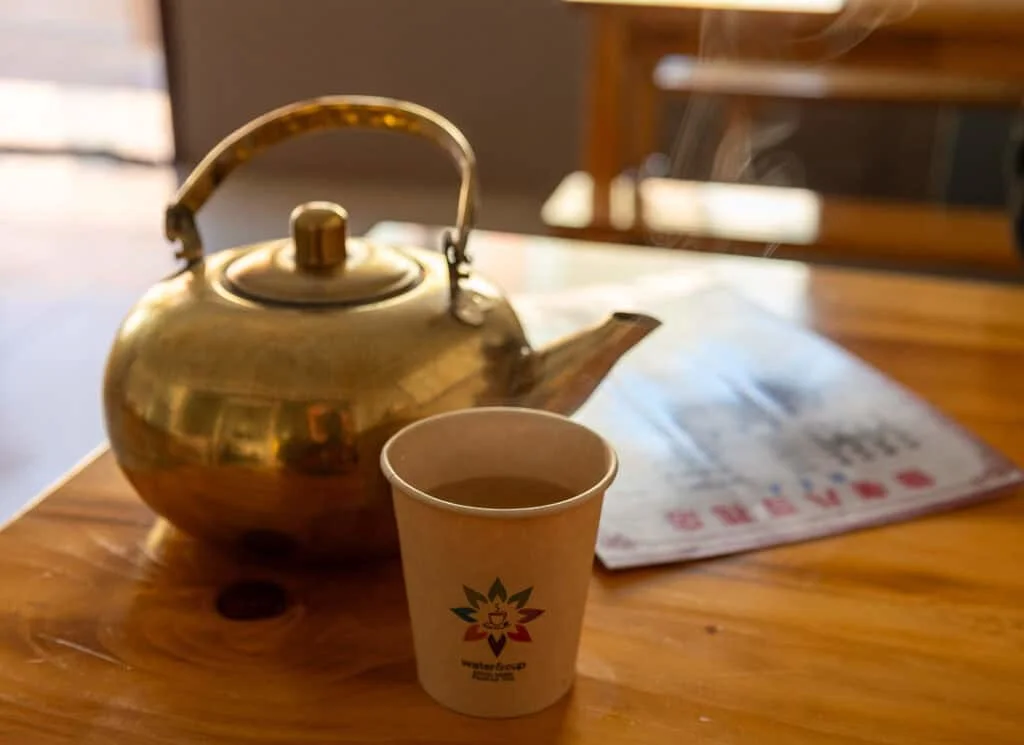
Dinner is at a tiny Nepalese restaurant down a narrow alley and up some steep steps. You’d never know it was there. Dimly lit and furnished in traditional Tibetan style, we dined on delicious aromatic Nepalese Thali and yak milk tea.

Accommodation in Dege, Sichuan
We spent one night in Dege at the King Gesar Palace Hotel which overlooks the river. Rooms were traditional and comfortable. Check rates and availability for hotels in Dege.
Day 9: Crossing borders: Dege to Yushu
Next morning we head for the main attraction in the city; Dege Parkhang Sutra-Printing House, a UNESCO Intangible Heritage Site and one the Tibetan Plateau’s cultural treasures.
Dege Parkhang Sutri-Print House

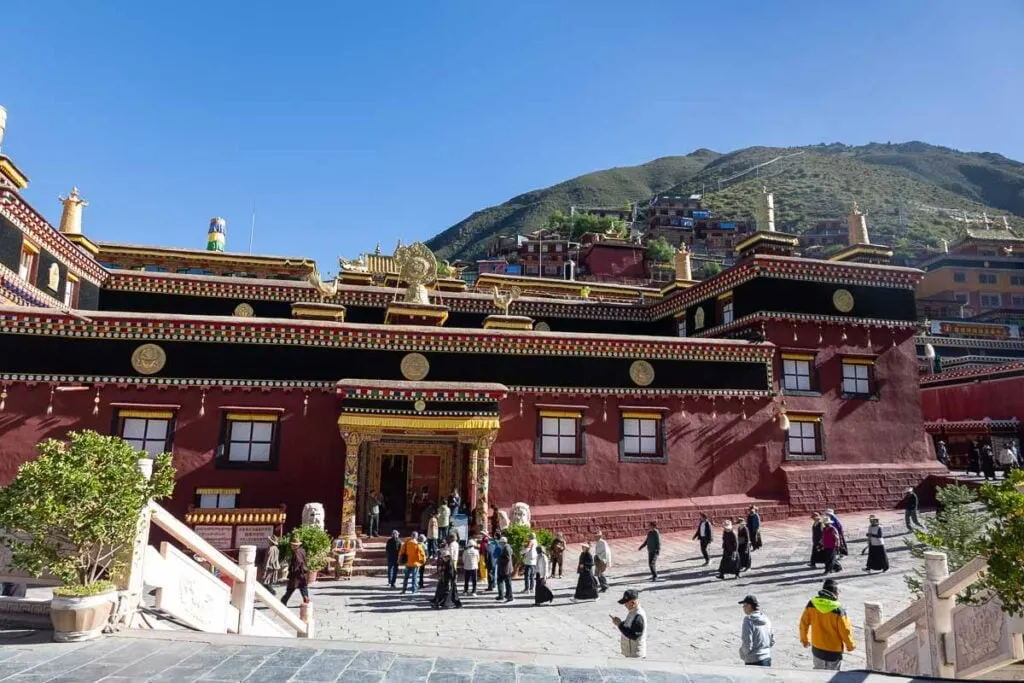
The print house, founded in 1729, prints Buddhist mantras, prayers and scriptures by hand, using carved wooden blocks and paper made from the Langdu plant.
The same method has been used for over 300 years. Every part of the process is carried out by hand, from engraving the wooden blocks to inking, pressing, drying and buttering the wood afterwards to preserve it.

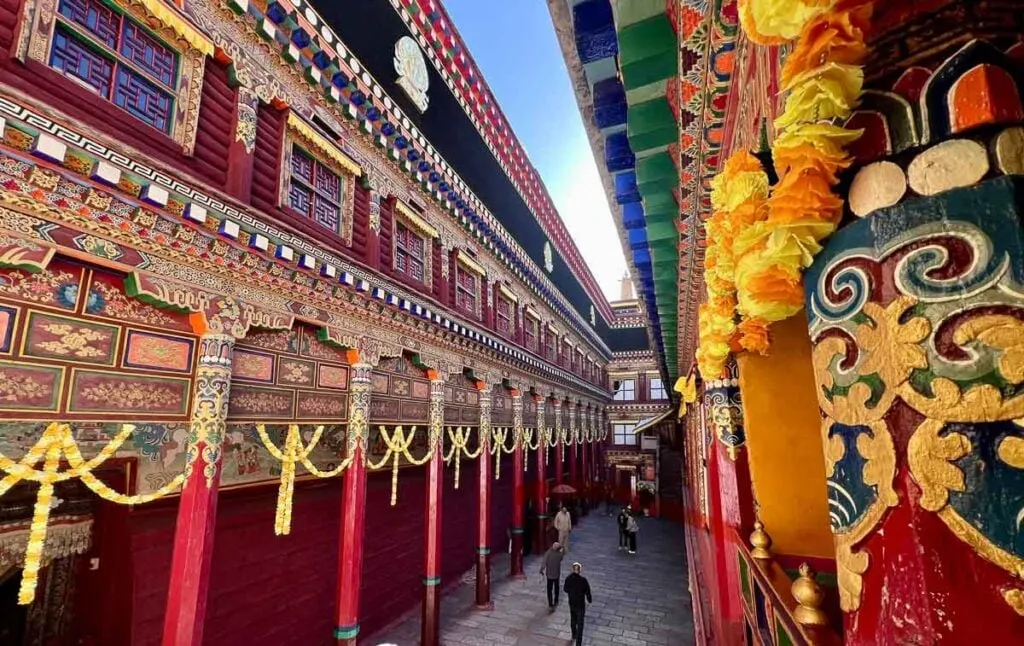

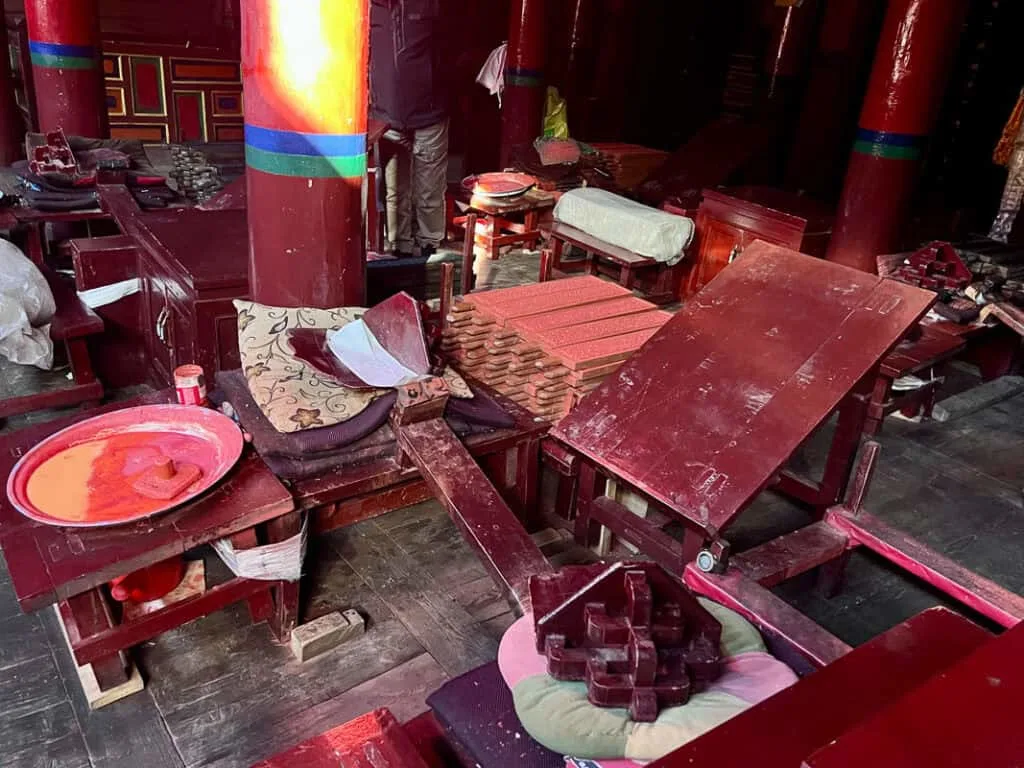

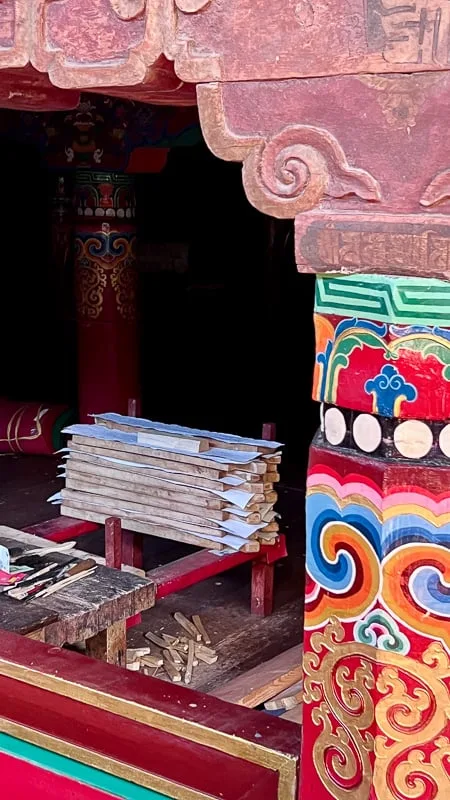

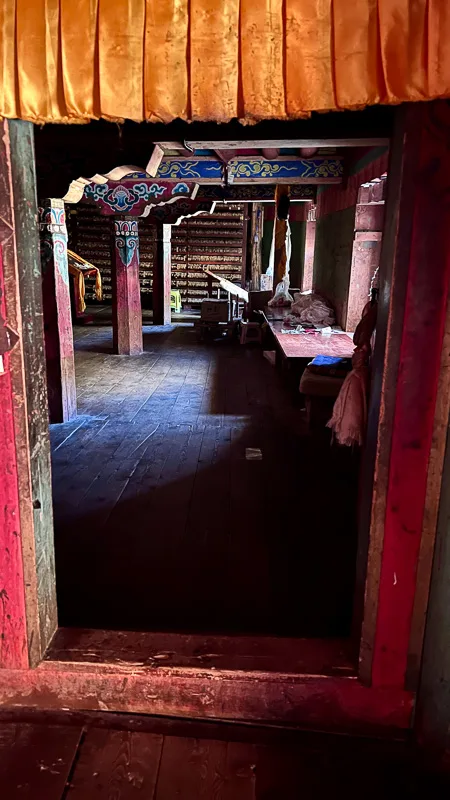
I could almost feel a sense of history and time gone by as I walked through the workshops. Shafts of daylight highlighting the symbols on hand-carved blocks, the smell of ink hanging in the air and Tibetan heritage preserved on over 320,000 engraved blocks.
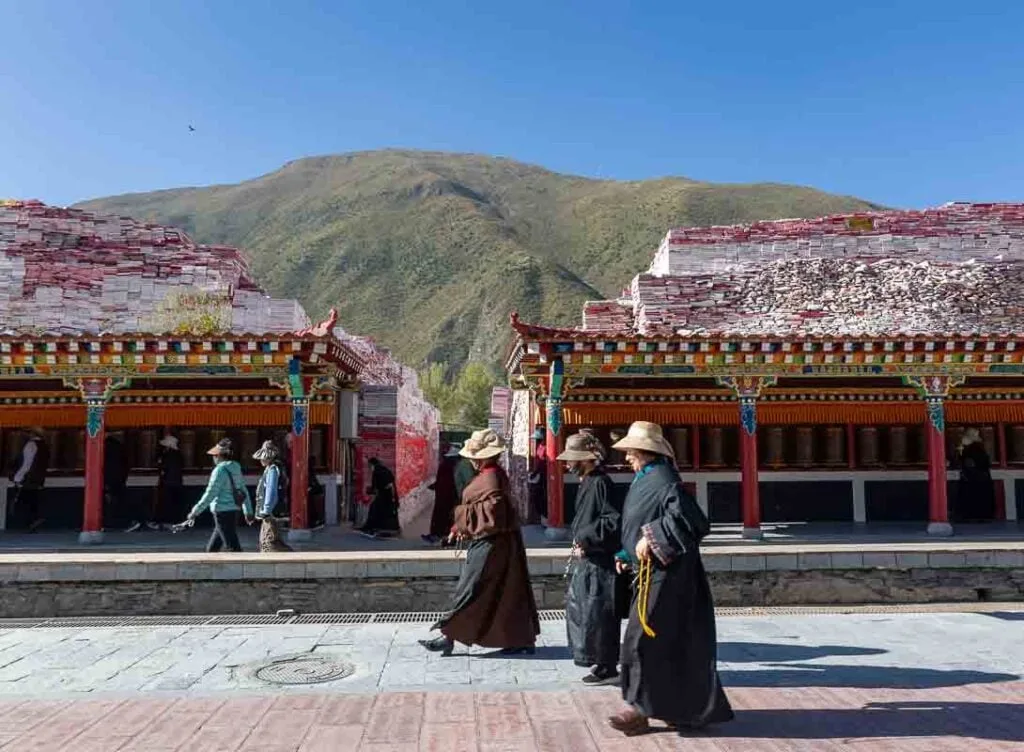
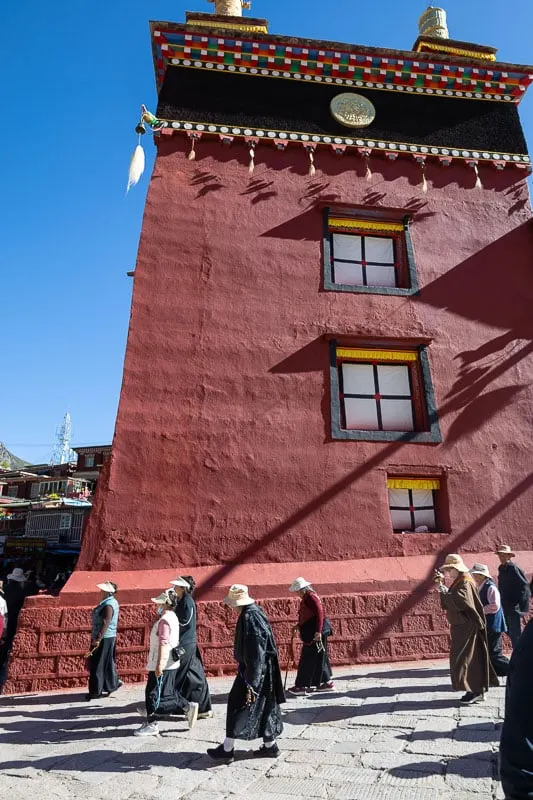
Outside faithful Tibetans circumambulate the building rhythmically rotating their hand-held prayer wheels, the tightly rolled prayers and mantras inside bringing good karma.

Qinghai Tibetan Plateau

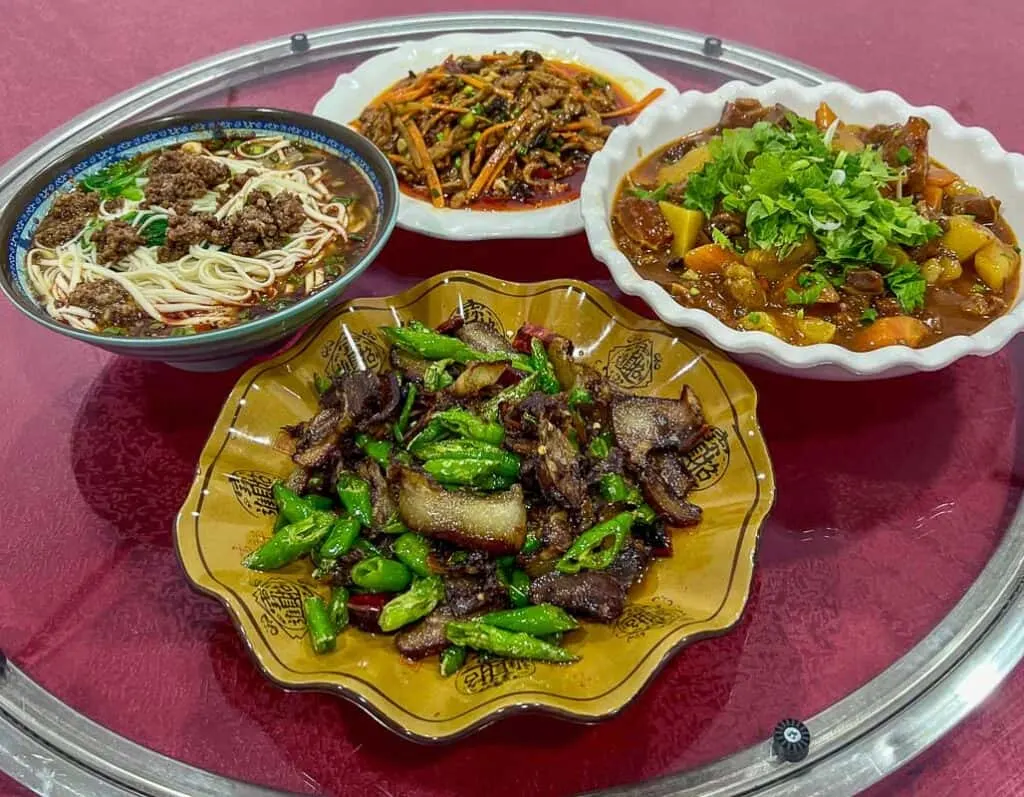
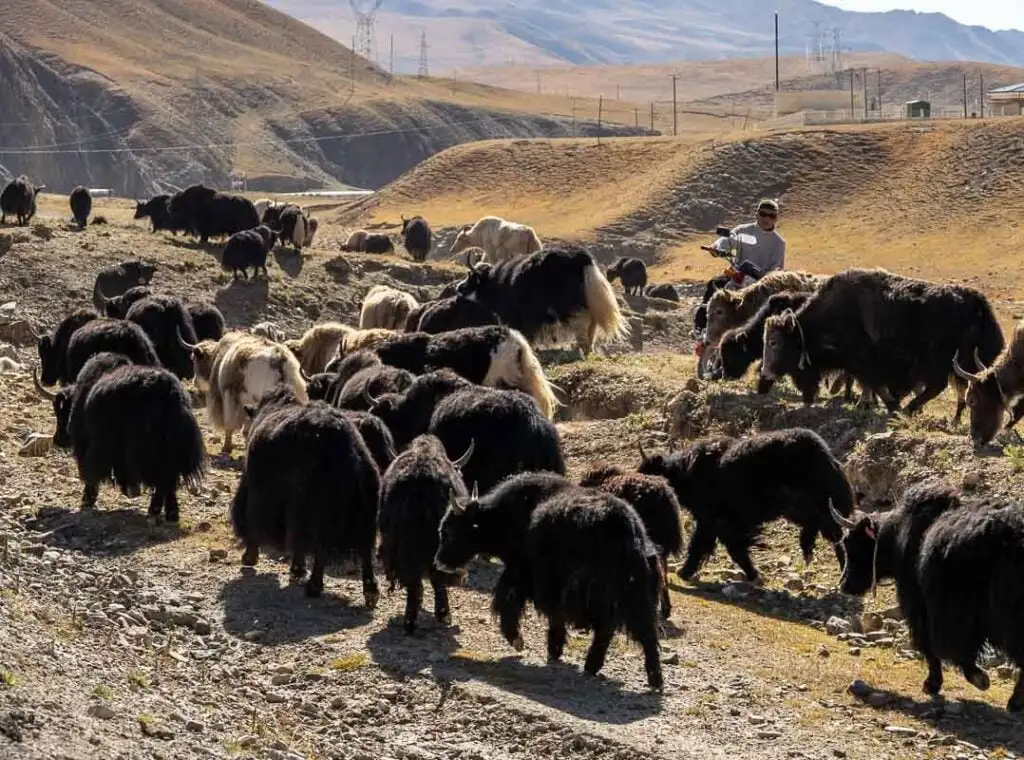
It’s time to cross the border from Sichuan to Qinghai and the road to Yushu is long. We break up the journey with a stop at a small town for lunch. The food is excellent and the local people are friendly. We hit the road again but not for long. We’re soon held up again by a few hundred yak who’ve claimed the road as their own. They’re herded to nearby grassland and we continue on our way.
Xianggu Temple and Tibetan bears

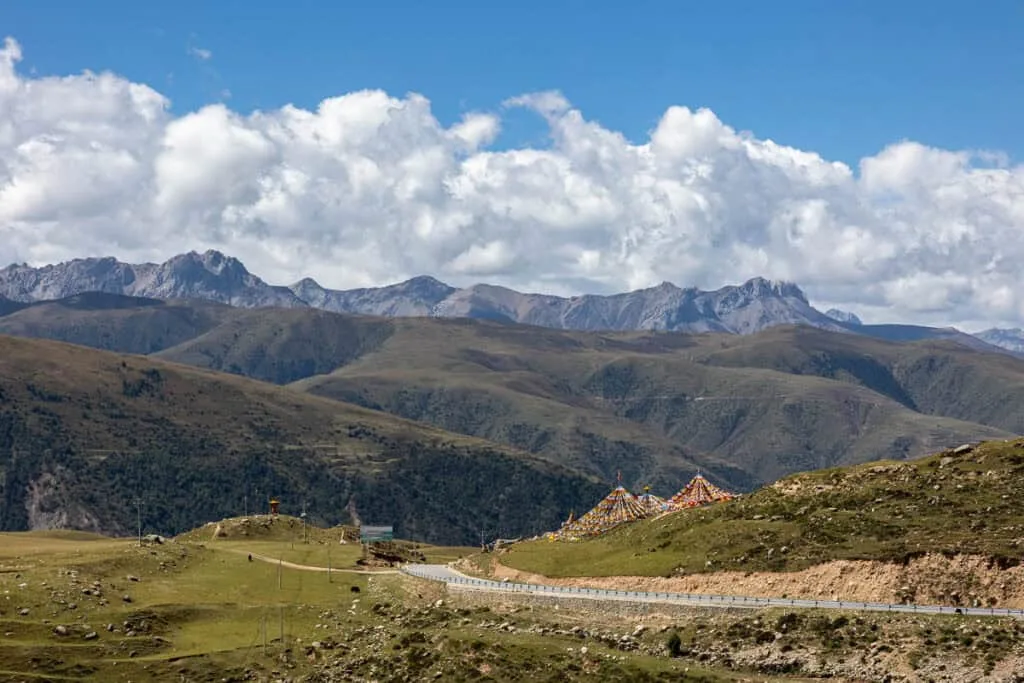
After stopping at some incredible vistas we cross the river over a small bridge. The road narrows as it climbs higher up the ravine, the muddy river now far below us.
I try not to look out of the window at the drop to my right, it’s a long way down and the road is single track. I was relieved to arrive at Xianggu Temple!
We visit the prayer hall where the monks are praying and chanting. The deep resonant sounds of dung chen (longhorns) echo around the large hall which is one of the most colourful and intricately decorated that I’ve seen.

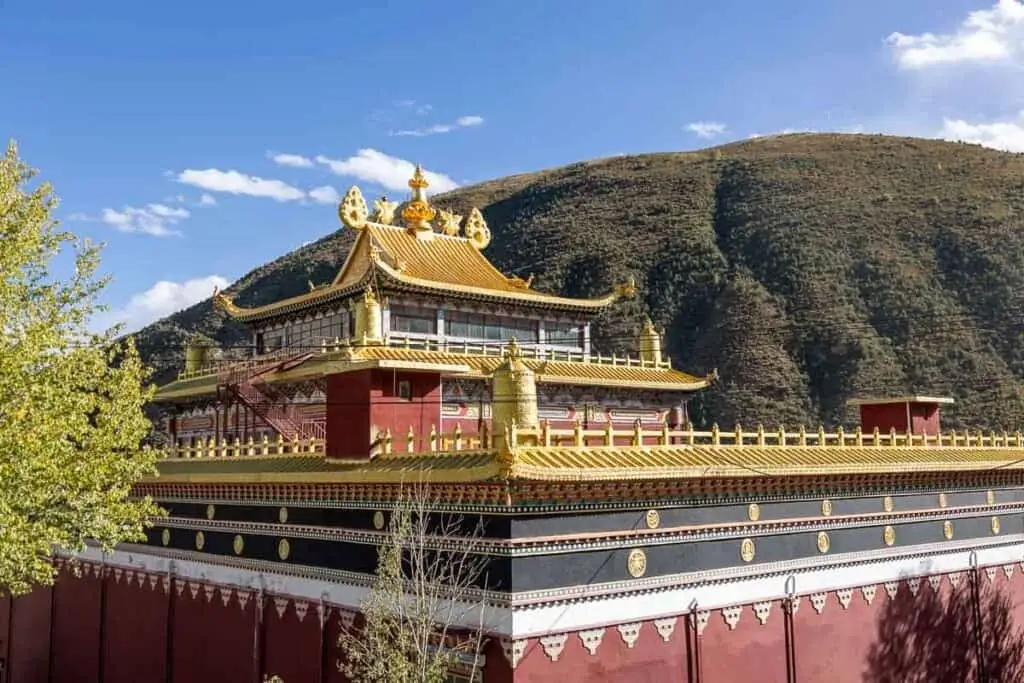
We’ve been told that we may see Tibetan brown bears nearby and we head to the canteen area of the complex where a huge Tibetan mastiff sprawls in the doorway.
The monks have been leaving kitchen scraps outside which the bears sometimes come to forage on. There’s a large metal barrier so it’s safe to observe.
We don’t have to wait long. A huge brown bear ambles through the trees, sniffing the air for food. But the cupboard is bare and it quickly leaves.
We don’t know when, or even if, the monks will leave any scraps but we decided to give it another half an hour. Our patience is rewarded as a female bear and her three cubs emerge from the trees. They stop briefly and check for food but there’s non and she soon leads them away with a grunt. A fleeting moment but oh so special.

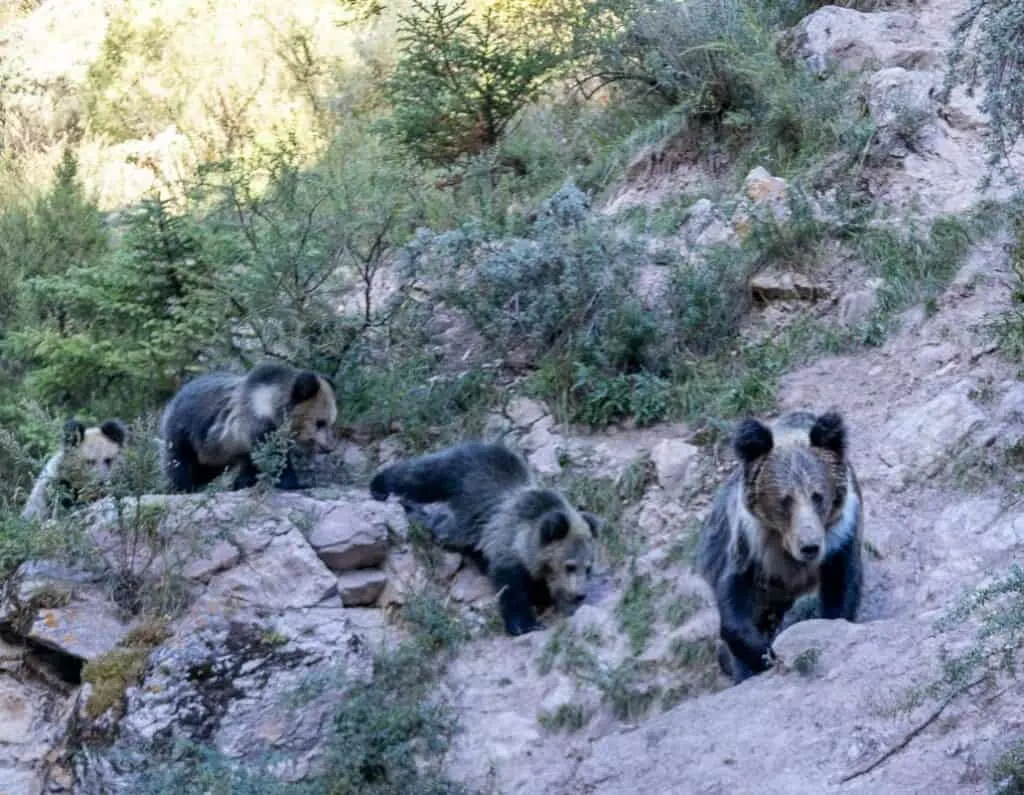

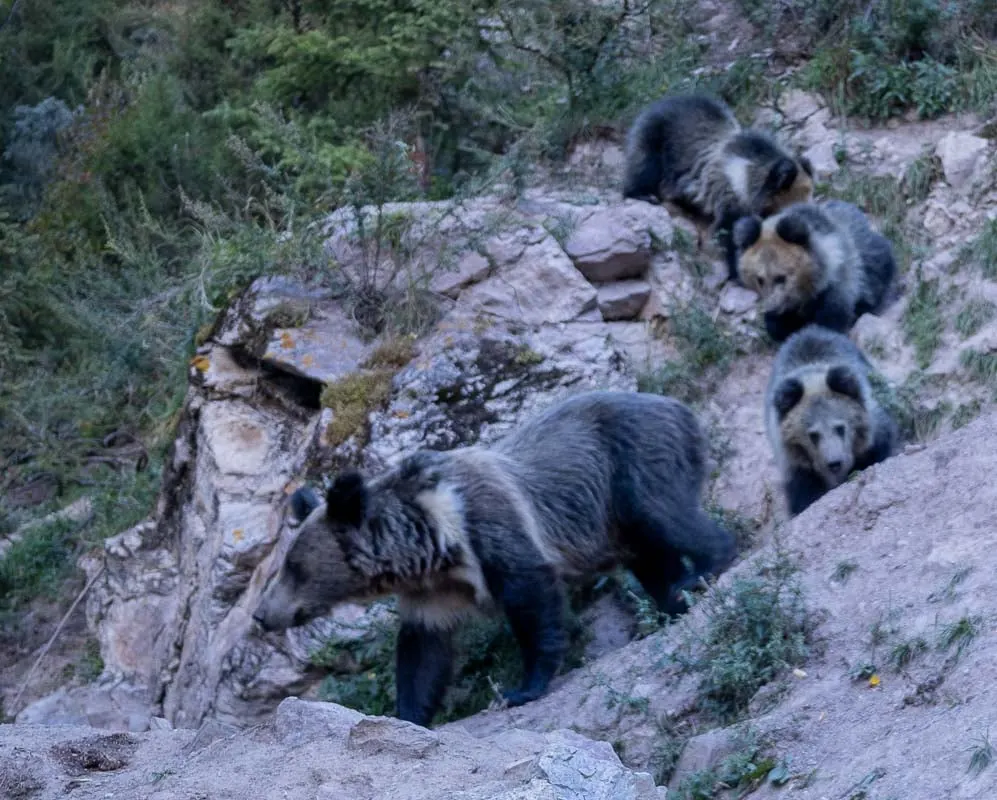
We cross the border from Sichuan and arrive in Yushu, one of the oldest towns in Qinghai Province. It’s also one of the most modern due to much of it being rebuilt after the 2010 earthquake. It sits at 3689 metres above sea-level.
It’s been a long day so we head out for an early dinner and eat at a restaurant serving western food. Pizza’s on the menu, my first and only non-Chinese meal of the trip!
Accommodation in Yushu, Qinghai

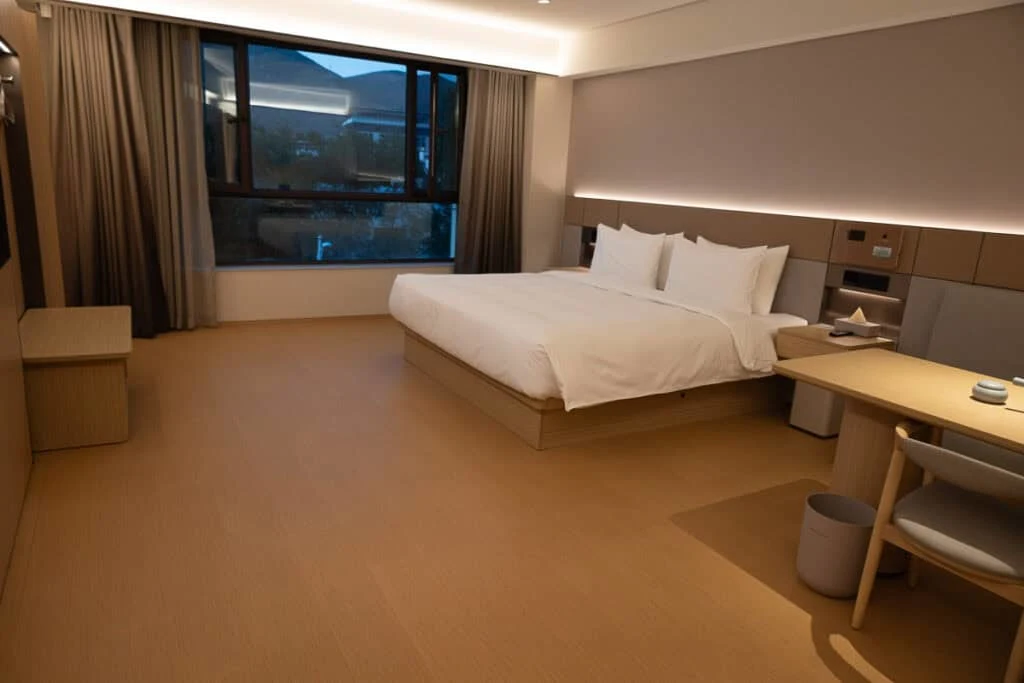

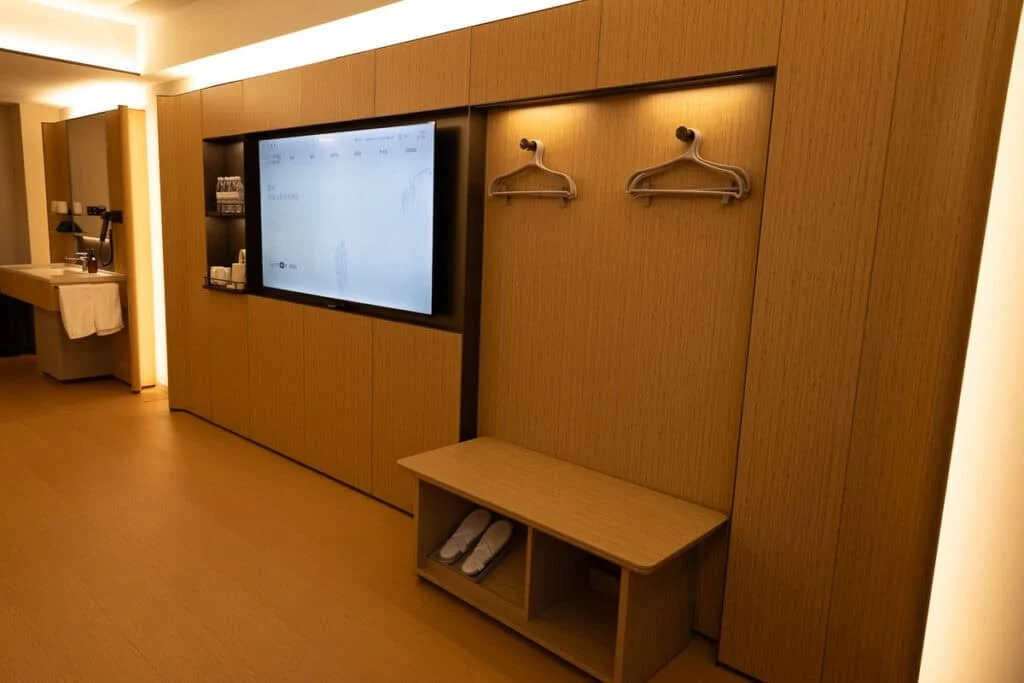
Two nights at Ji Hotel in Yushu. The hotel is contemporary styled with spacious rooms and in a good location. One of my favourites of the trip.
Day 10: Jiegu Monastery, Mani Stone City, temples and silken tofu
We spent the whole of day ten exploring everything Yushu has to offer. And there’s a lot to see.
Layers of faith at Jiana Mani Stone City

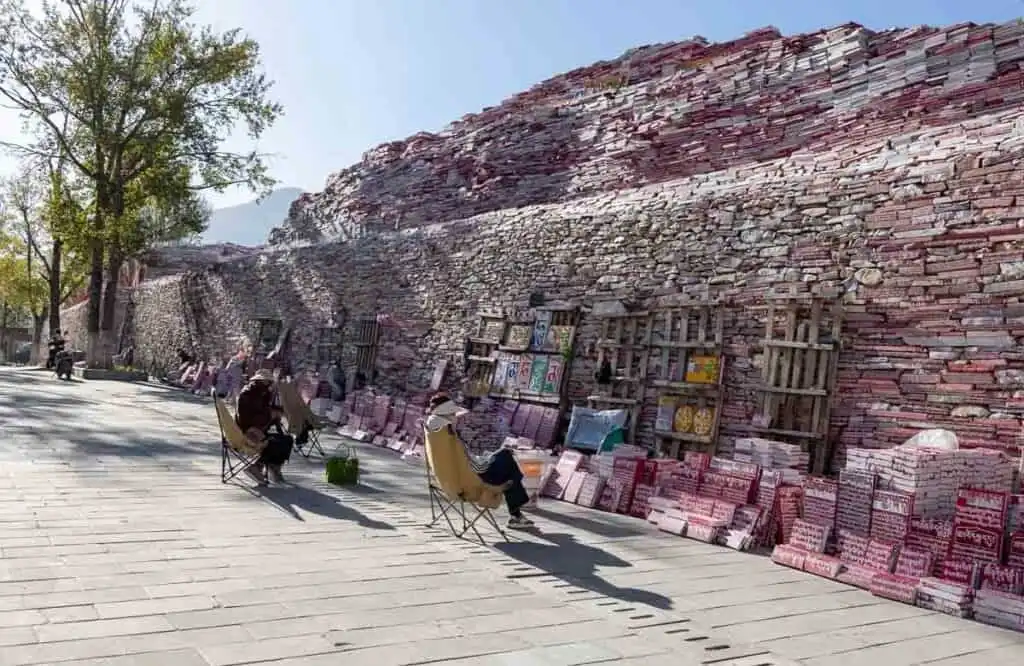
What is a Mani Stone?
A mani stone is a block or slab of stone engraved with a Tibetan mantra or prayer. Most commonly, ‘Om Mani Padme Hum,’ the Buddhist mantra of compassion.
Pilgrims place the stones in mounds near monasteries, around trees and by stupas. The mounds grow as stones are added over months, years and decades.

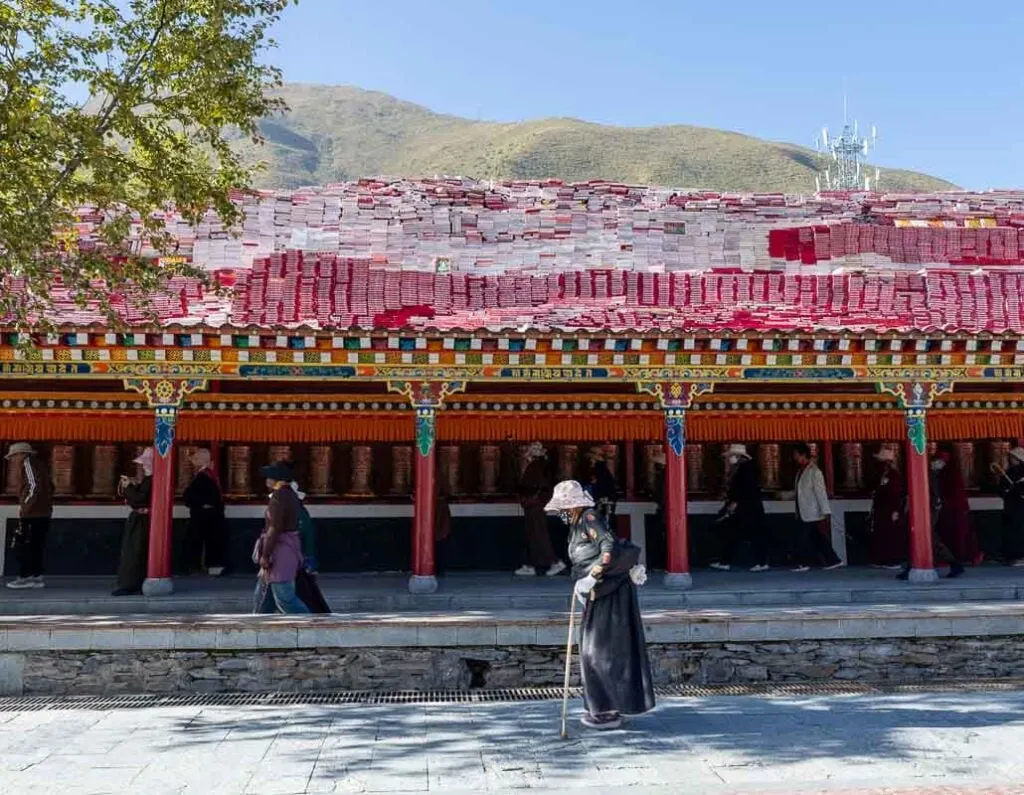
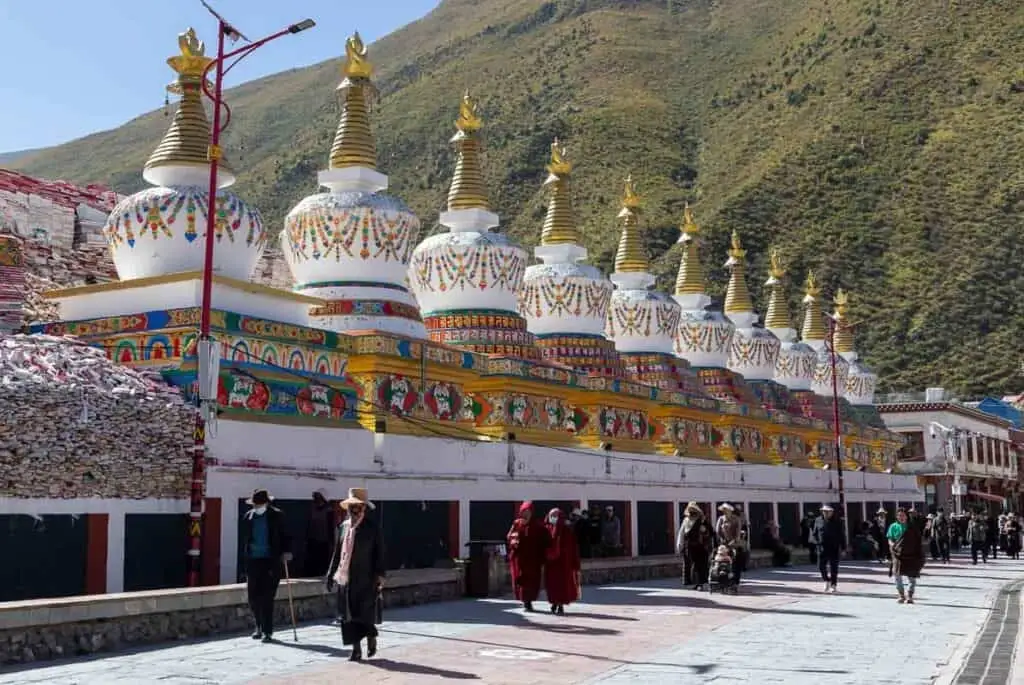
If I tell you that Xinzhai Jiana Mani Stone City is over 300 years old and said to be made up of over 2.5 billion mani stones you’ll begin to get an idea of how extraordinary this site is. And it’s huge, covering an area of around two football pitches at a height of around 3-4 metres.
Visiting was incredibly powerful and like nothing I’ve experienced before. People were circumambulating the mound, spinning prayer wheels with some pilgrims performing fully-body Tibetan prostrations.
We too joined the throng circumnavigating the mound. The large prayer wheels quickly spun, brightly coloured prayer flags fluttered overhead and the sound of the faithful’s chanting floated in the air along with the aroma of incense.
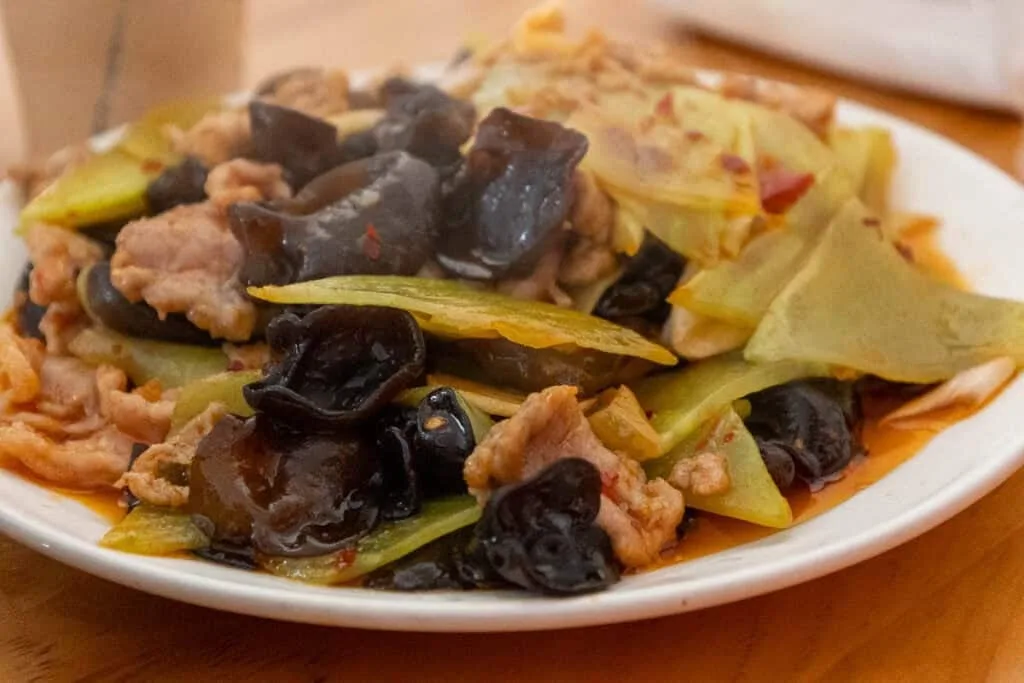
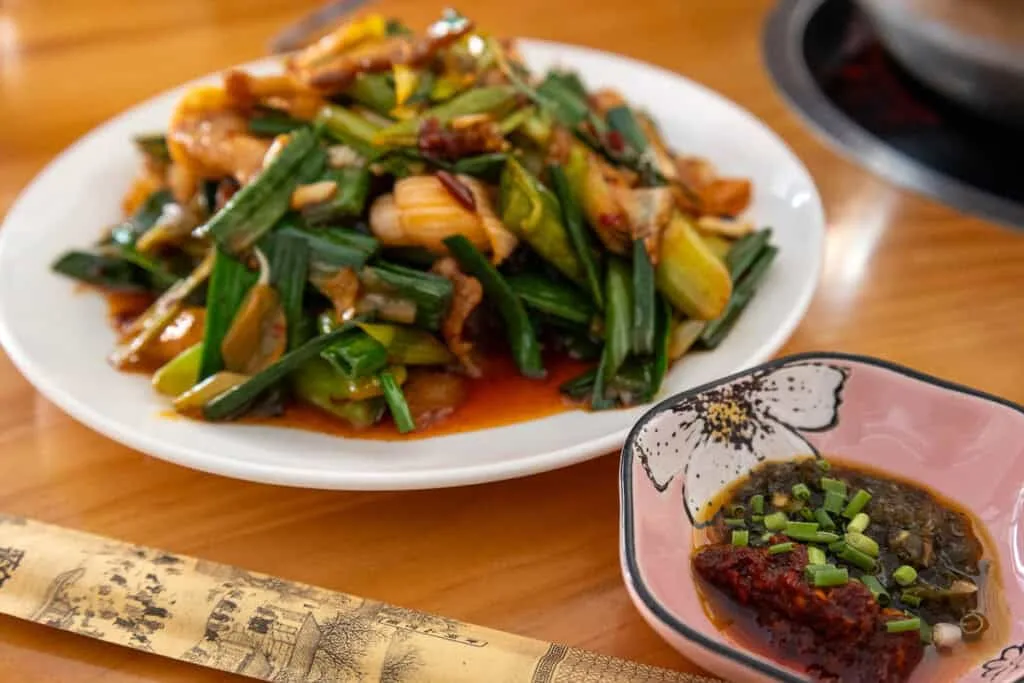
There are market stalls where people sell hand crafted goods, clothing, foods like yak milk butter and chilli paste. We managed to chat with a bit of translation help from Z from Eastogo Travel. I bought a jar of chilli paste to bring home. It’s very good. And very hot!

Carving our wishes into stone
Visiting a small yard nearby we attempted engraving our own stones. It wasn’t easy, as the results clearly show. Afterwards, we climbed the mani stone steps into the centre of the pile and added our own stones to the mound.

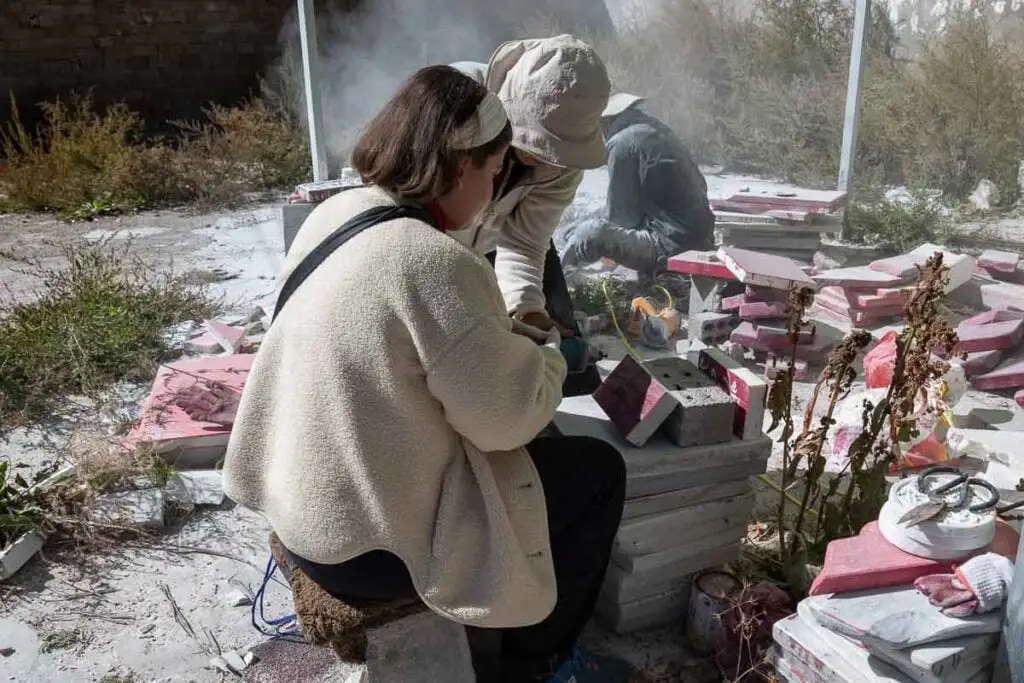

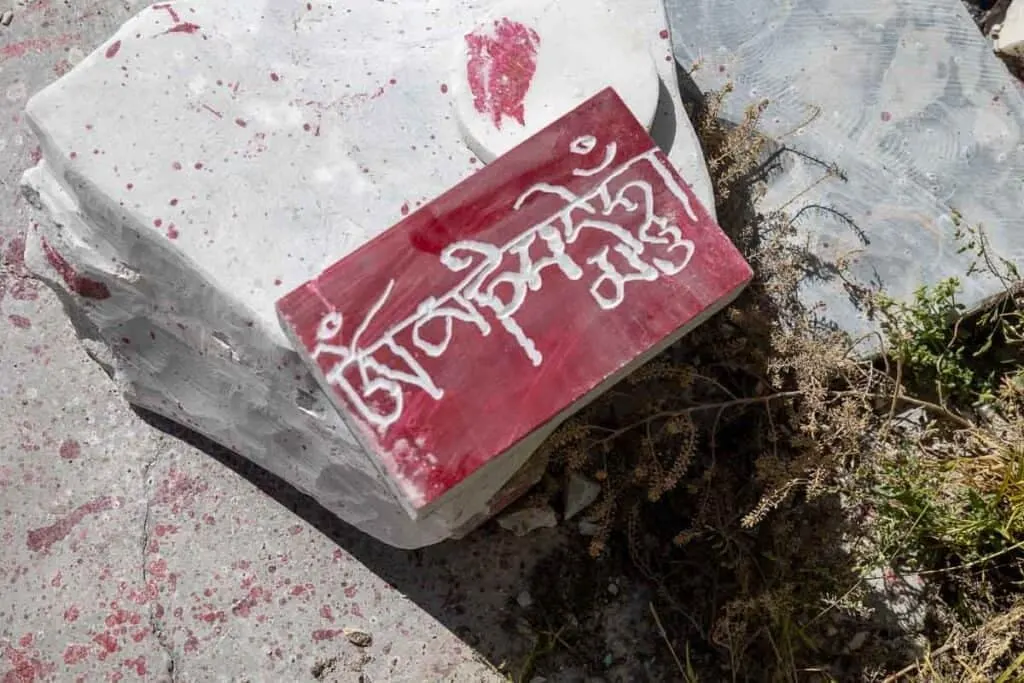

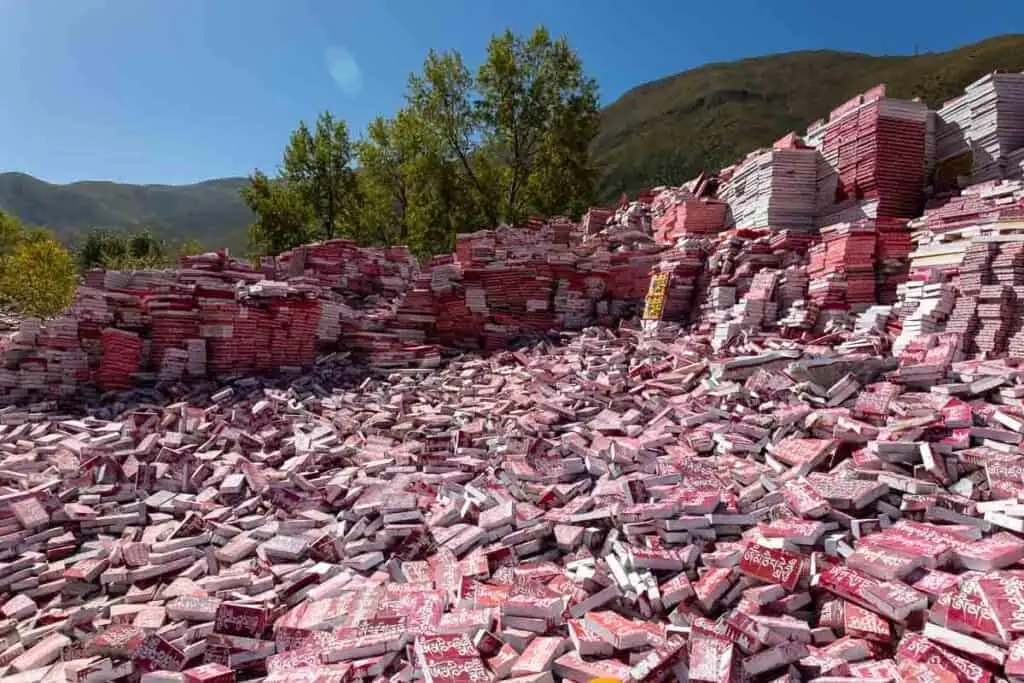
I can remember the sound of stone on stone as I stood on tiptoe to slide my mani stone onto the top layer of the mound. This glimpse into the spiritual side of Qinghai was a moving experience and Jiana Mani Stone City is a place that stays with me still.
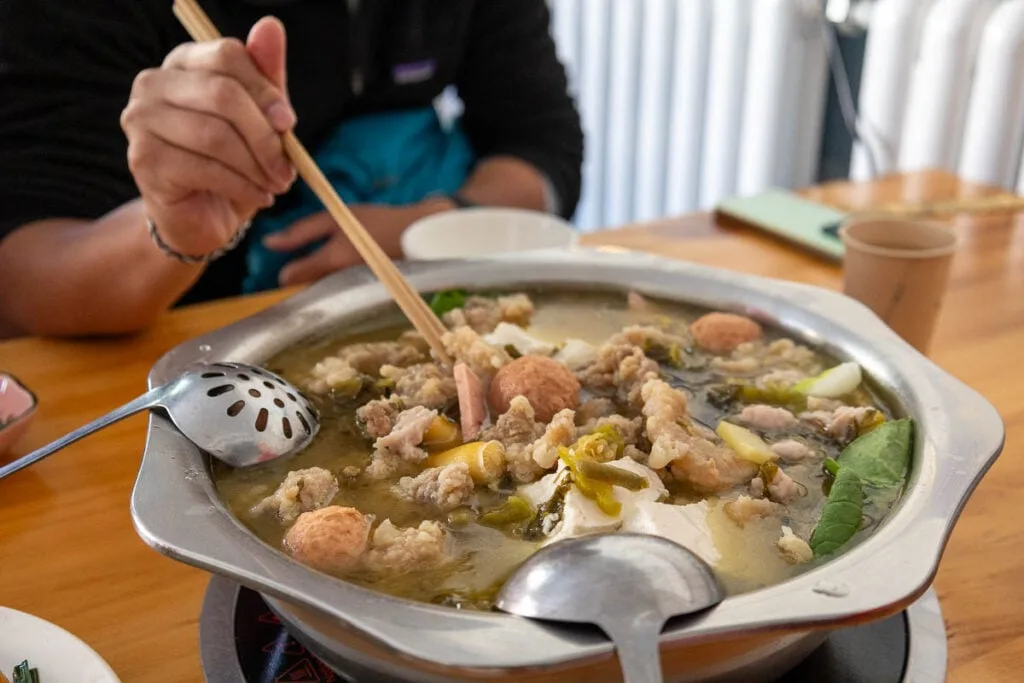
After a tasty hot pot lunch with silken tofu we drove up to Jiegu Monastery which sits on the hillside of the Mutameima Mountain overlooking the town.




Jiegu Monastery
Belonging to the Sakya sect, the monastery is renowned throughout the Tibetan region and is one of the most influential in Yushu.

The tiered monastery is huge with multiple halls but a feeling of calm and devotion envelops the complex. It’s quiet with only an occasional monk to be seen – I’m guessing they’re in prayers. It’s a total contrast to the Mani Stone City.
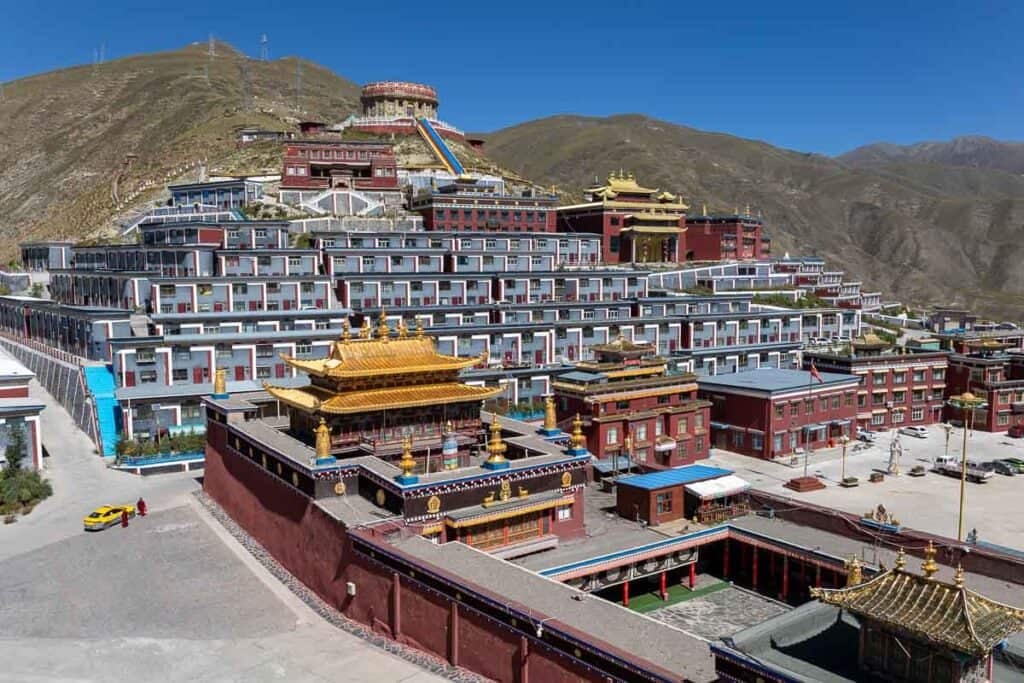

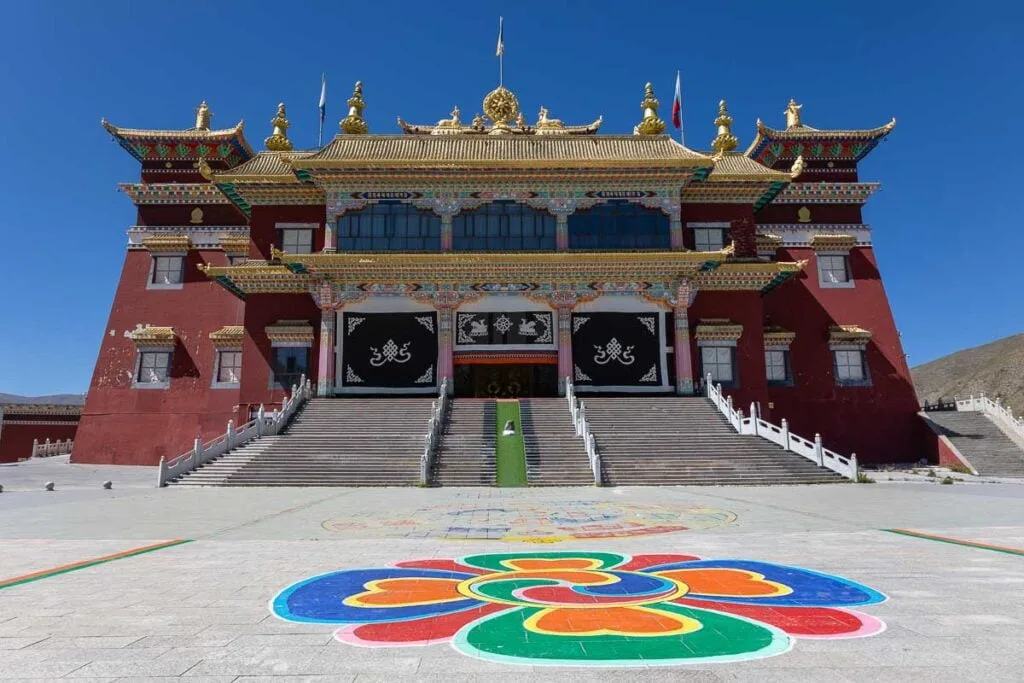
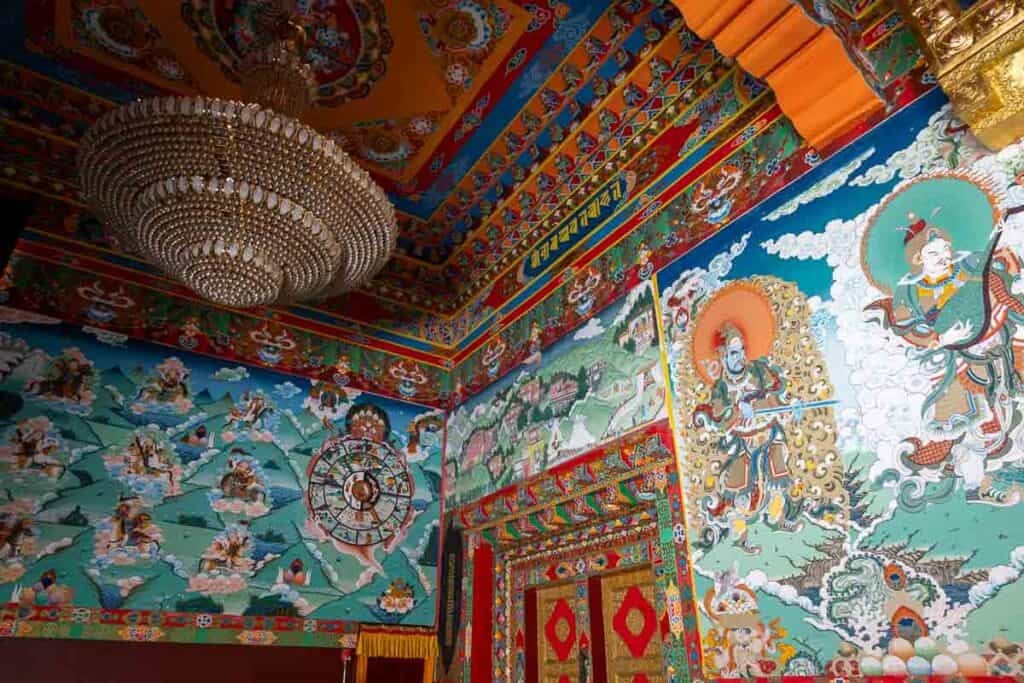
The entrance to Sangzhuojiacho Assembly Hall is one of the most ornate and colourful that we’ve seen.
From the terrace are sweeping views across the surrounding plateau, mountains and the town below. It’s a peaceful pause on the journey and a quiet introduction to the spiritual heart of the Qinghai Tibetan Plateau.
Our next stop, a short drive away, is Princess Wencheng Temple which is built directly into the cliffside. Inside statues are built into the rockface but sadly, no photography is allowed.

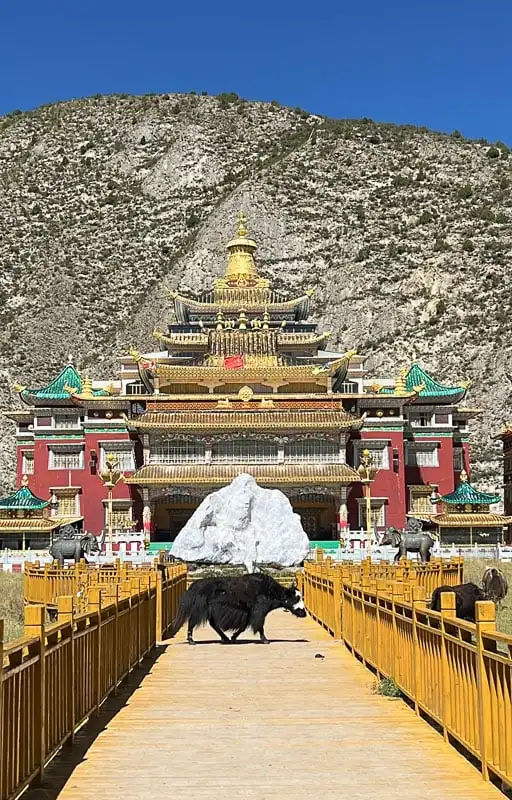
We also visit Chan Buddhist temple where a gaggle of giggling, shaven-headed female monks are intrigued by us. The feeling’s mutual and it’s all very friendly.
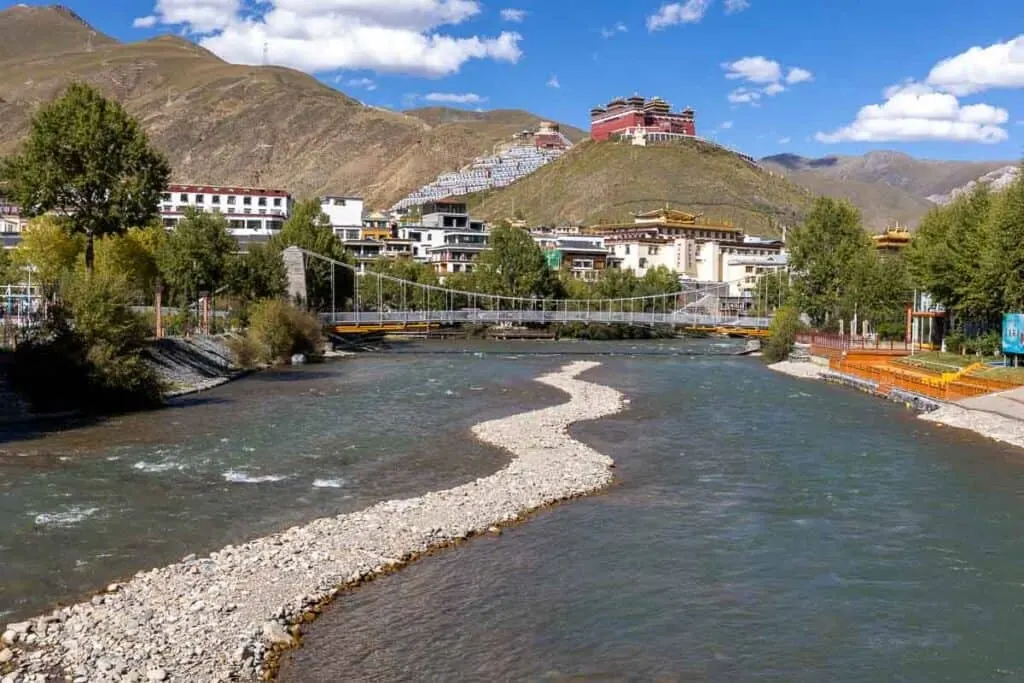
We head back to Yushu town where my travelling companion and I take a wander around Yushu before heading back to Ji Hotel for some well-earned downtime. Dinner that evening is a full-on dumpling fest!

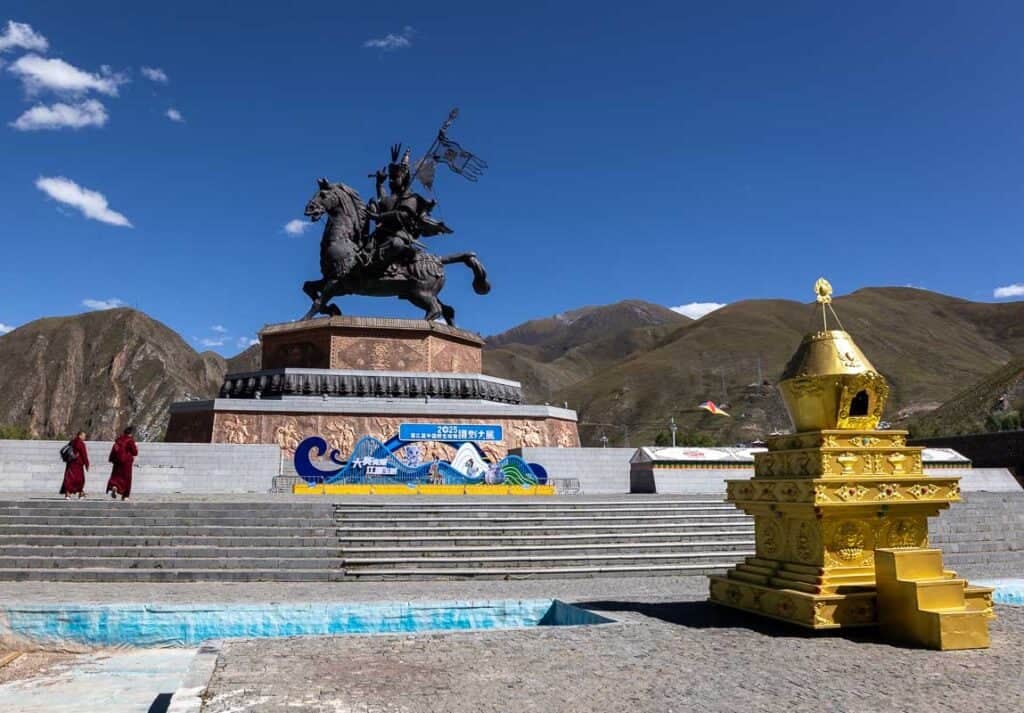
Day 11: The journey from Yushu to Maduo with wildlife safari enroute
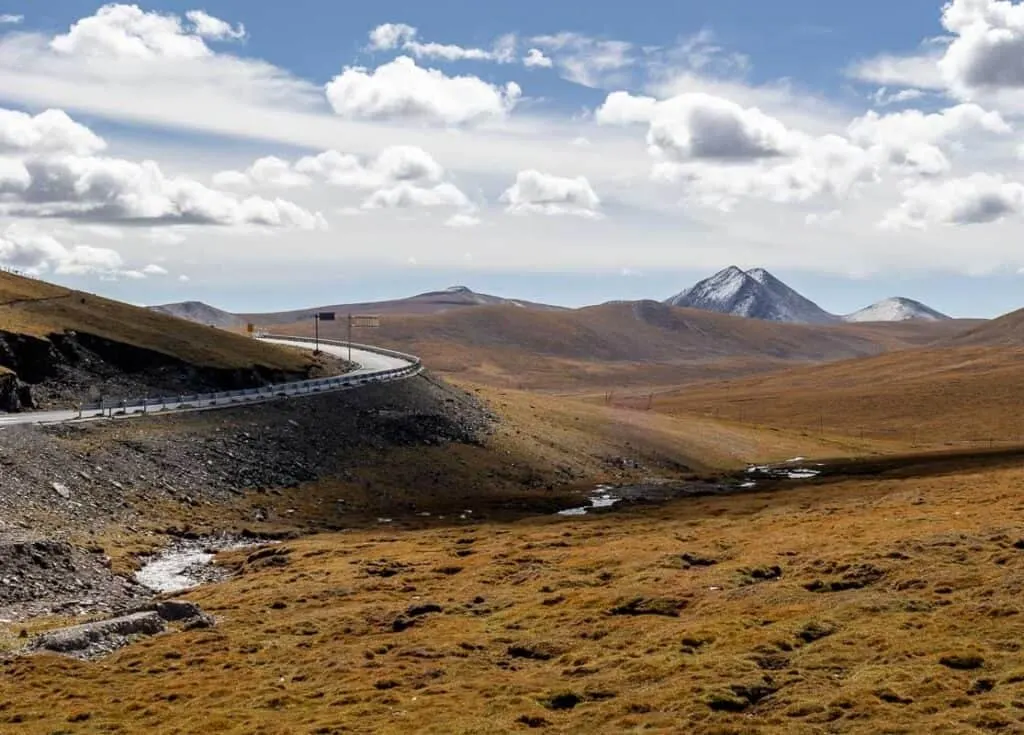
We leave Yushu behind and set out on the long drive to Maduo. The city scenery soon transforms into spectacular landscapes with distant mountain backdrops and the occasional yak herds competing for space on the road. Rolling yak roadblocks now a familiar scenario.

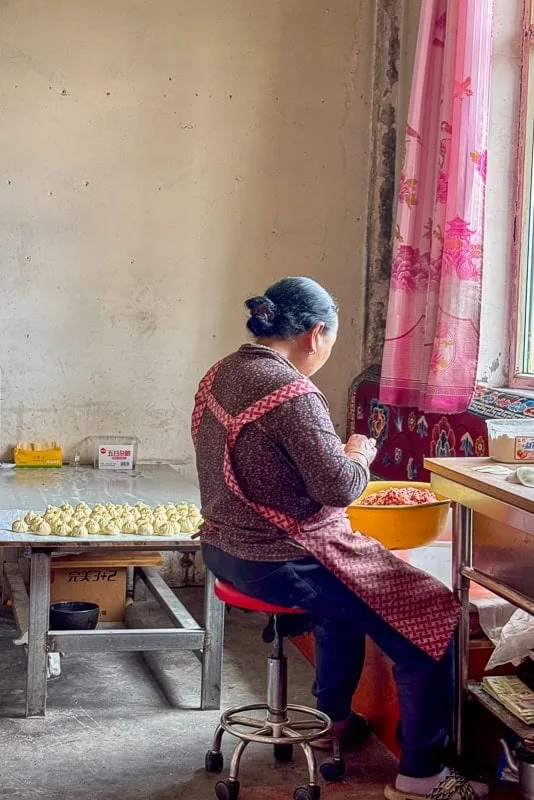
A few hours into the journey we discover a small grocery store in the middle of nowhere and we pull in, hoping to pick up some lunch. The owner’s wife sits by the window preparing dumplings. Copious amounts of dumplings. And we’re hungry.
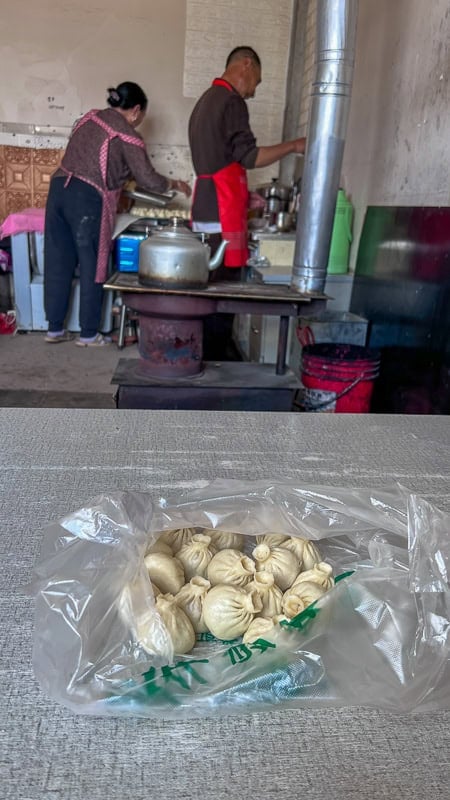
The couple are happy to oblige and steam the yak meat jiaozi which they bring to the table in a plastic bag with a tub of rich red chilli sauce. We sit on a small bench in their back room and savour the plump parcels bursting with flavour. It’s far from fancy but these are without doubt the best dumplings I’ve ever tasted.

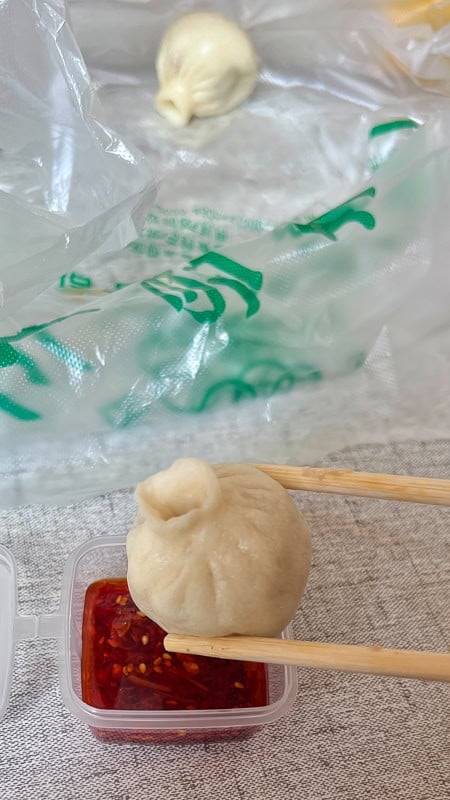
Stuffed full, we continue on, heading for an area of small lakes known as the Xingxing Sea where thousands of small lakes puncture the landscape.
These areas of wetland and vegetation attract many species of bird and wildlife and we head off from the main road and spend 2-3 hours seeking out the creatures and birdlife of the Tibetan Plateau. There’s a lot to see.
Wildlife on the China Tibetan Plateau
Pikas, small rabbit-like mammals, are the first to make an appearance. They pop up from their burrows in the ground and quickly disappear down another. They’re a lot quicker than me so sorry, no photographic evidence.

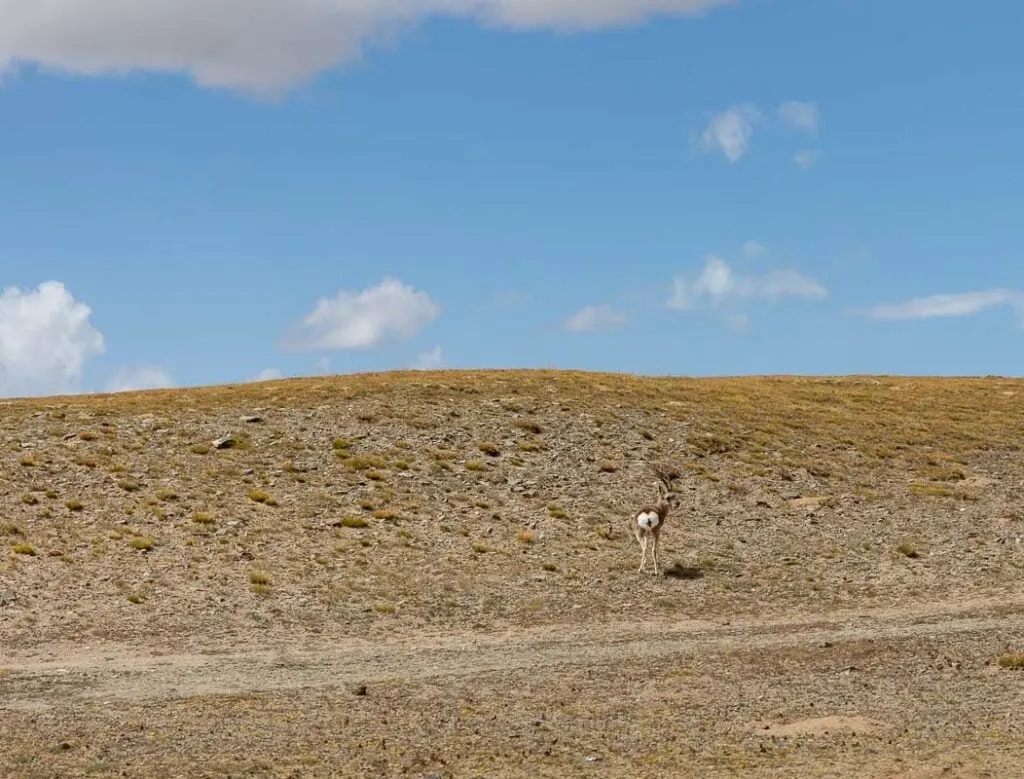
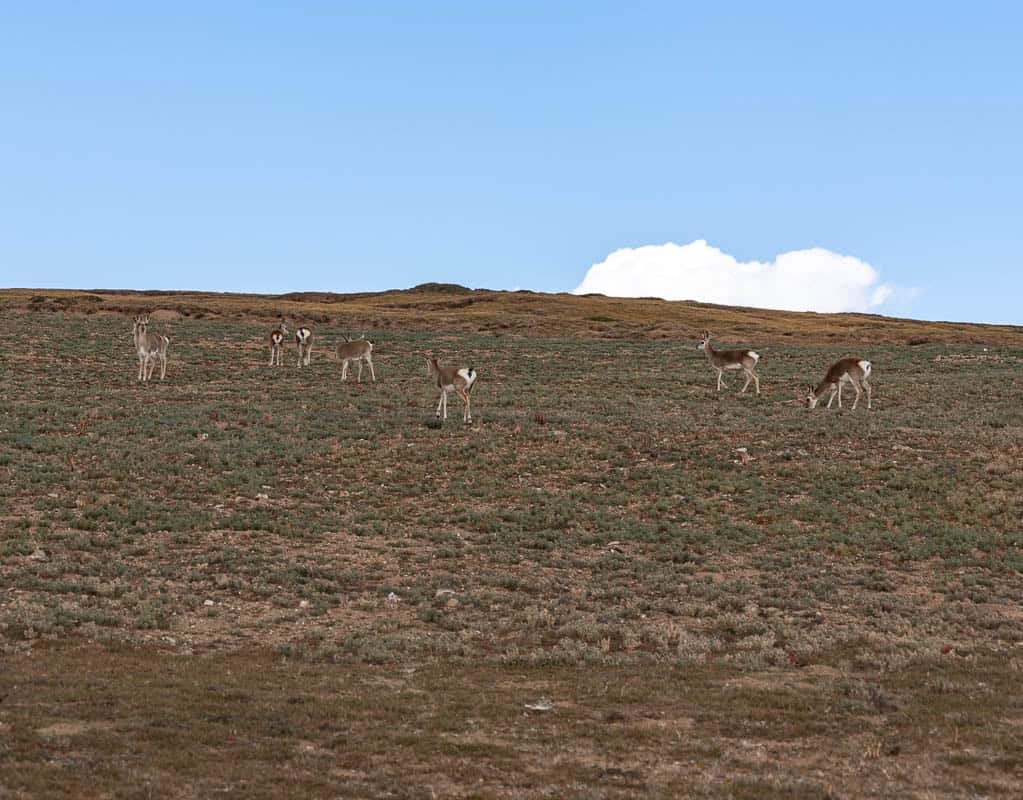
Tibetan gazelles (goa) were many and we saw a few small herds, their distinctive white heart-shaped rumps making them easy to spot in the Qinghai highlands.
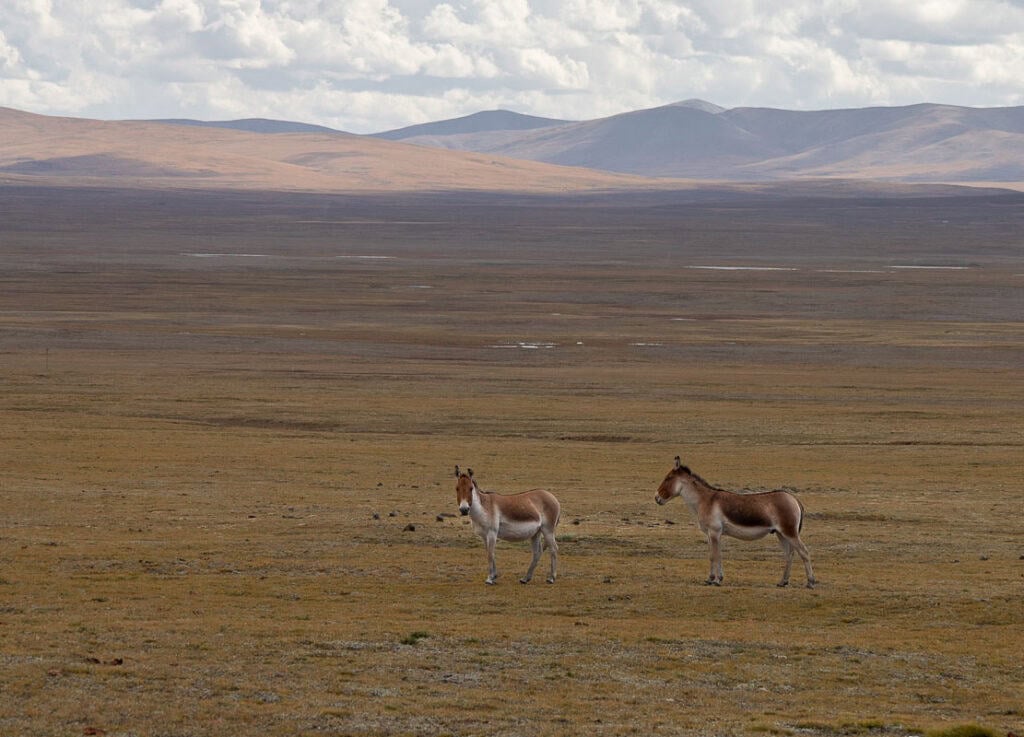
We passed wild horses and saw Tibetan wild asses (Kiangs). There are birds of prey too and we spot Upland buzzards, bar-headed geese and ruddy shelducks. And of course, wild yaks. There’s hail too.
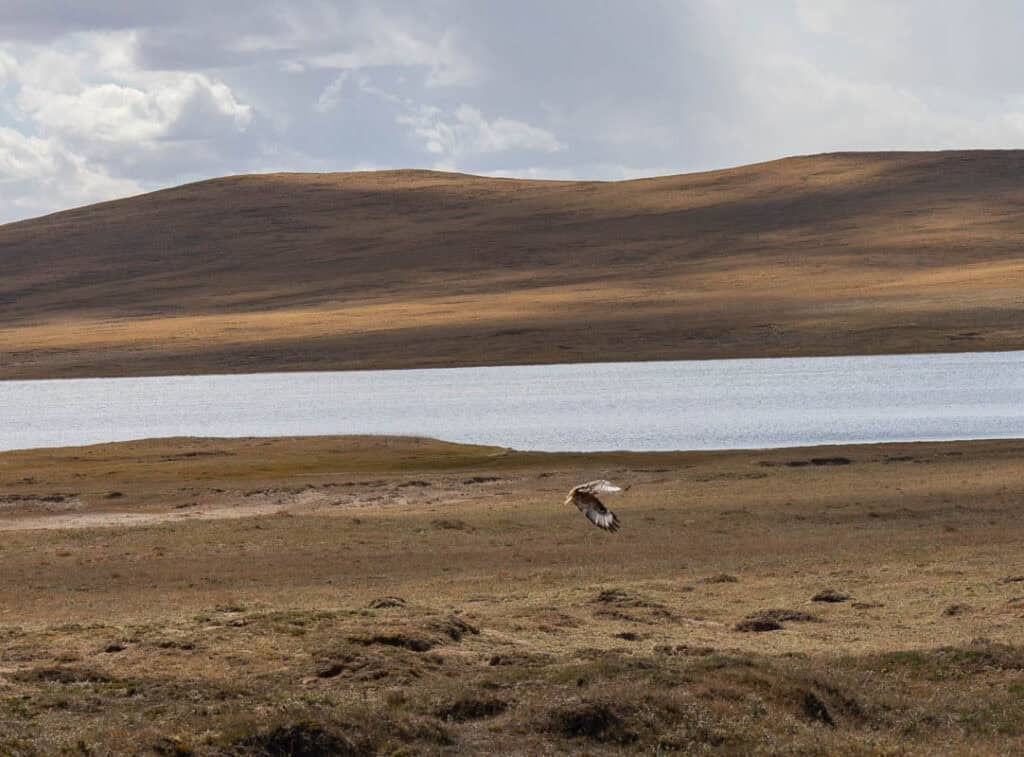
Tibetan wolves and foxes and Tibetan antelope also roam inhabit the area but if they were there they were very well camouflaged.
If you’re into wildlife then Eastogo Travel operate wildlife tours to seek out the elusive Snow Leopard and other Tibetan Plateau wildlife.
It’s late afternoon when we arrive in Maduo. The outback town sits at an elevation of 4500 metres, the highest altitude of our trip so far. There’s not much in the town, which is a layover point on the long road from Yushu to Xining. But it’s a place to lay our heads and try some of the local food.
The region is inhabited by the Hui, a Chinese Muslim community and we try a local speciality dish; roasted lamb chops at a small Hui restaurant just steps from the hotel.
Accommodation in Maduo

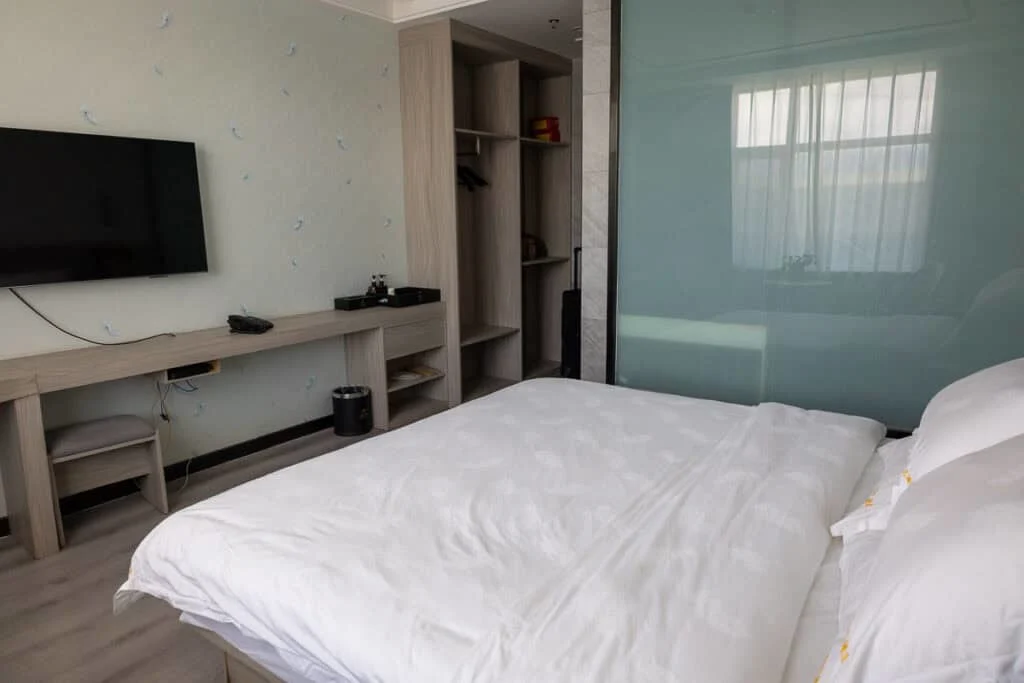

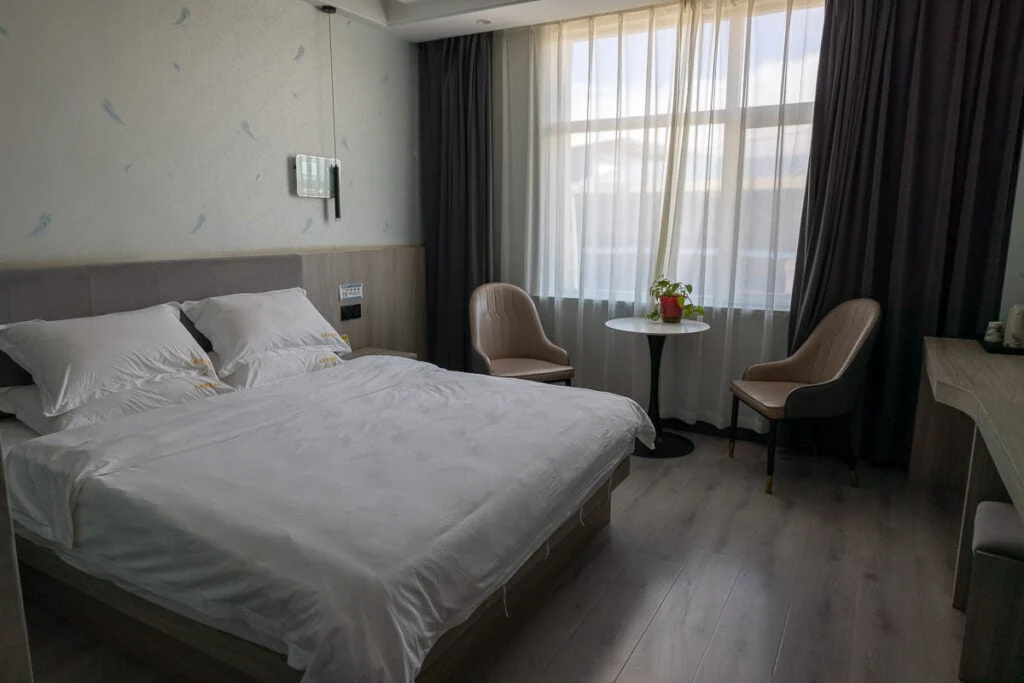
We spent the night at Zhaling Lake Hotel, which is basic but acceptable with the bonus of in-room oxygen which operates from 8pm – 8am.
Day 12: Maduo to Xining with a stop at Ta’er Monastery
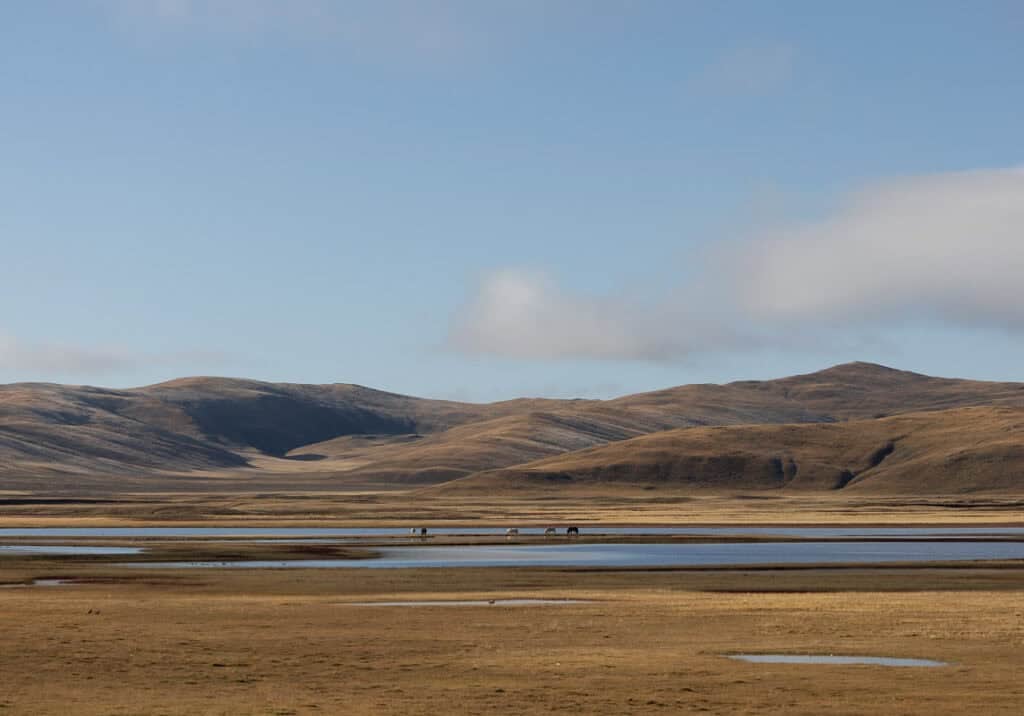
It’s the final leg of our China road trip and we’re heading from Maduo to Xining, the capital of Qinghai Province and the largest city on the Tibetan Plateau.
It’s our longest day on the road but there’s plenty of incredible scenery to see on the way. We encounter sheep, pass mountain ranges and of course, there’s a rolling yak roadblock enroute.

We stop for lunch in the busy town of Hainan where I enjoy a tasty bowl of hot beef noodles and sweet potato chips. The noodles swell up the longer they’re in the broth so they never seem to go down and five minutes in the bowl seems as full as when I started. It tastes good so I’m not complaining.
Before we reach Xining we stop at Ta’er Monastery (Kumbum Monastery) located 25 km south of the city. It’s one of the six great monasteries of the Gelugpa school of Tibetan Buddhism and the birthplace of its founder, Master Tsongkhapa.
Ta’er Monastery
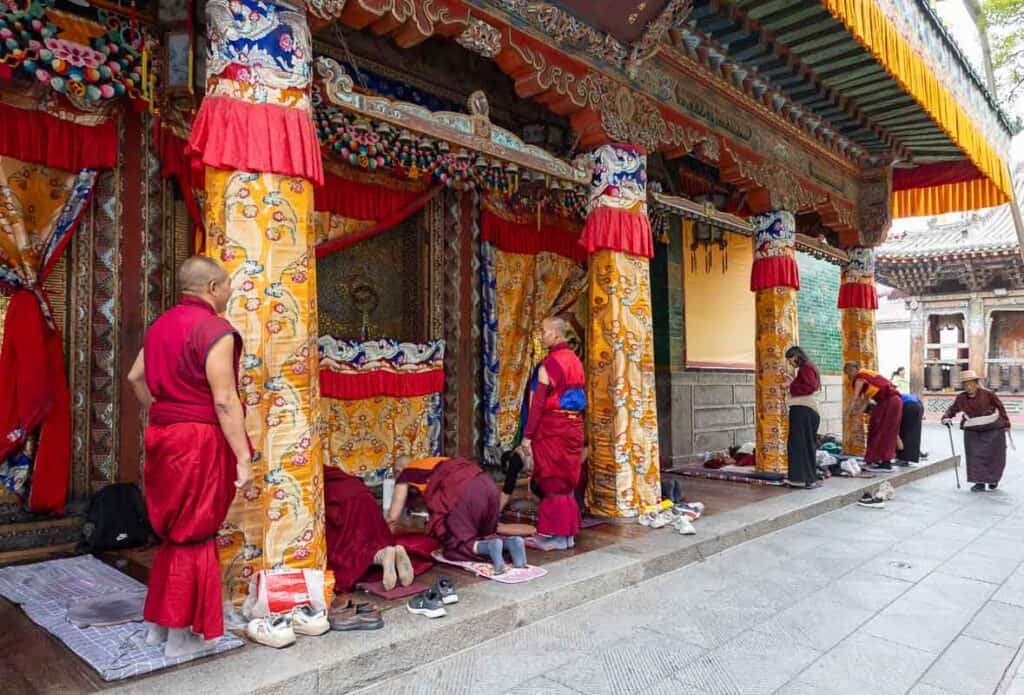
Ta’er monastery is over 600 years old and known for its architecture, treasures and deeply spiritual atmosphere. We see brightly painted yak butter sculptures which are kept in a chilled display cabinet to keep them fresh. They’re replaced annually and you’d never know that they’re made from butter. Vibrant murals and embroidered art make up the monastery’s two other wonders.
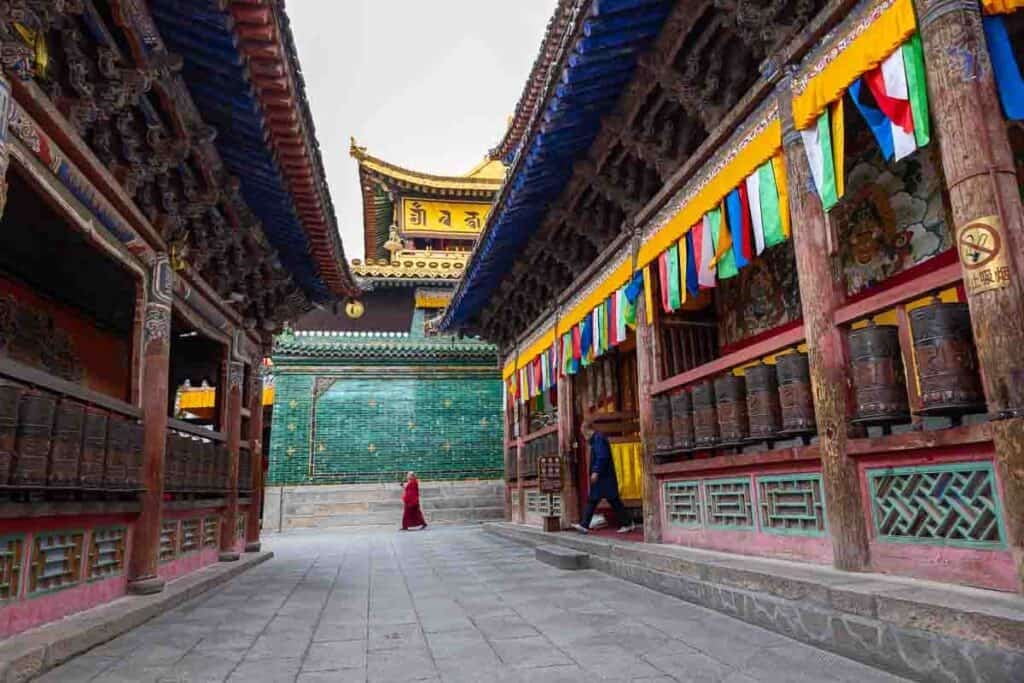
It’s much busier than the other monasteries we’ve visited so far. A sign that we’re nearing the city of Xining.
Xining, Qinghai
Xining is over 2,100 years old and has been a hub on the Qinghai route of the ancient Silk Road, originally connecting the western frontiers with the Central Plains.
Xining night market, rose cake and robots
We arrived in Xining later afternoon and checked into the Ailunge Garden Hotel and headed straight out again to Xining night market.
This long narrow pedestrian street is lined with food stalls piled high with produce and local delicacies which is illuminated from above by hundreds of red, glowing lanterns. It’s busy with people buying, selling and enjoying great food.
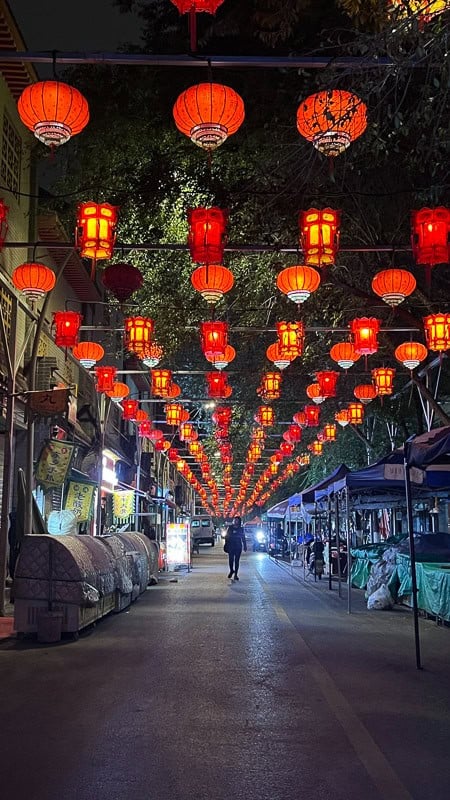
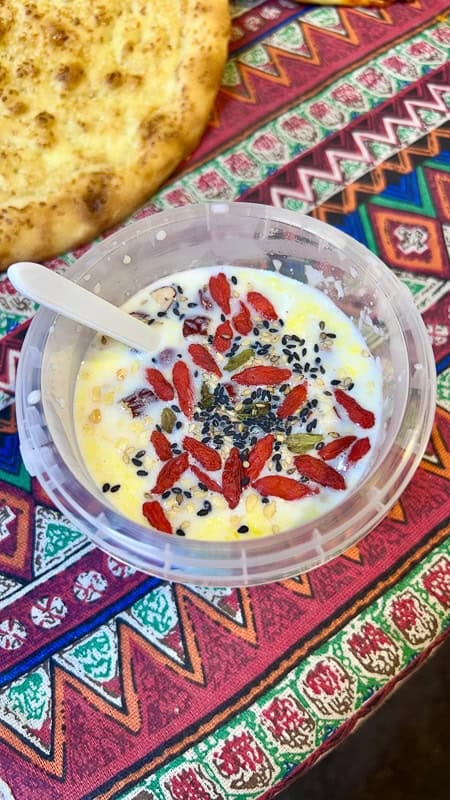

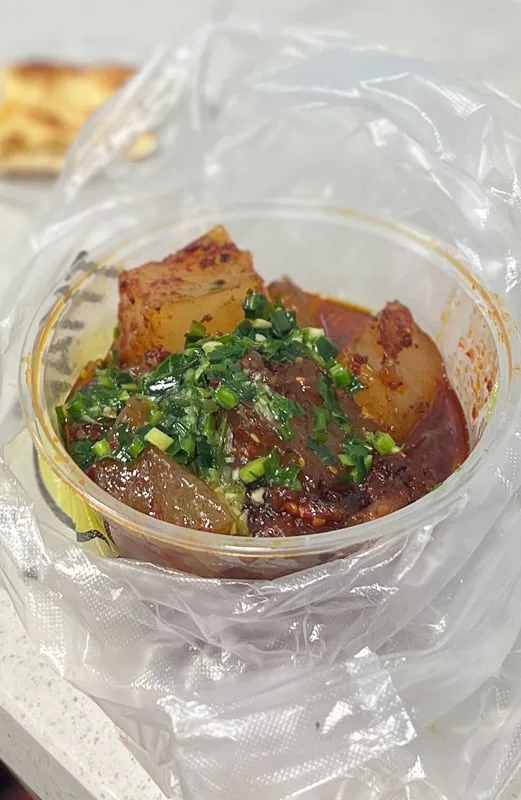
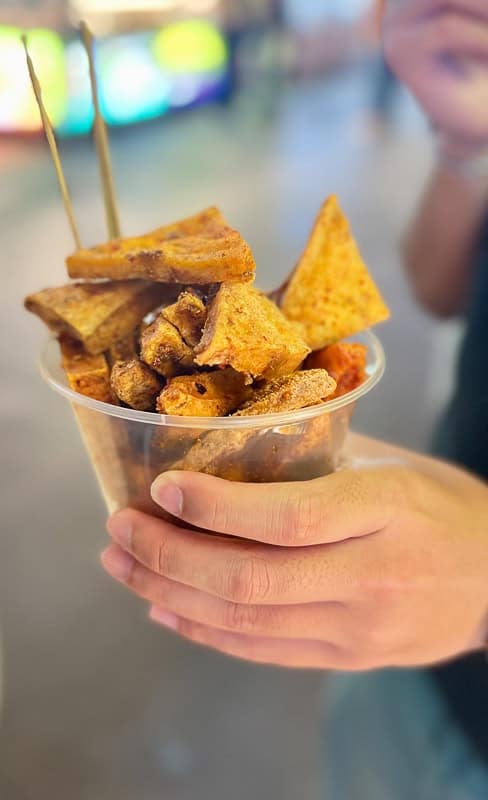
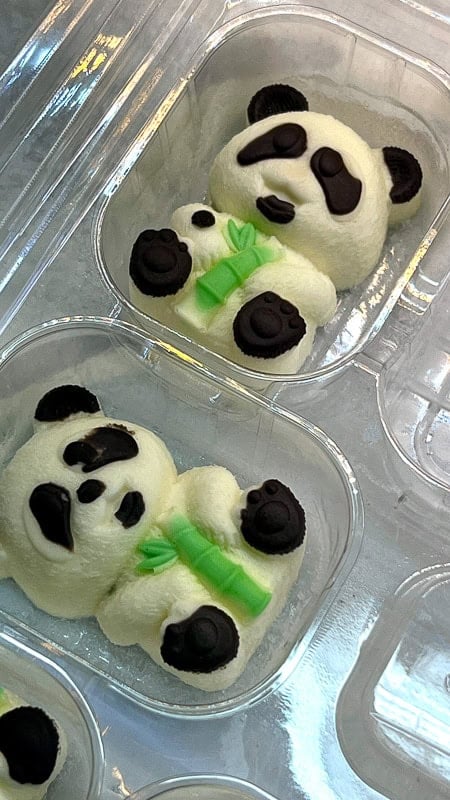
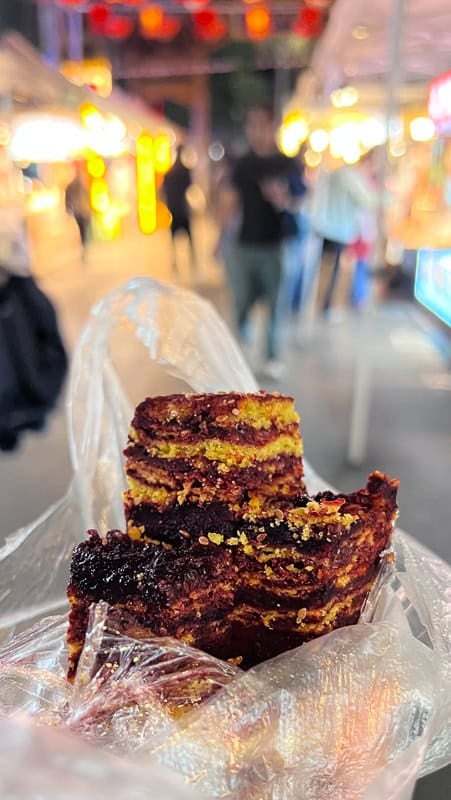
A myriad of street food offers loads of choices, many of which I’ve never seen before and of course many Chinese favourites. It’s not long before we tuck in.
An elderly stall holder serves us a hot, sweet dish made with egg, milk, sugar and rice wine. It’s topped with mixed seeds, dried goji berries and sultanas and is delicious. Proper comfort food.
We try cold potato noodles, warm sesame flatbread, sesame toast bites and lamb skewers which are all so good we could easily have overdone it. We also sample some strange gelatinous cubes served in a spicy broth which I wasn’t that keen on and still have no idea of its name.
My favourite dish of all was rose cake. A soft rose flavoured sponge with crispy layers. Absolutely sublime!
Robot room service
Yes, we overdid it and fit to burst went back to the hotel to sleep off our food coma. But not before testing out the room service – robot style.

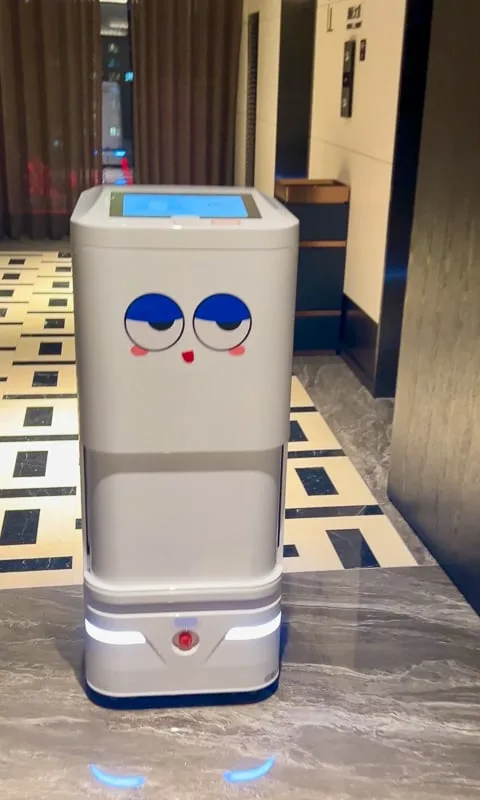



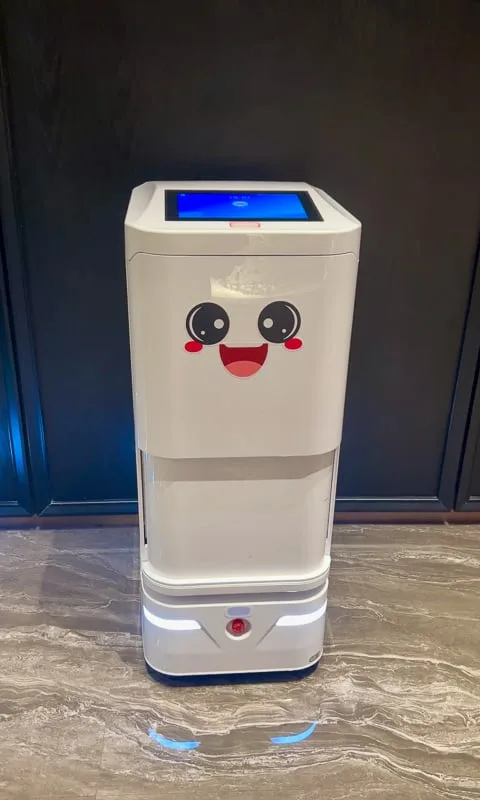
As with our hotel in Yushu, there’s robot room service and we’re itching to try it out. We order a cold lemon tea from the app and wait in anticipation.
The room phone rings to let us know it’s arrived, and we open the door to find our delivery bot outside, complete with sleepy looking face! We press the button on its lid and a compartment slides open to reveal our order which we retrieve like excited children.
The robots are a lot of fun although it’s a bit disconcerting the first time you meet one. Especially if you’re in the elevator which stops to let someone in and it’s one of these little guys. But you soon get used to them.
Accommodation in Xining
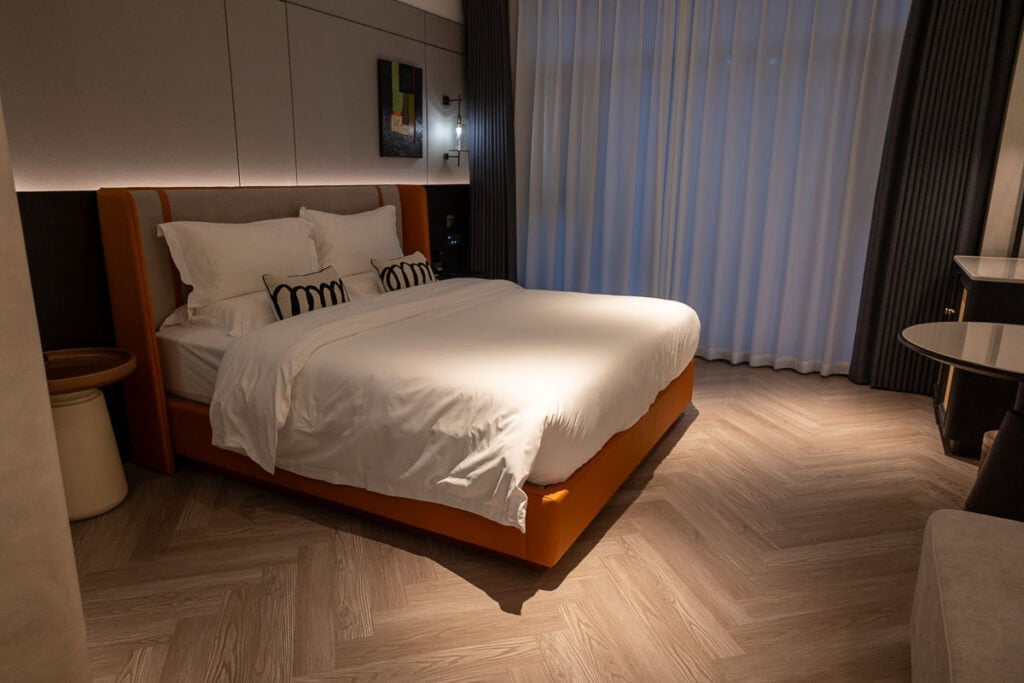

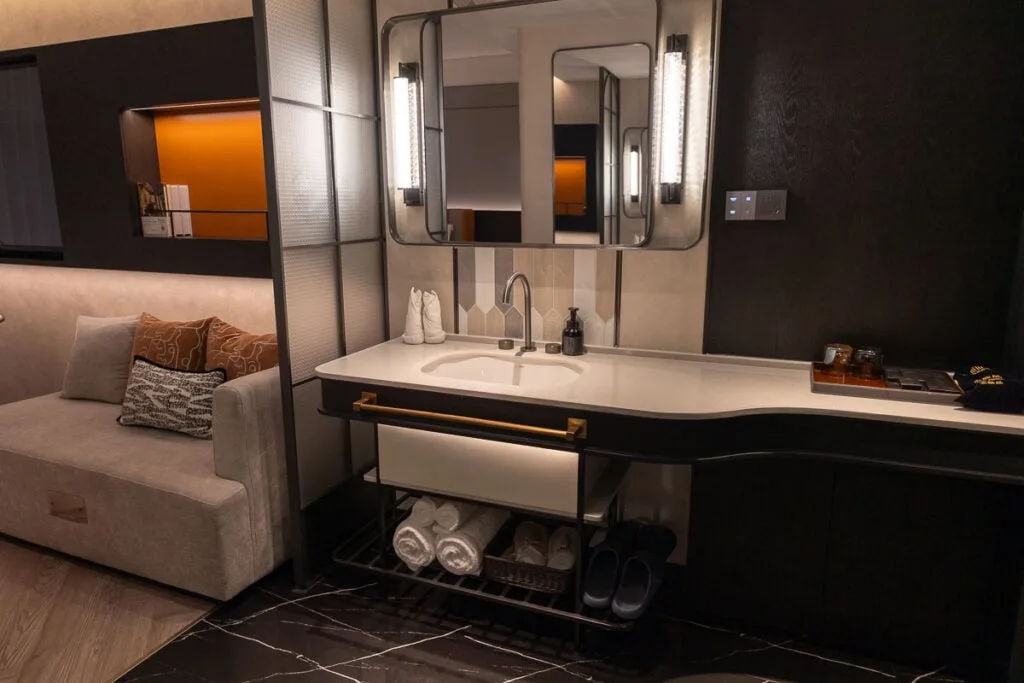

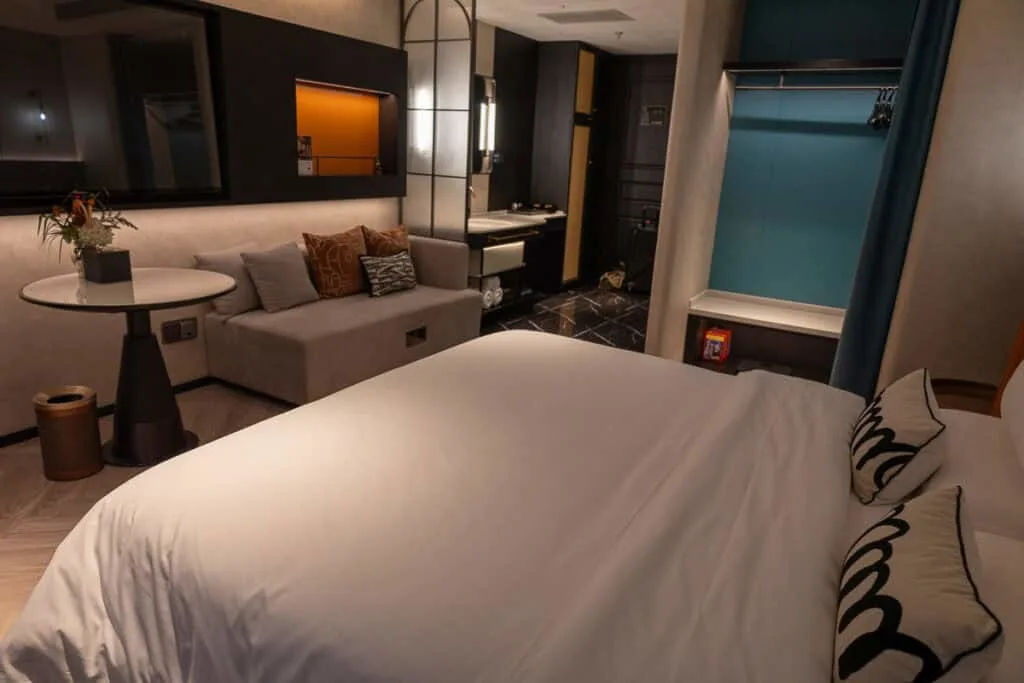
Our final night is spent at the gorgeous Ailunge Garden Hotel in Xining. This contemporary hotel is rather gorgeous and very comfortable. I had a late flight home and was more than happy to pay extra to extend my stay just to chill in my lovely room.
Day 13 Retro Xining, snow leopards and soufflé
My flight wasn’t until 8pm the next day so there was time to explore a little more of Xining the next morning.
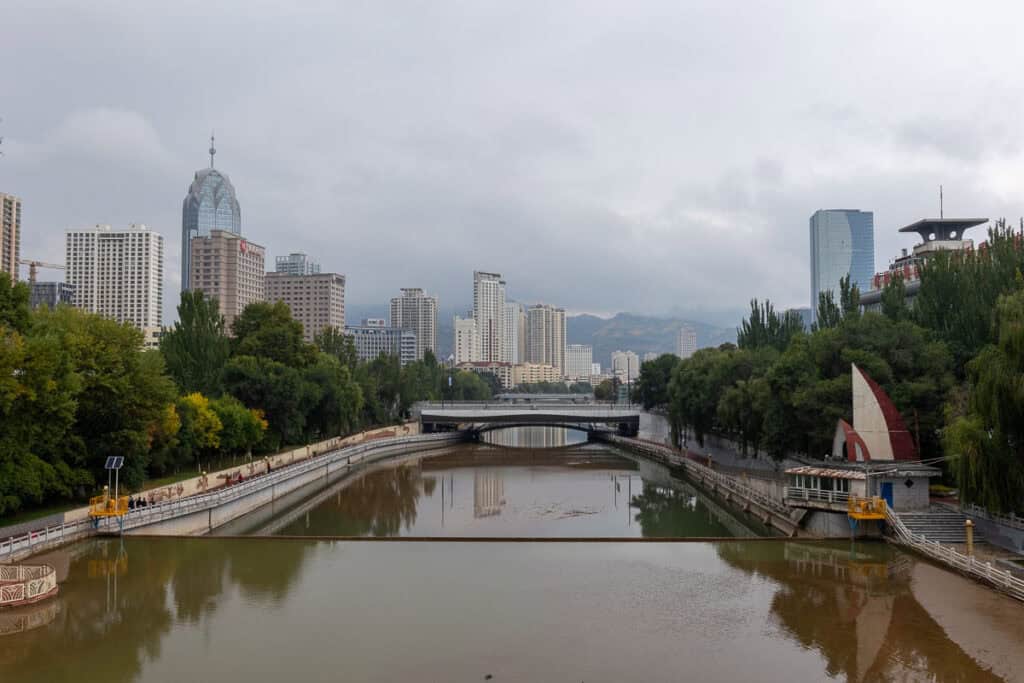
I headed out on foot with Emma, whom I’d mainly travelled with during the trip. We walked past a large park and children’s’ playground and crossed the river before passing a sports stadium.
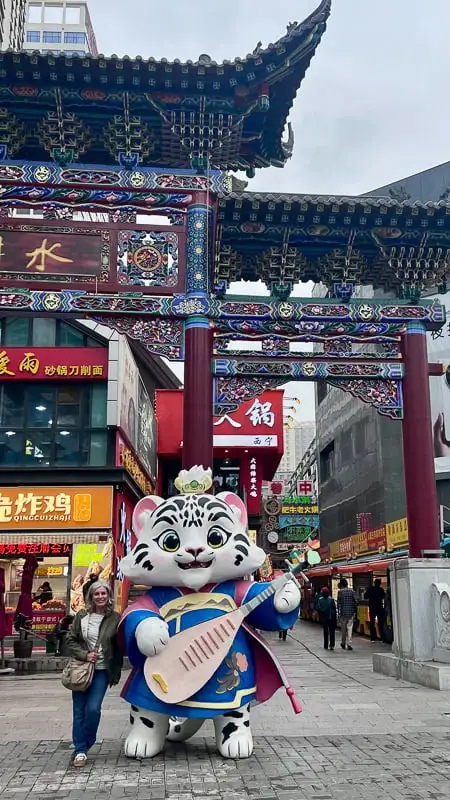
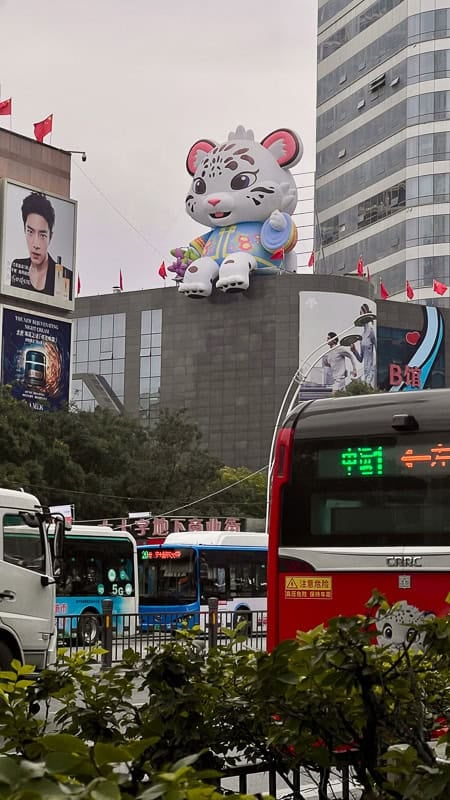
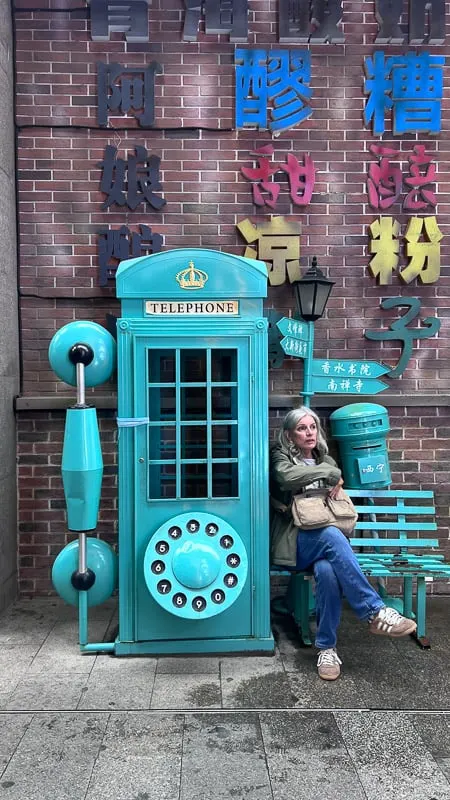
A large Chinese gateway with a giant model snow leopard, the emblem for Qinghai, draws us in and we find ourselves in Shuijing Lane. Here we discover a retro food alley which was a bit like stepping back into the fifties. As well as market stalls, there are diners, burger bars and fast-food eateries all with a fun kitsch vibe.

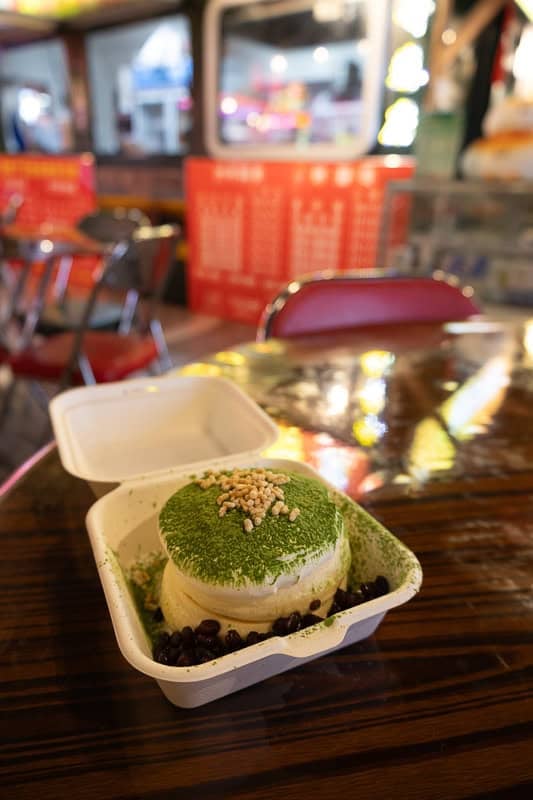

We stop for soft, foamy matcha soufflés, which took about four times as long to make as it did for us to devour them. And they were dreamy.
We slowly walk back to the hotel, pausing on the way for a teenager who wanted a photo with us which happened a few times during our China road trip. We were happy to oblige given that we took so many photos of the local people.
Back at the hotel it’s time to say goodbye to the rest of the group who then depart. I head to the hotel bistro and order some lunch using the ‘We Chat’ app. A spicy Noodle Bolognese style dish that arrives with chopsticks. It may have got messy!
I have a few hours to chill in my room before my flight and spend time mulling over my two weeks in China. This incredible journey through the Tibetan Plateau with Eastogo Travel exploring the Tibetan culture of Sichuan and Qinghai was full of unique, authentic and unforgettable experiences.
A day spent with a nomad yak herding family, meditation with a Tibetan monk, the whisper of prayers at Jiegu Mani Stone City and centuries of craft at Dege Parkhang Sutri-Print House. Remote monasteries, prayer flags, temples and scenic mountain passes along with stunning landscapes, wildlife encounters and the people of Western China.
Travelling with Eastogo Travel
This incredible China itinerary is not without challenges; language barriers, cultural differences and remote landscapes that can be tricky to navigate alone as a westerner. Eastogo Travel made every day smooth and worry-free allowing us to fully immerse ourselves in everything Western China has to offer.
One of our group suffered from altitude sickness after a few days and Eastogo, after getting her the medical care she needed, re-arranged a whole new itinerary for her at lower altitudes. We all met up again in Xining and, just like us, she’d had the most amazing time.
If this is your kind of adventure, I can’t recommend Eastogo Travel highly enough. Throughout our trip the attention to detail, care and professionalism was outstanding. Our itinerary through Sichuan and Qinghai was carefully designed but also flexible depending on the various scenarios encountered. Read more about my thoughts on travelling with Eastogo Travel.
As our journey across Western China came to an end, I realised how rare this kind of travel truly is. Two weeks of moving slowly through Sichuan and Qinghai and the China Tibetan Plateau gave us so much more than dramatic landscapes.
It offered an insight into a deeply spiritual way of life shaped by altitude, tradition and faith. From centuries-old monasteries and sacred mani stones to wildlife encounters and long, quiet roads stretching into the mountains.
As I boarded my flight home , one thing was certain, this remarkable region of China has left an indelible impression. And I can’t wait to return.
Planning a trip to China? You might find these essential China travel tips useful. Everything you need to know before travelling to China for the first time, including visas, payments, transport and cultural tips.


Suzanne Jones is a full-time travel blogger and writer at The Travelbunny which she started in 2011 during her time as a professional travel planner. Suzanne enjoys exploring new destinations, adventure and the outdoors. When not travelling you’ll most likely find her, camera in hand, enjoying coastal walks in Sussex.
Suzanne also runs Hello Sussex a website which showcases the best of East & West Sussex. Read more about Suzanne.
EASTOGO TRAVEL
Monday 18th of May 2026
Suzanne, Dege and those 320,000 woodblocks, the mani stone city at Yushu, and then that bear with her cubs at Xianggu — this was one of those trips where every day felt like another world. So glad we got to share this corner of the plateau with you.
Suzanne Jones
Monday 18th of May 2026
Thank you for introducing your world to me. It was an incredible experience and expertly carried out by you and the team. Thank you